Key policy findings
1. Use trauma-informed, racially literate approaches to exploring colonial history, centring multiple voices over singular narratives.
2. Resource public parks, libraries, and museums as essential belonging spaces for all.
3. Use inclusive, varied methods (e.g., tactile, visual) to make heritage engagement accessible to diverse communities.
Summary
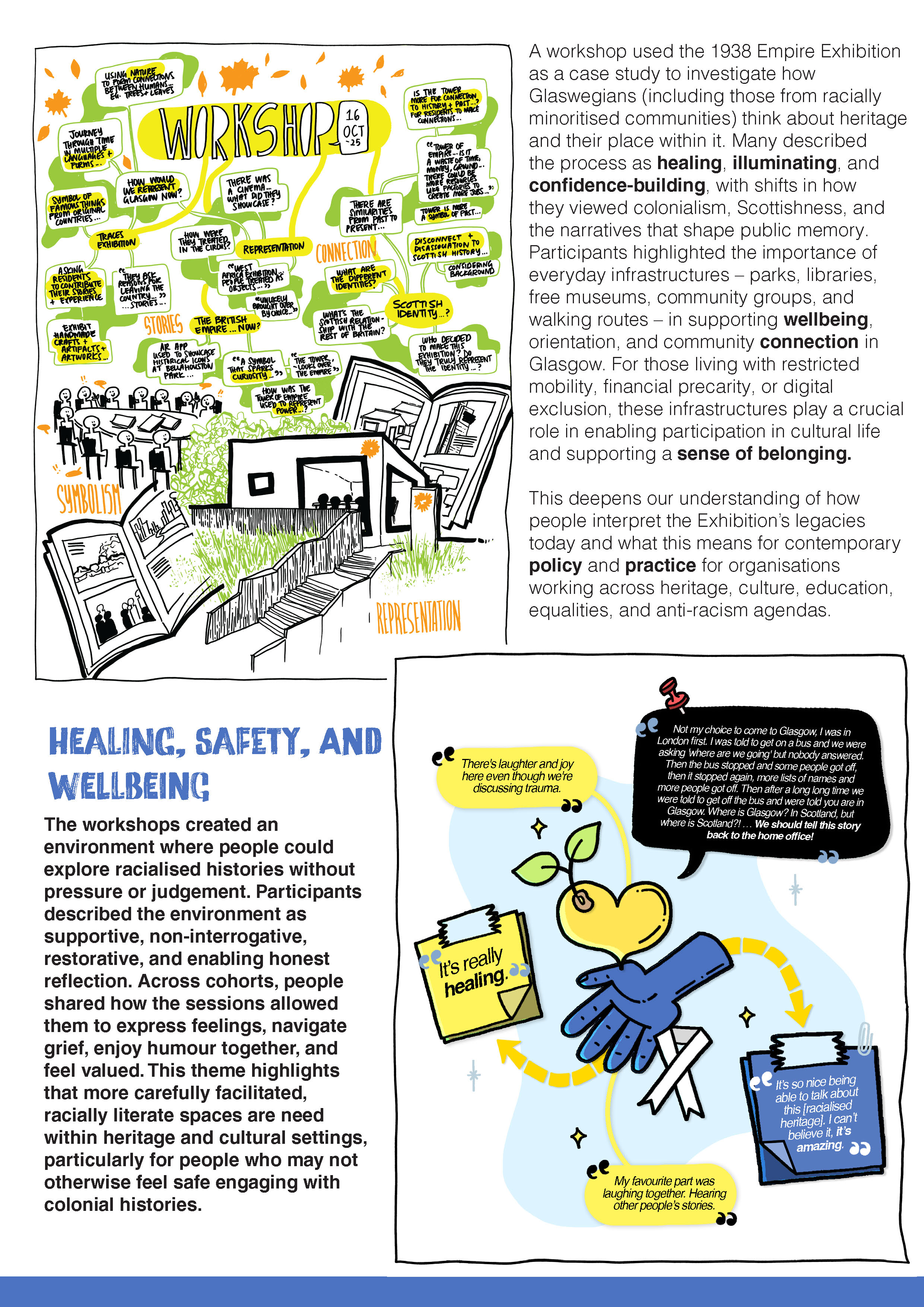
The 1938 Empire Exhibition was one of Scotland’s largest public events, yet its history is now largely absent from Glasgow’s collective memory. For today’s diverse communities, particularly people seeking asylum, migrants, people of colour, and young people, the legacies of empire continue to shape experiences of identity, representation, safety, and belonging. Understanding how people make sense of these narratives has clear implications for heritage, culture, equalities, integration, and anti-racism policy.
This document summarises a new understanding of how Scottish people interpret colonial history (specifically in Glasgow) and what this means for heritage, culture, equalities, and anti-racism policy. It will:
• Present clear accessible insights from research workshops in 2025
• Highlight participants’ voices, lived experiences, and emotional responses
• Communicate 3 core themes relevant to heritage, anti-racism and equalities policy
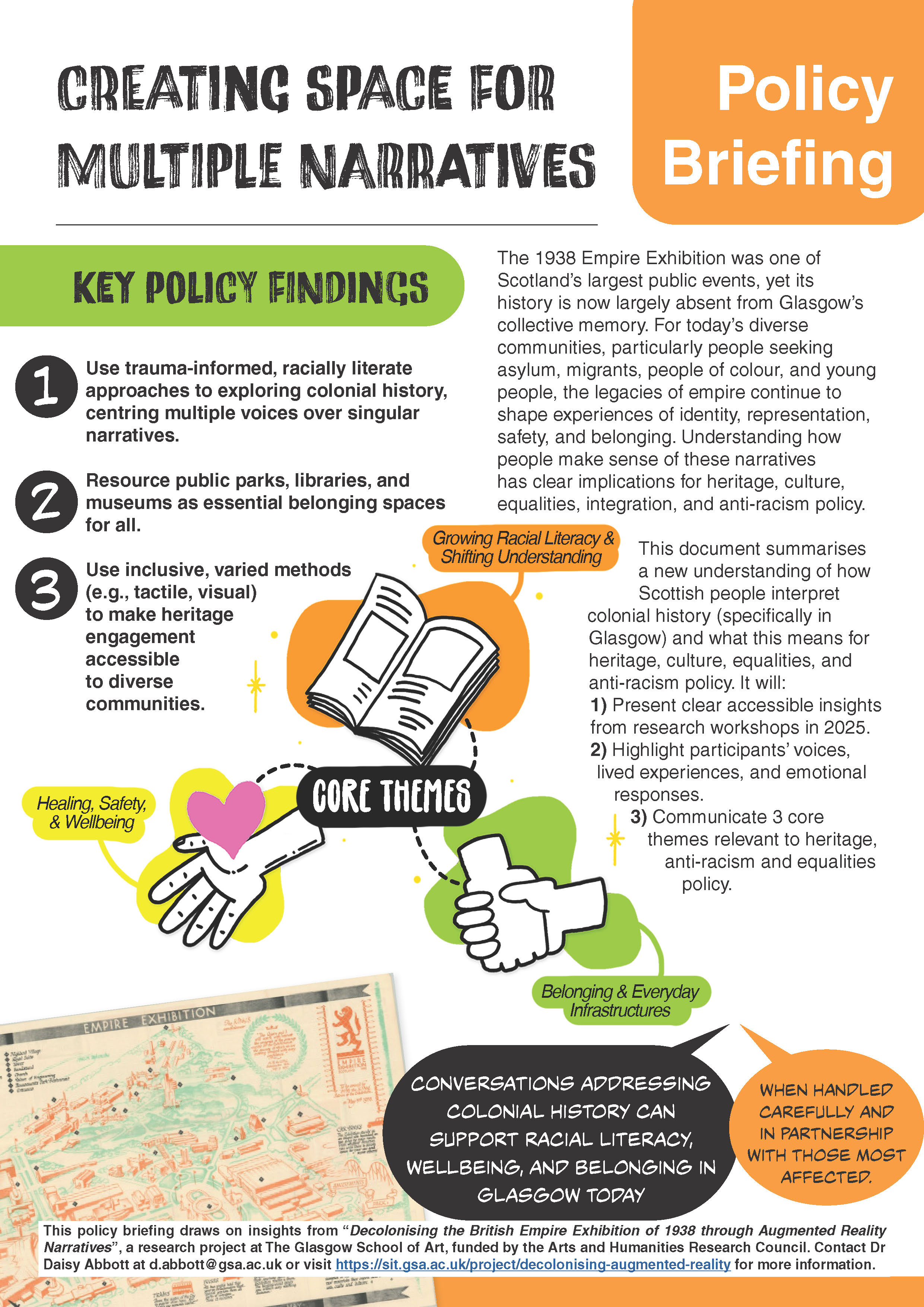
Core Themes
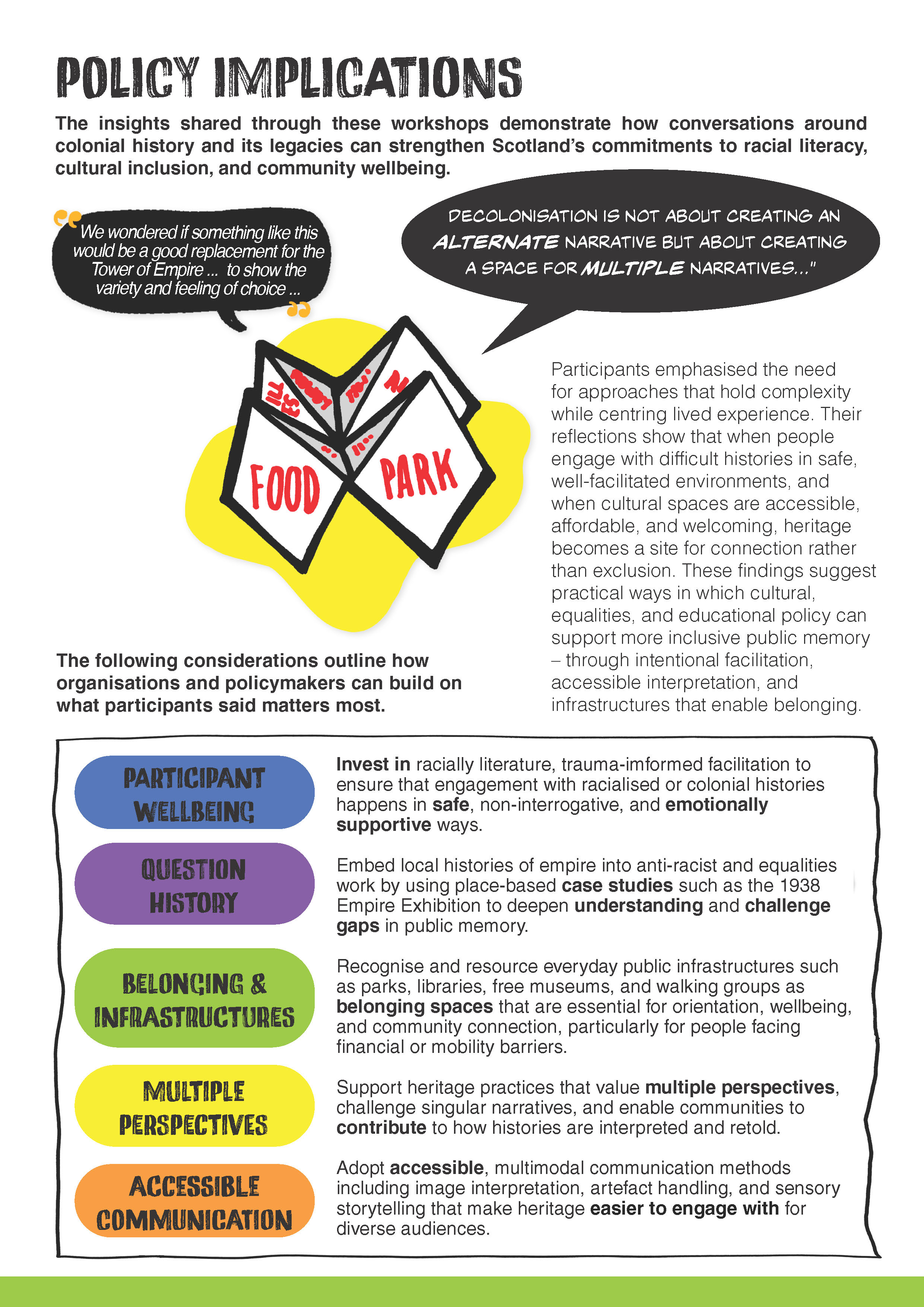
• Growing Racial Literacy and Shifting Understanding
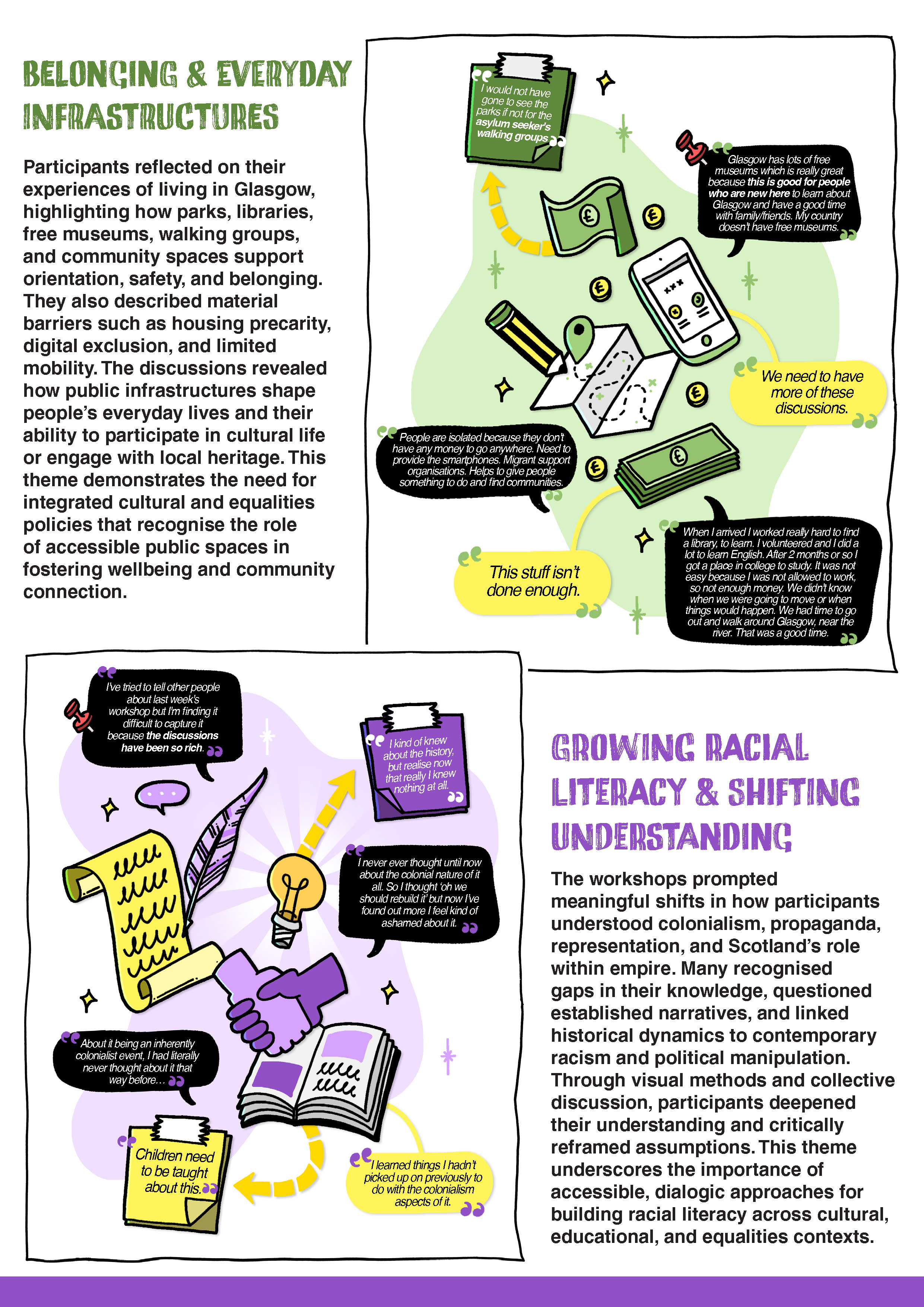
• Healing, Safety, and Wellbeing
• Belonging and Everyday Infrastructures
Conversations addressing colonial history can support racial literacy, wellbeing, and belonging in Glasgow today; when handled carefully and in partnership with those most affected.