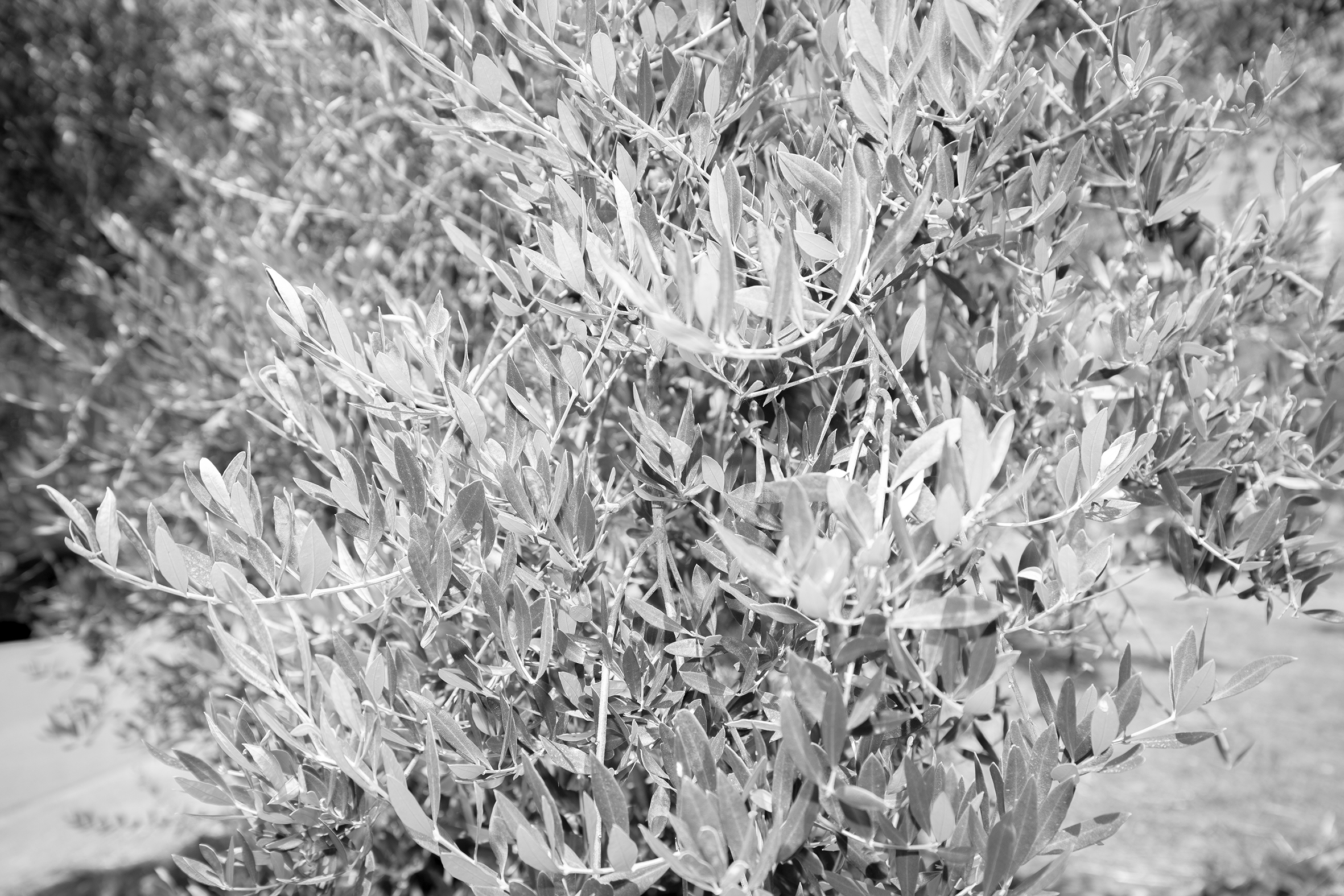
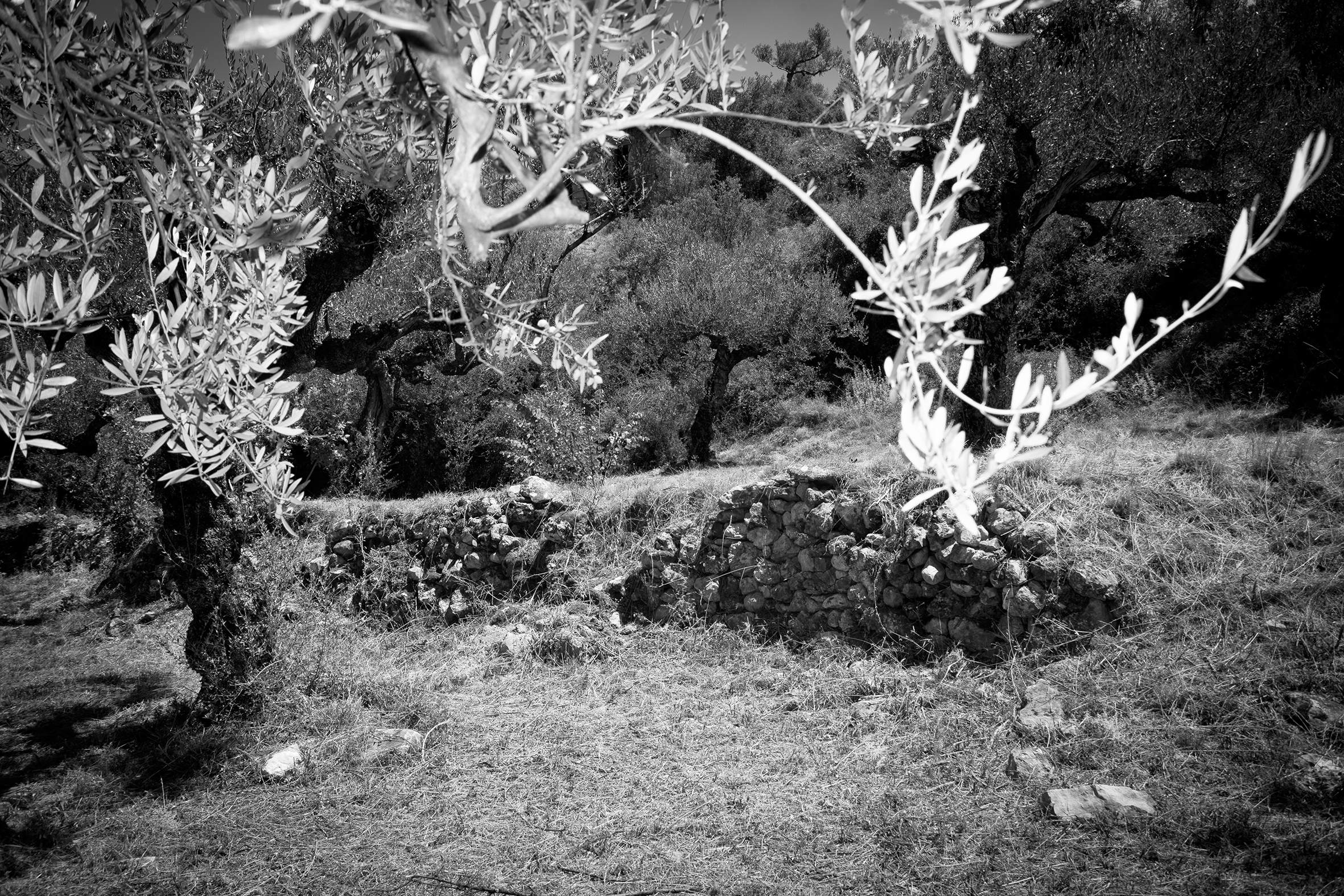
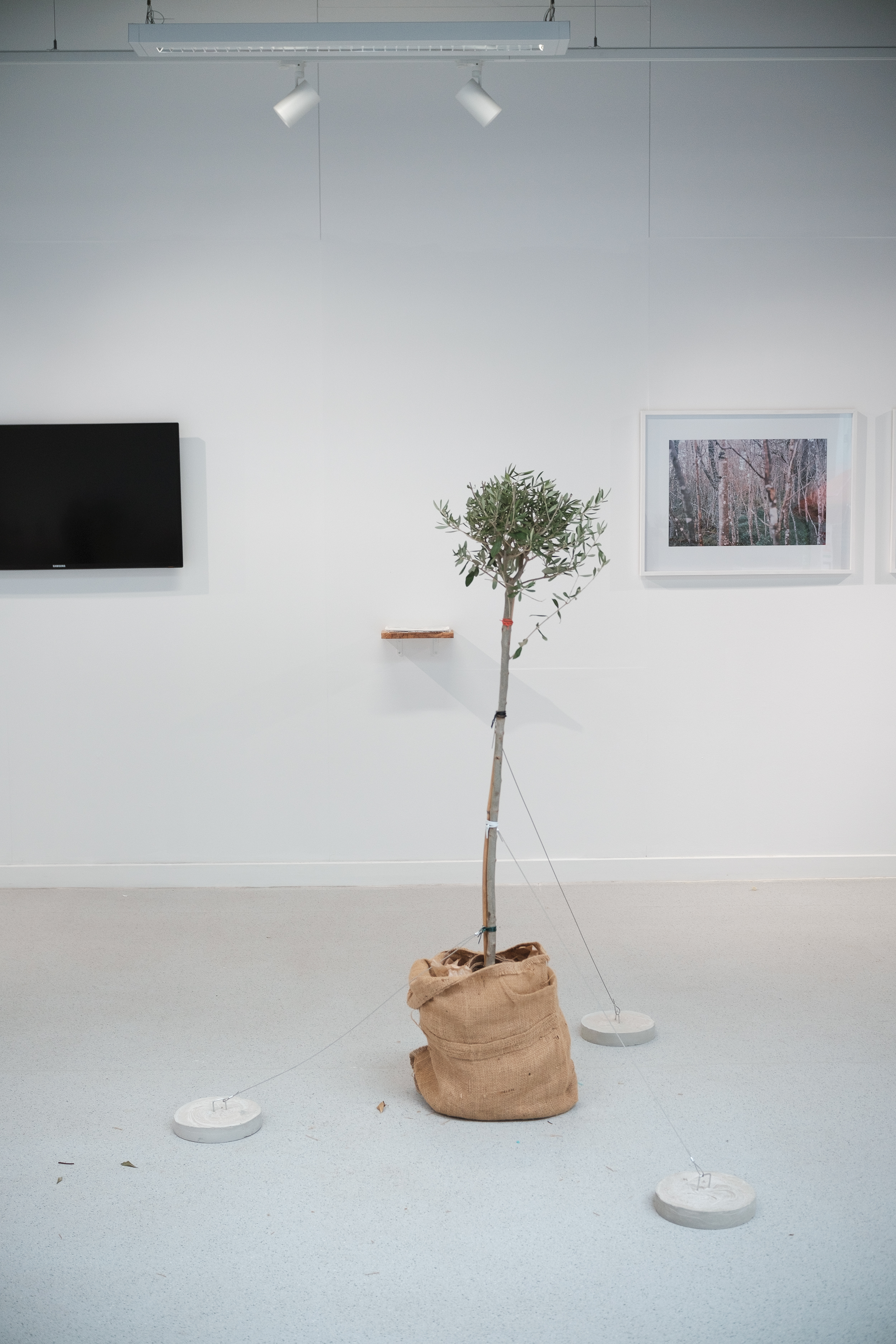
Olive Tee / in situ / Kalamata I, 2023-2025, large format film printed on coated sterling silver plate.
MiOlive Tee / in situ / Kalamata II, 2023-2025, large format film printed on coated sterling silver plate.
diptych
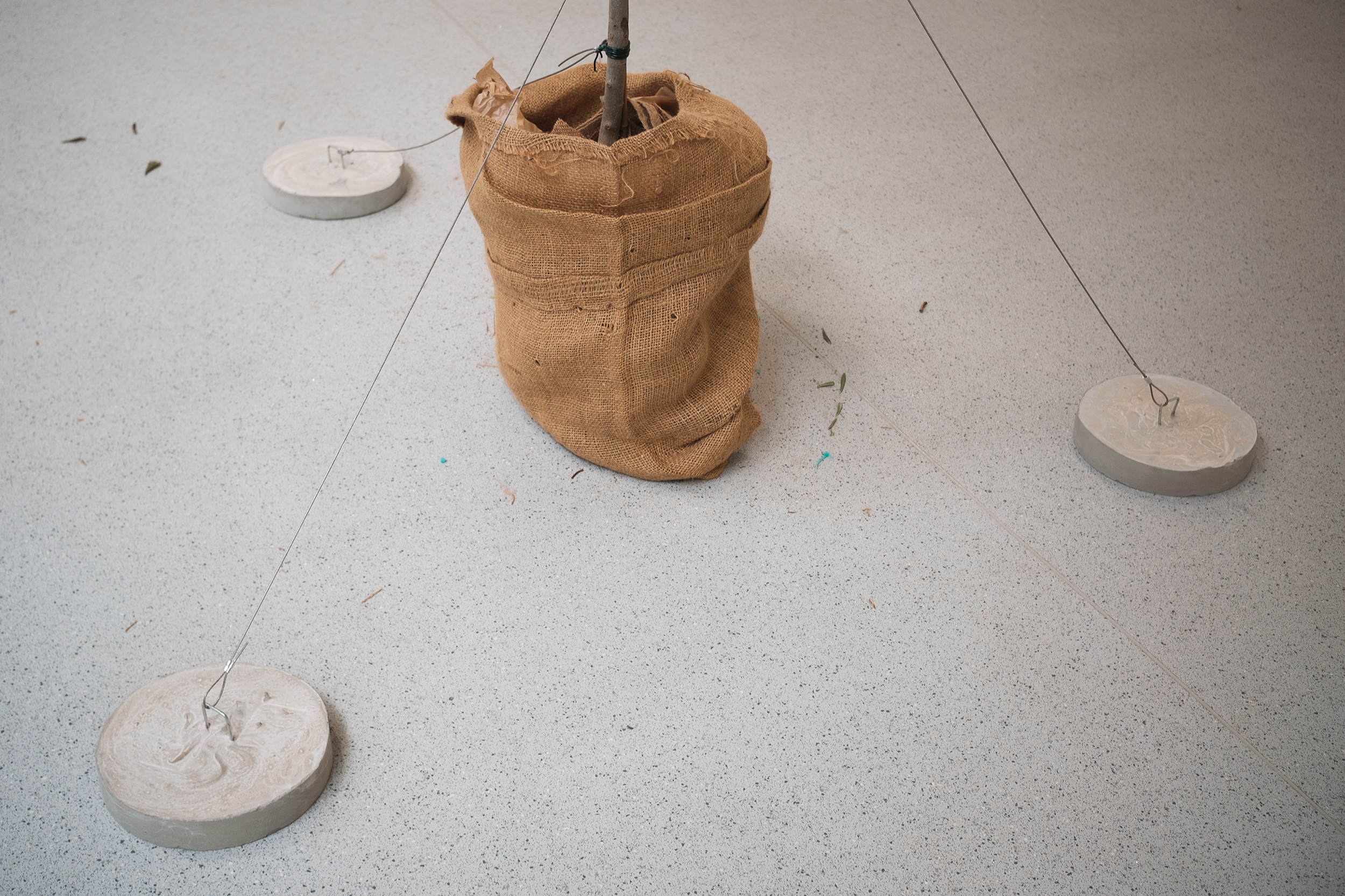
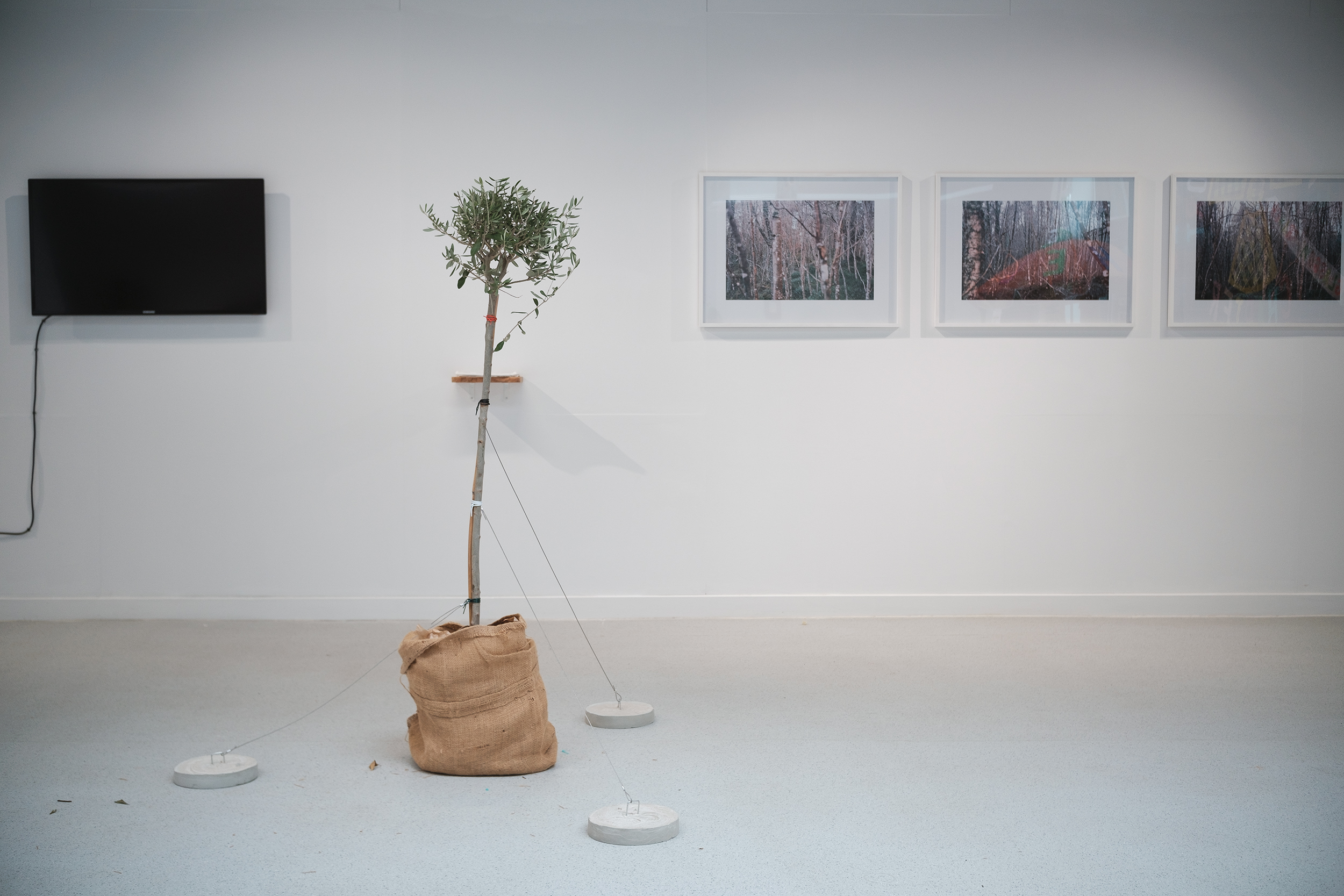
a response to the relocation of olive trees from Gaza
The systematic uprooting of Palestinian olive trees by Israeli forces and settlers is more than an act of environmental destruction—it is a calculated strategy of oppression that exemplifies the broader framework of Israel’s green colonialism. This phenomenon, which integrates ecological policies with settler-colonial objectives, serves as a mechanism of dispossession and control. The regulation and destruction of Palestinian olive groves highlight how environmental narratives are manipulated to justify land appropriation, surveillance, and the erasure of Palestinian identity. This essay explores how green colonialism operates by targeting olive trees, illustrating the intersection of ecological rhetoric and settler-colonial ambitions. The olive tree is deeply rooted in Palestinian history, culture, and economy. These trees, some of which have stood for centuries, symbolize resilience and an enduring connection to the land. Beyond their cultural and symbolic value, olives provide a major source of income for Palestinian farmers, with olive oil production accounting for a significant share of agricultural livelihoods. As such, the destruction of olive trees is not just an environmental or economic issue—it is an attack on Palestinian identity and self-sufficiency.
The work was made as part of the Reading Landscape Exhibition held in the Annex Gallery of The Glasgow School of Art between 22 April – 16 May 2025.