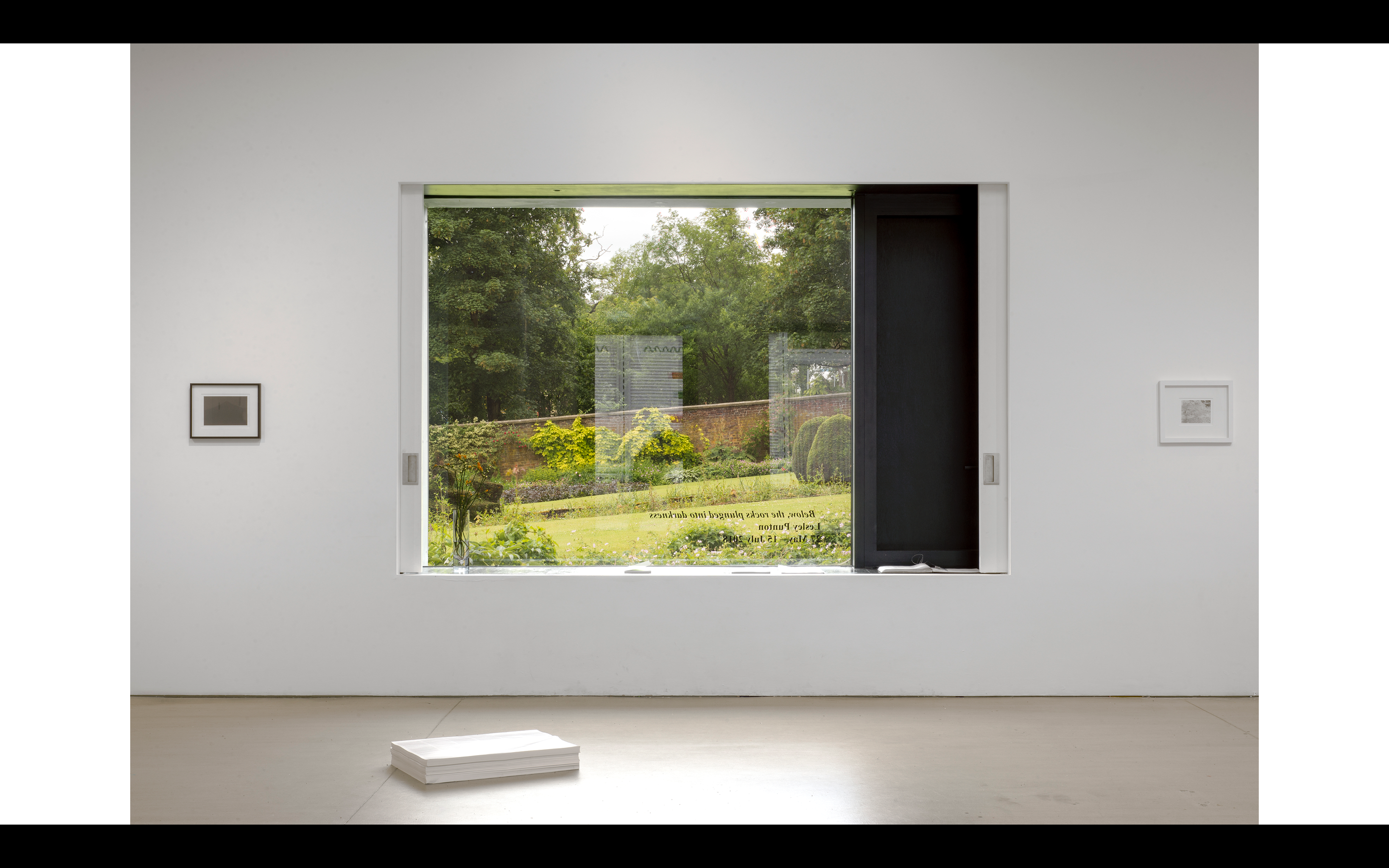
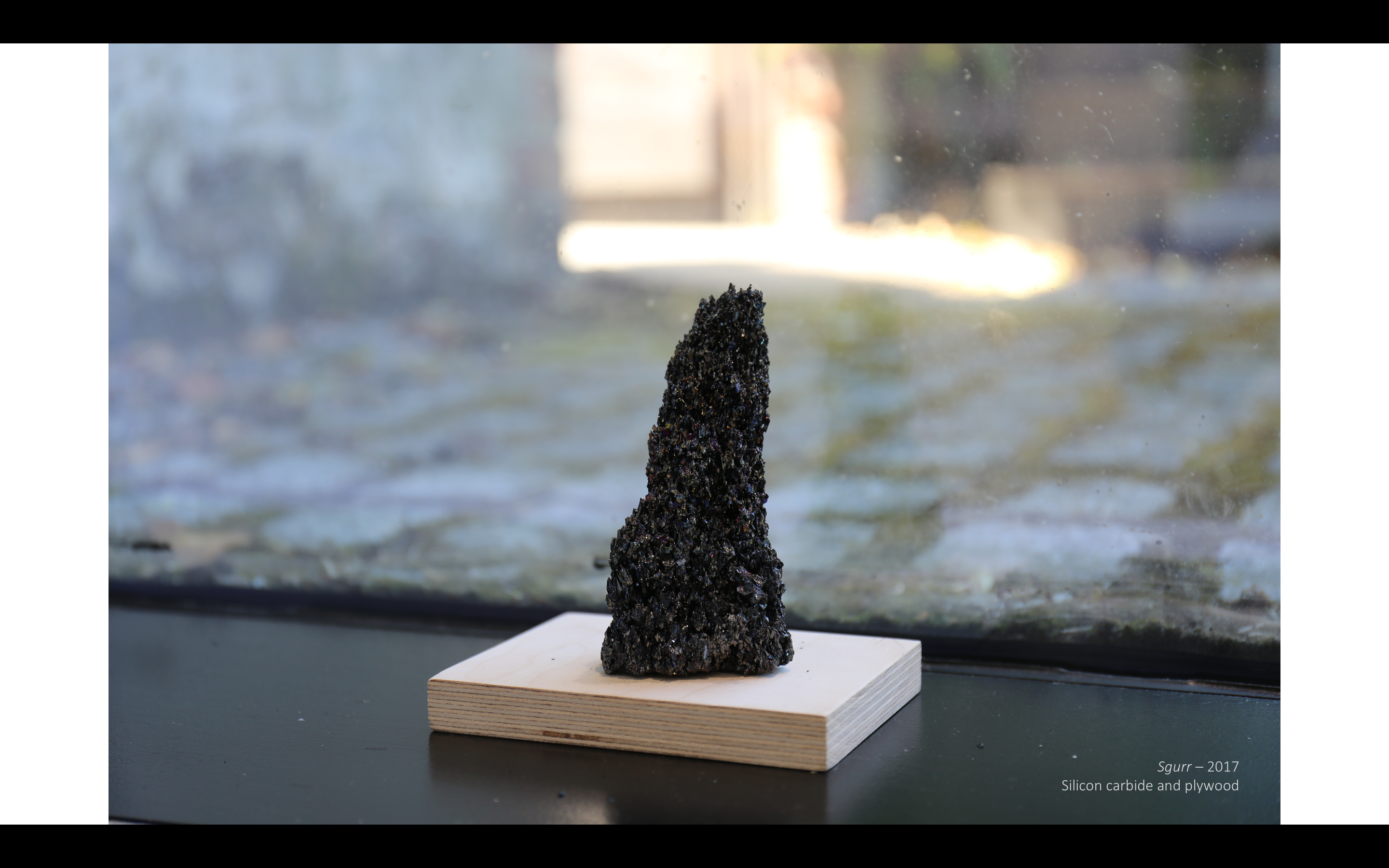
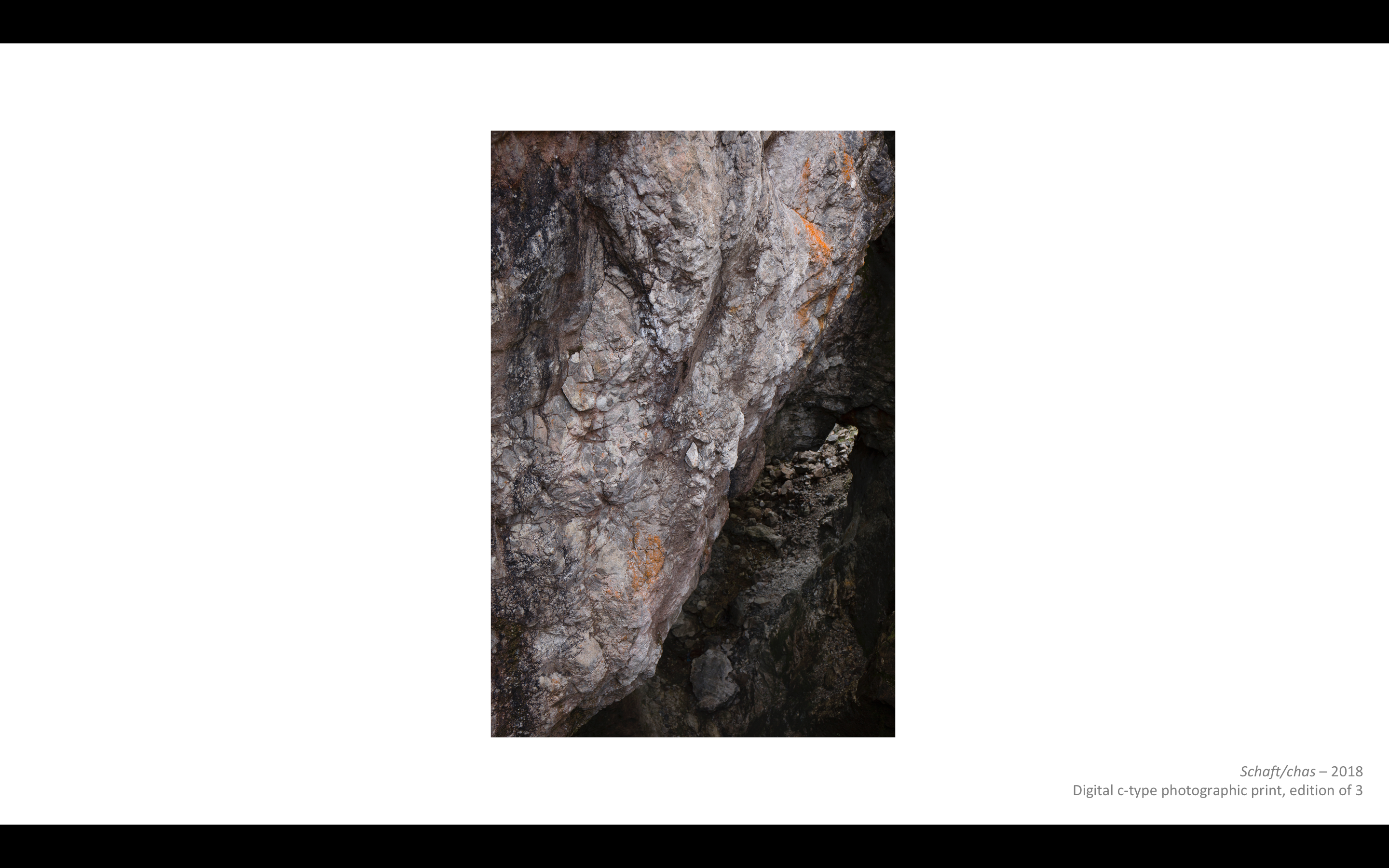
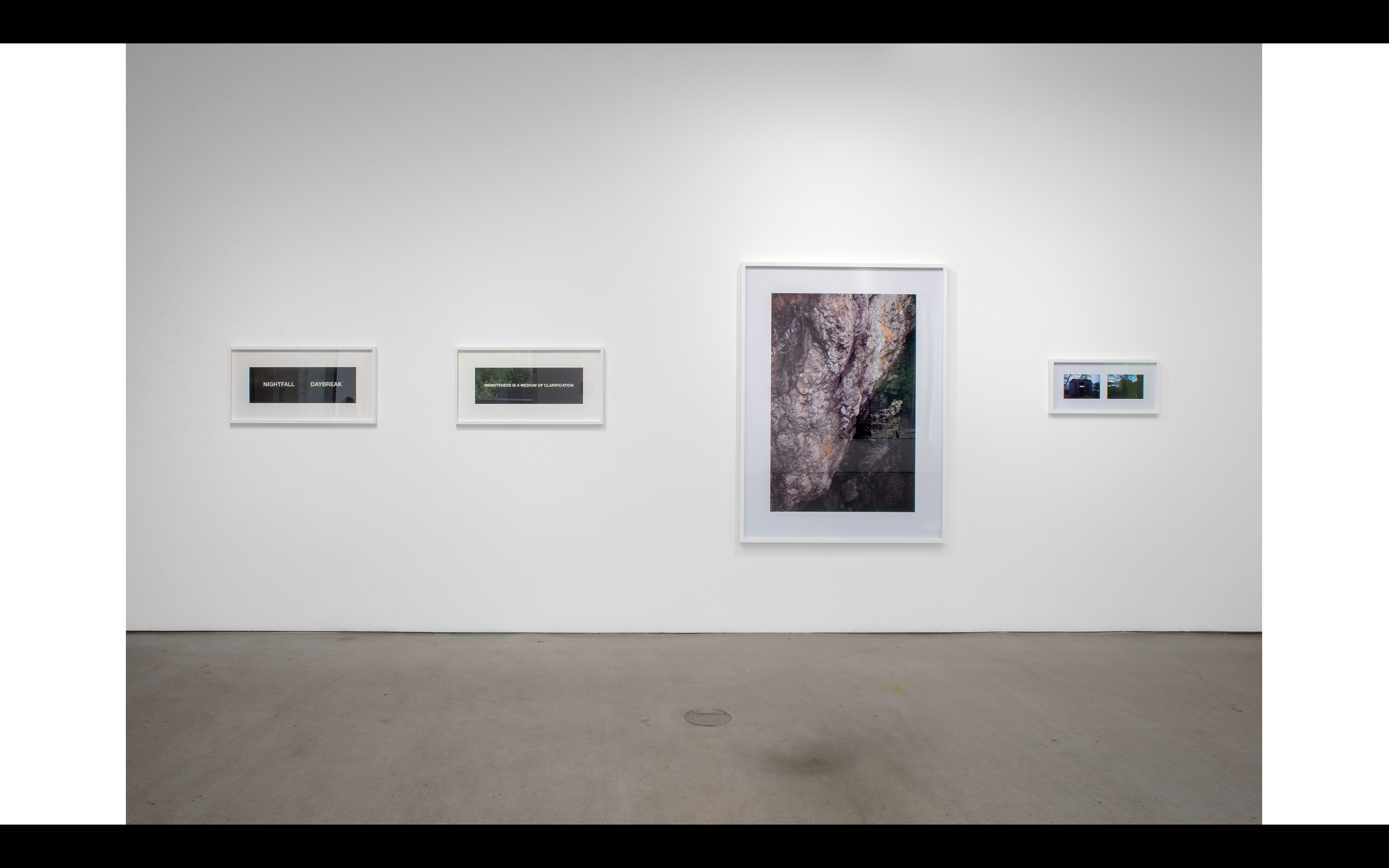
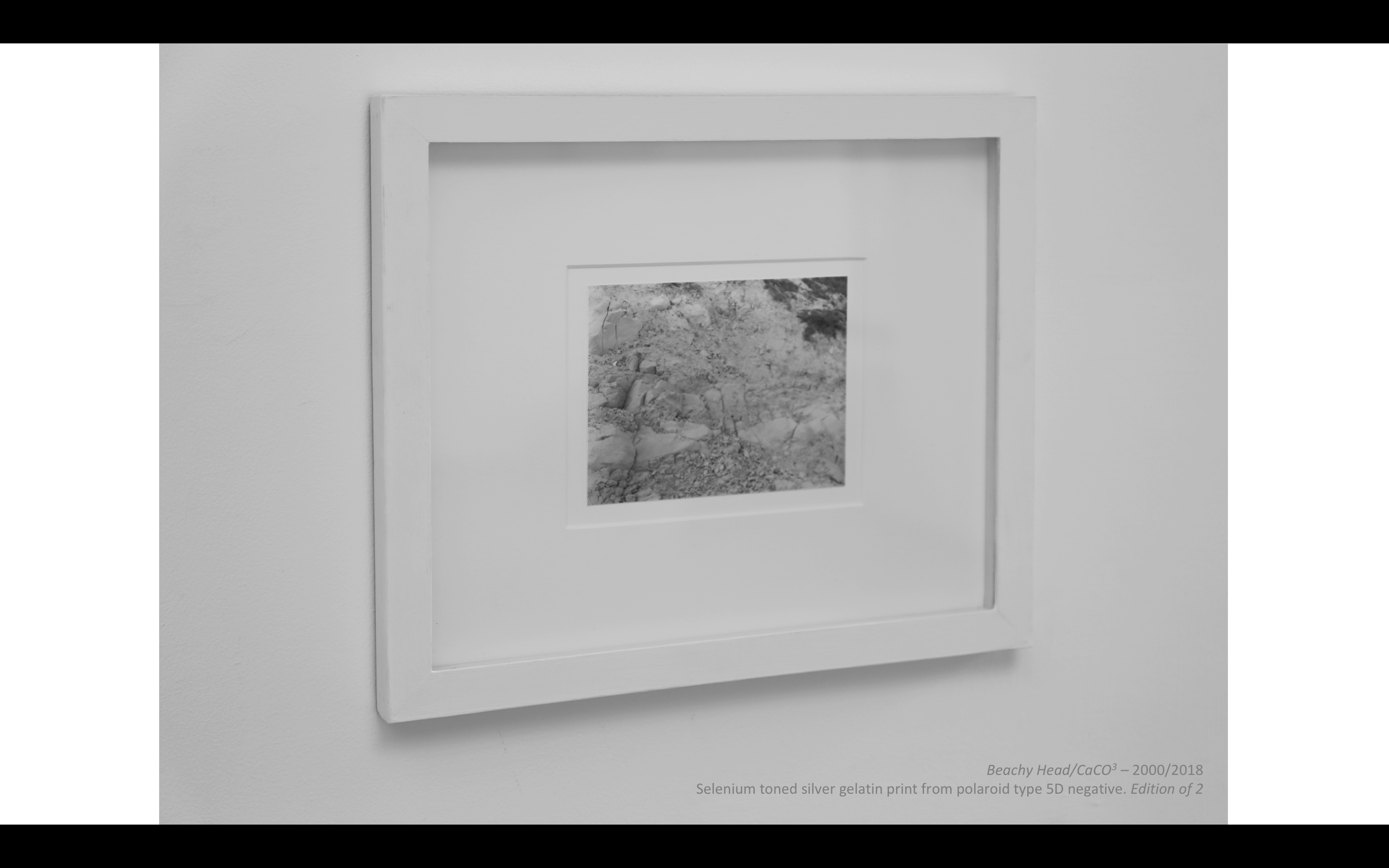
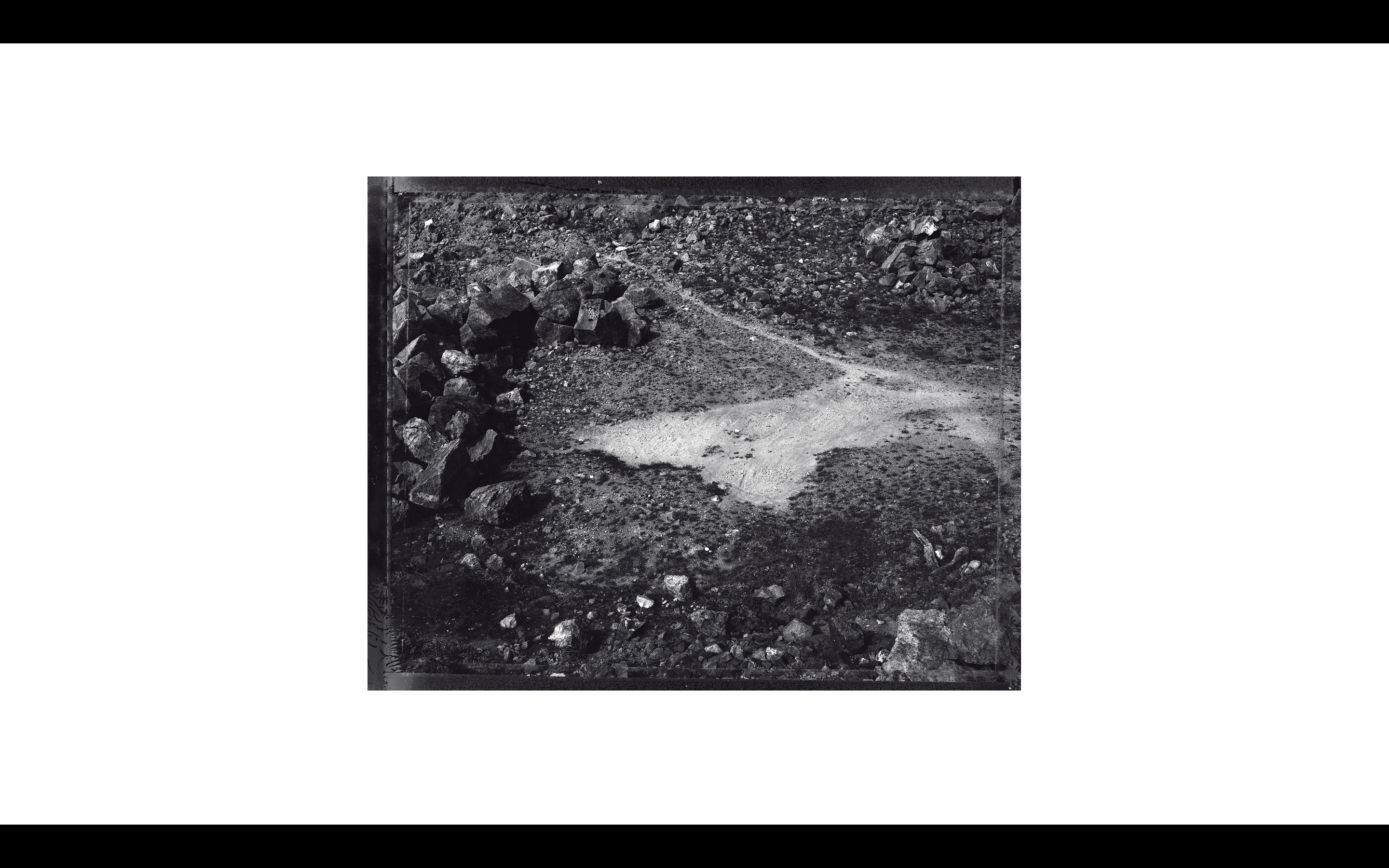
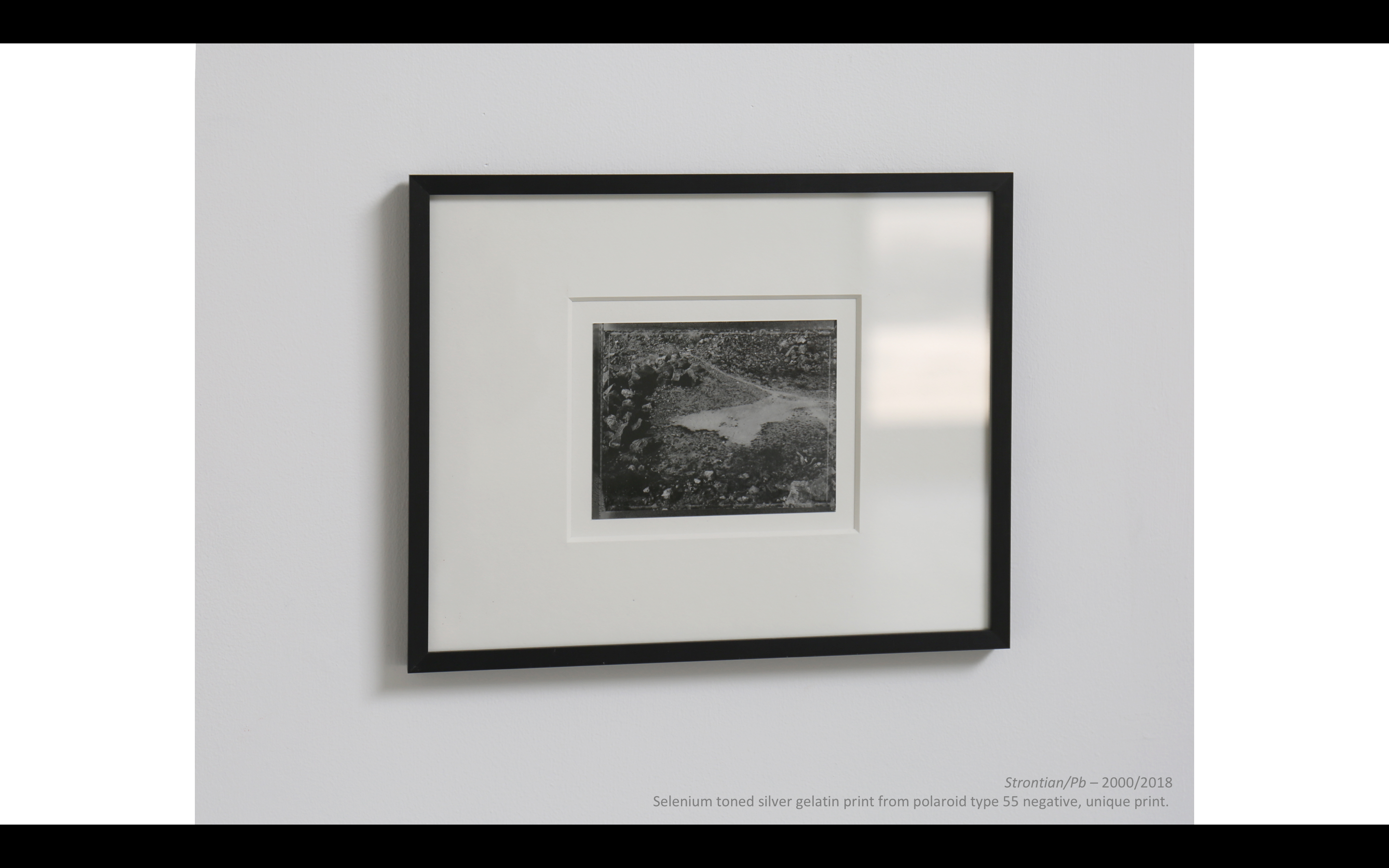
A body of work made, and shown initially in a solo exhibition in the studio Pavilion at the House for An Art Lover, Glasgow, May-July 2018 (https://studiopavilion.co.uk/below-the-rocks-plunged-into-darkness/) dealt with aspects of deep time and geology and contrasted with personal narratives of place and real time. The central work in this series is a multi part work titled "collection", with associated works "Schaft/Chas" (colour photograph), "Sgurr" (silicon carbide readymade), "Strontian/Pb" (silver gelatin print), and "Beachy Head/CaCO3" (silver gelatin print).
"Collection", and "Schaft/Chas" (the primary works) were subsequently exhibited at 'Practicing Landscape: Land, Histories & Transformation' which comprised an Exhibition of practice-led research (to be complemented by a Symposium) held at the Lighthouse, Glasgow (25 Jan-22 March 2020). http://radar.gsa.ac.uk/7261/ For this exhibition, I was a member of and contributor to the Curatorial Working Group.
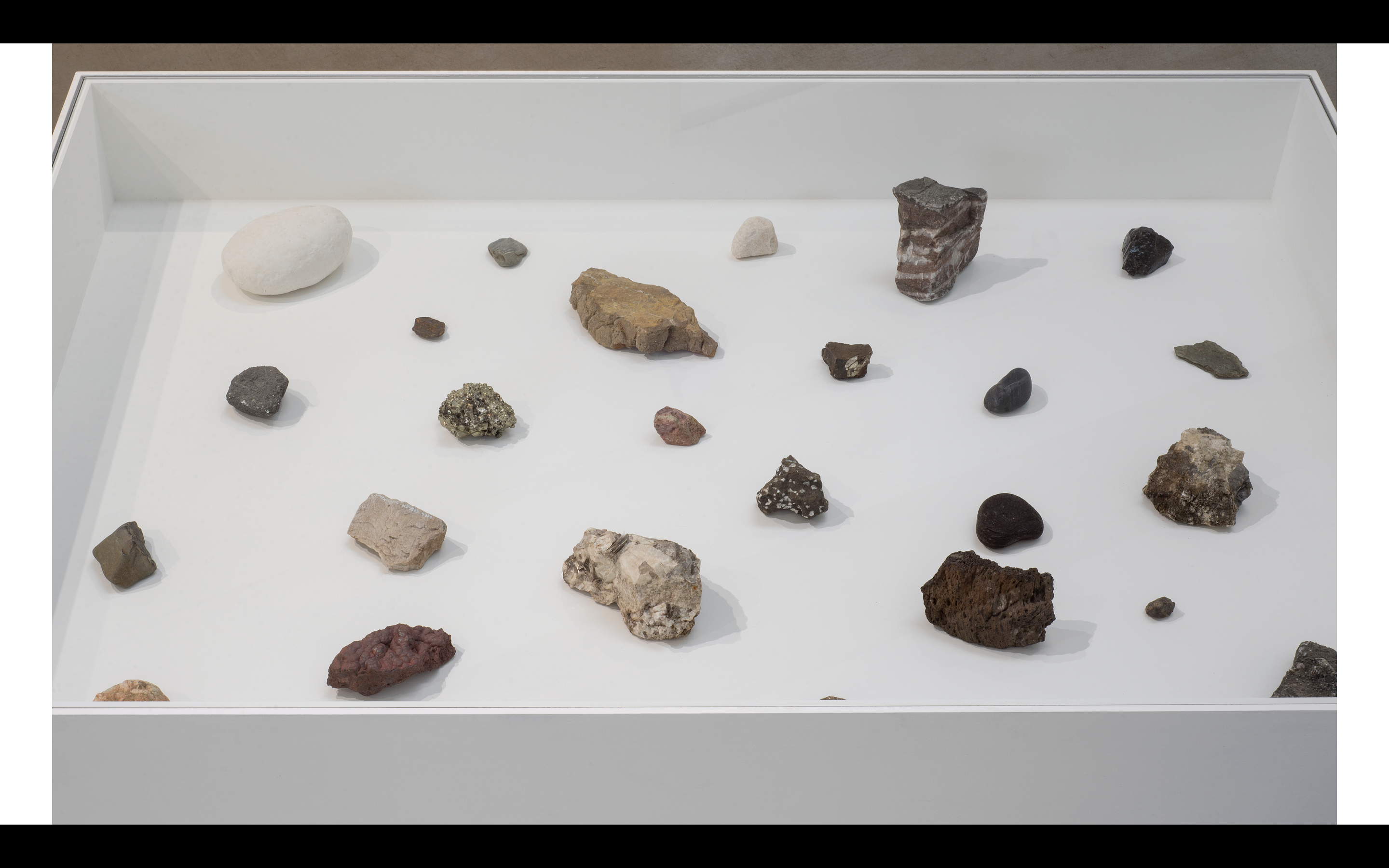
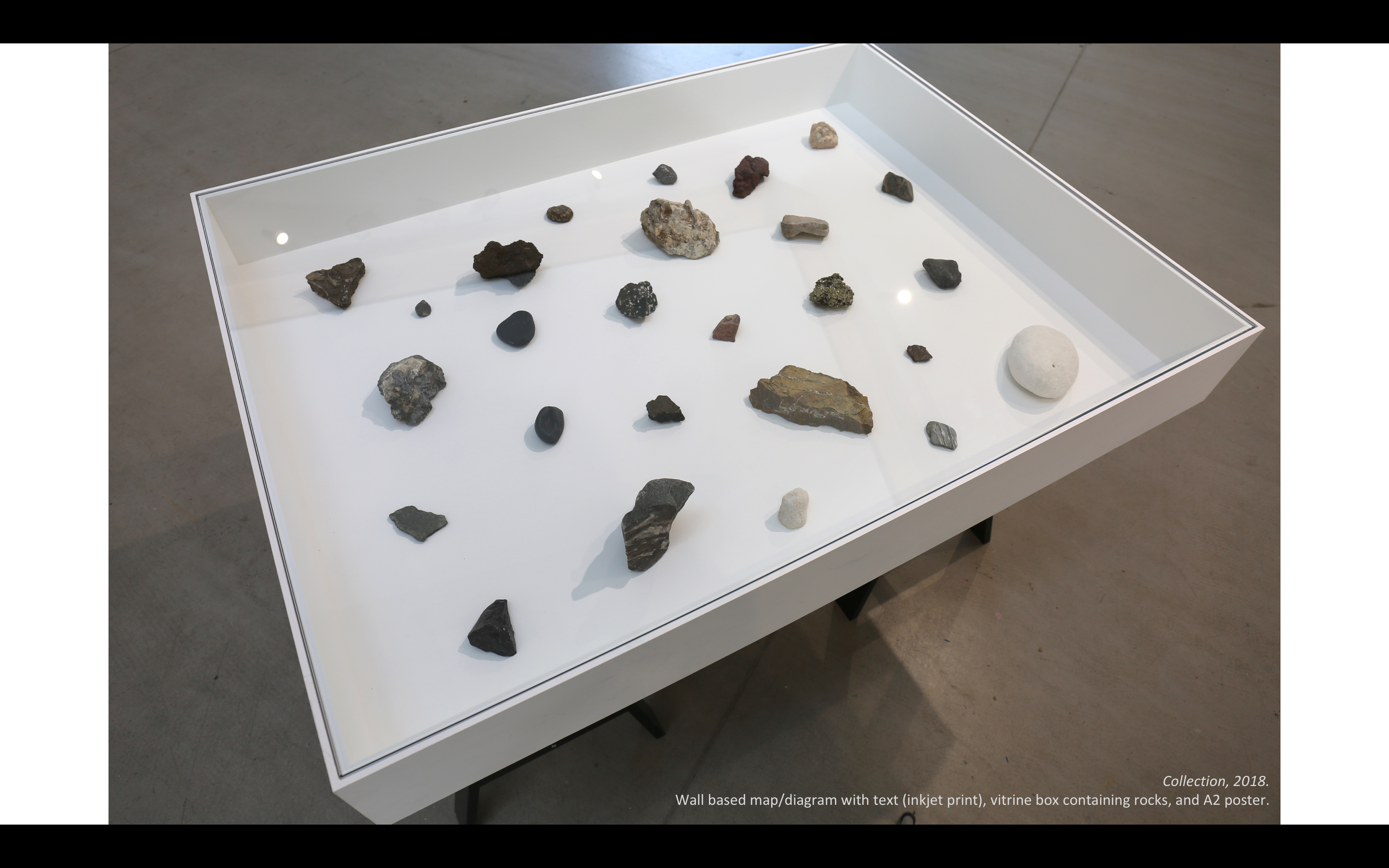
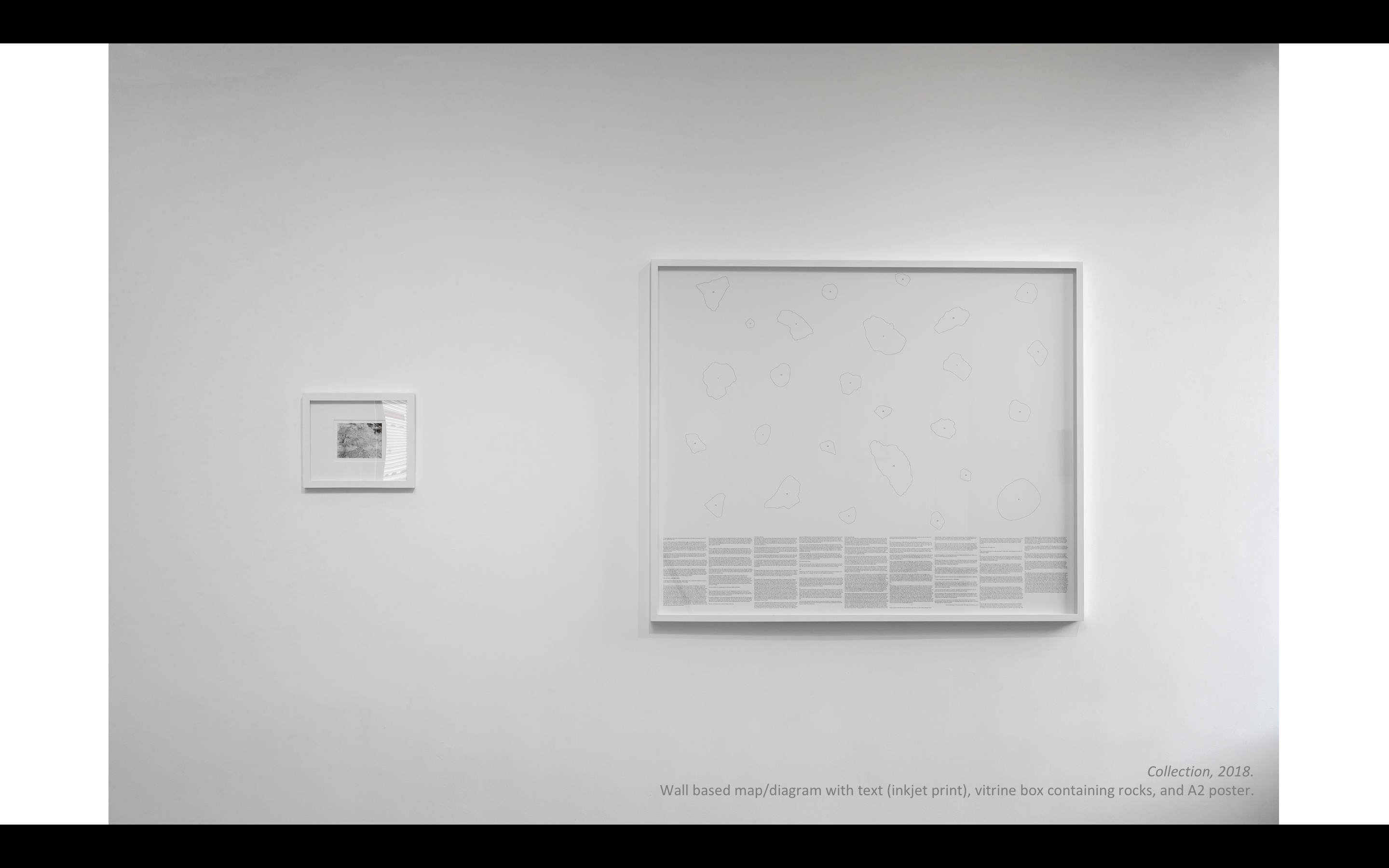
"Collection" is a work that displays a series of rocks found in various locations within a museum case/vitrine. Shown alongside, a corresponding framed print/map in the form of a computer generated line drawing of the contents of the display case, with texts that elaborate upon the "narratives" of each stone, gives context to the materials displayed in the vitrine. The vitrine and the text are separated so that the objects are given their own autonomy from the text.
The stones appear, on the whole, to be quite ordinary upon first examination, but each holds a story of some degree of significance. The stones range from pieces of galena found in leadmines in Scotland where the radioactive isotope strontium was first discovered; a piece of iron pyrites bought from a market stall in Amsterdam; a remarkably heavy lump of in ore picked up from one of the world’s deepest iron ore mines in the north of Sweden; a tiny fragment of a meteorite that landed in China in the 18th century; rocks picked up on the mountain in Scotland (Schiehallion) where experiments to determine the relative mass of the earth were first conducted (and which resulted in the invention of contour lines); and the first rock given to me by my young son, to name a few.
The narratives attached to the 26 rocks vary from subjective, personal recollections of my experience of the place and people who were with me; some are more historically focused, and some scientific, with the piece weaving different types of narratives together where there are no hierarches proffered between the different types of knowledge.
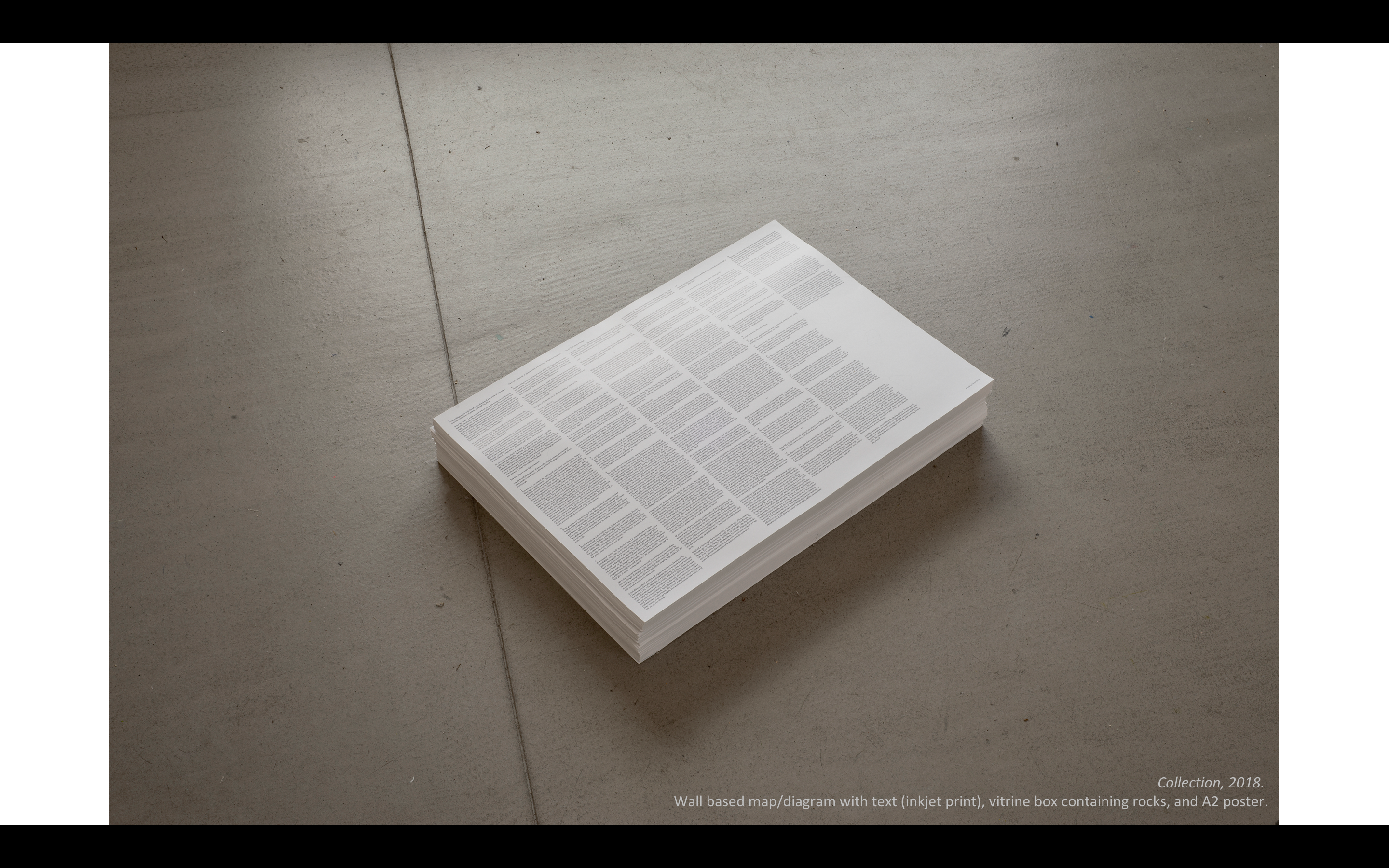
There is also a sculptural stack of A2 posters with the map and text for the viewer to take away.