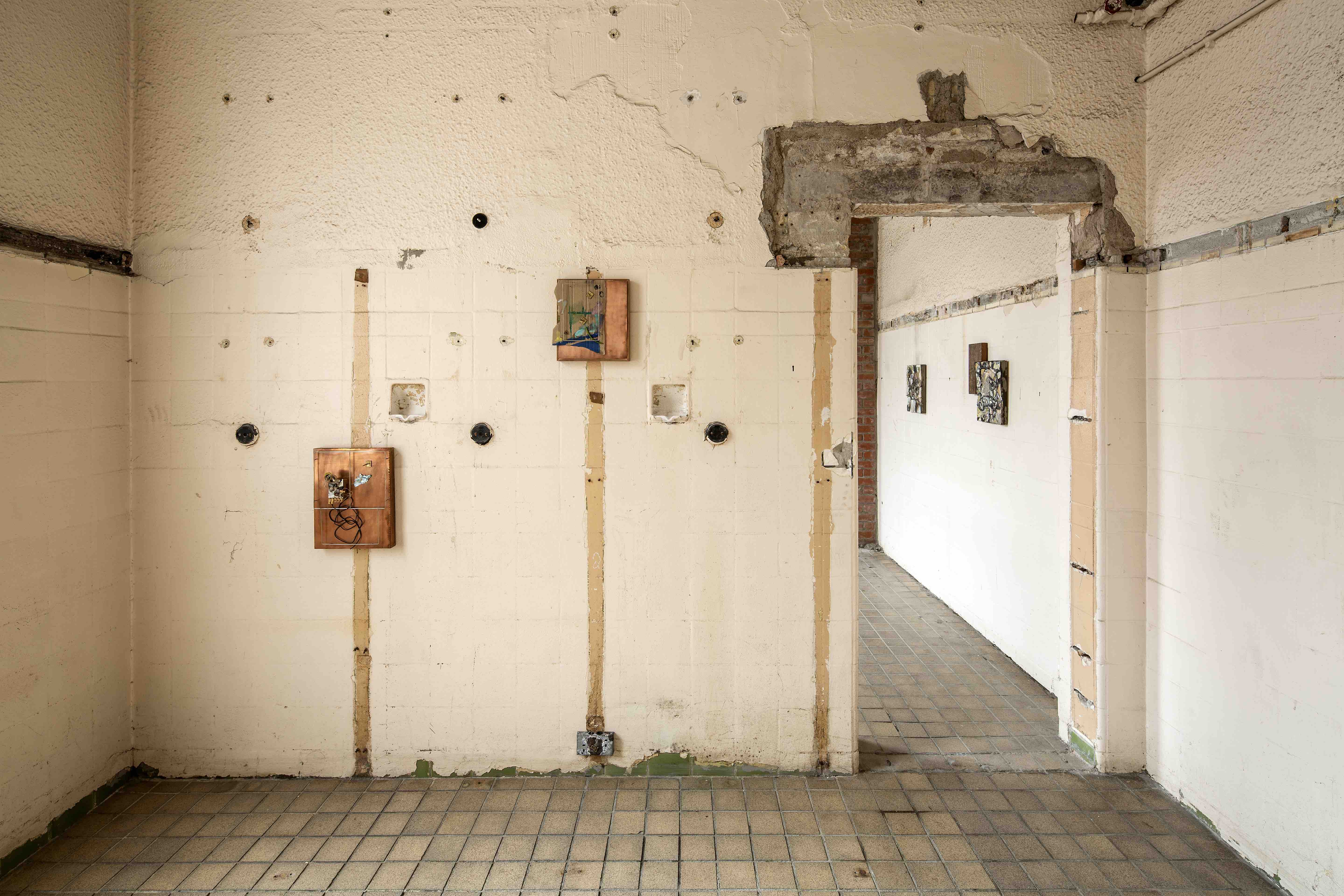
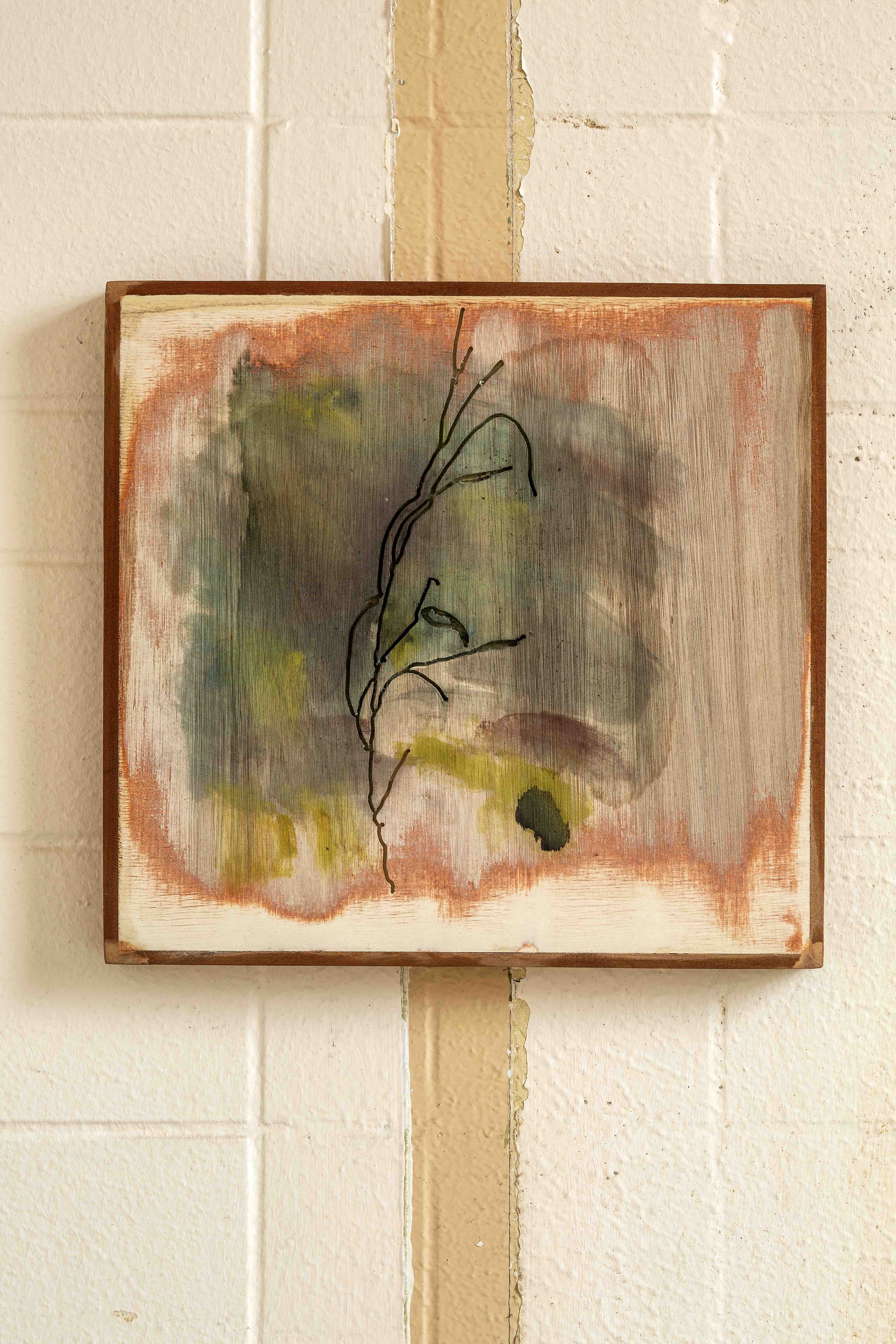
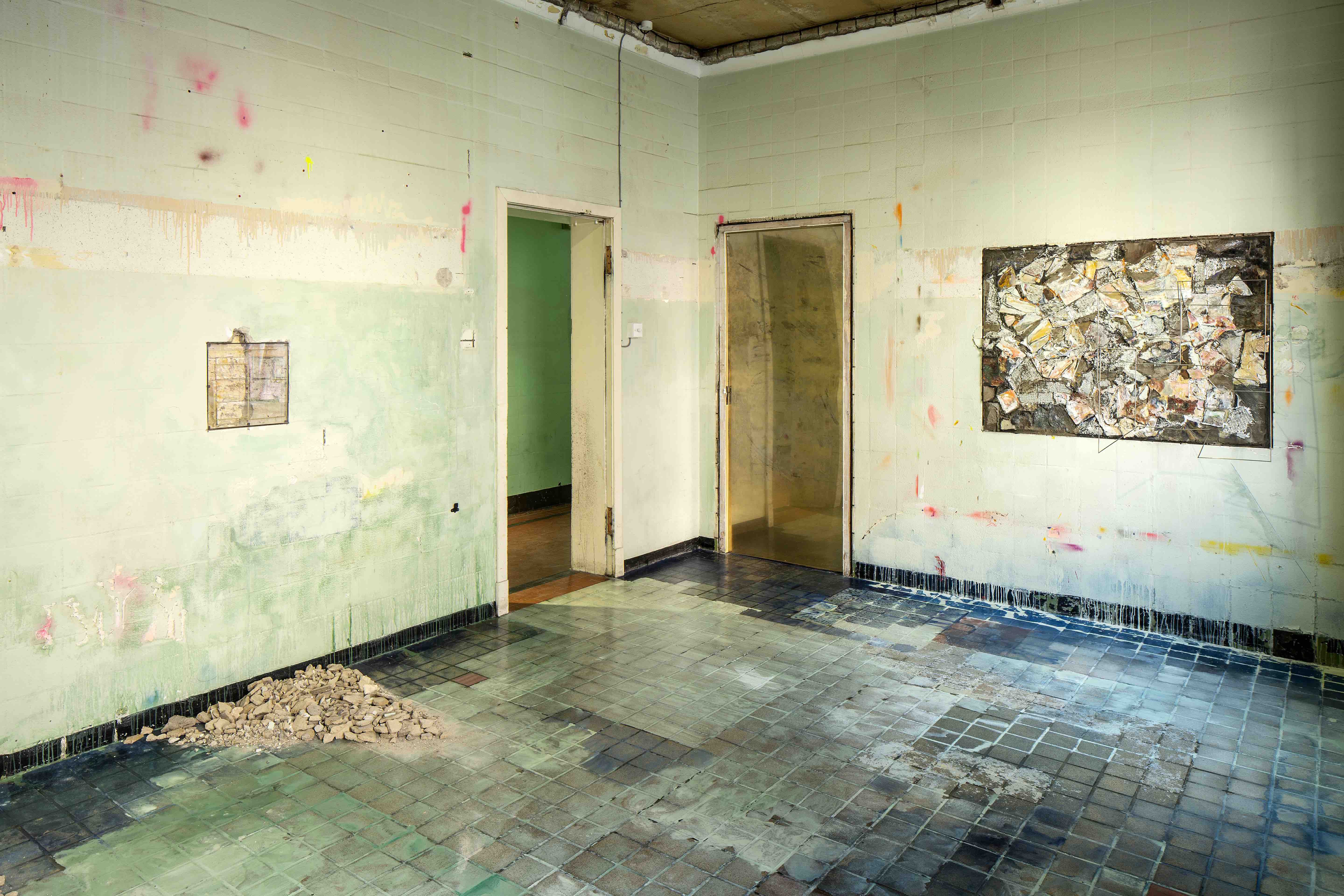
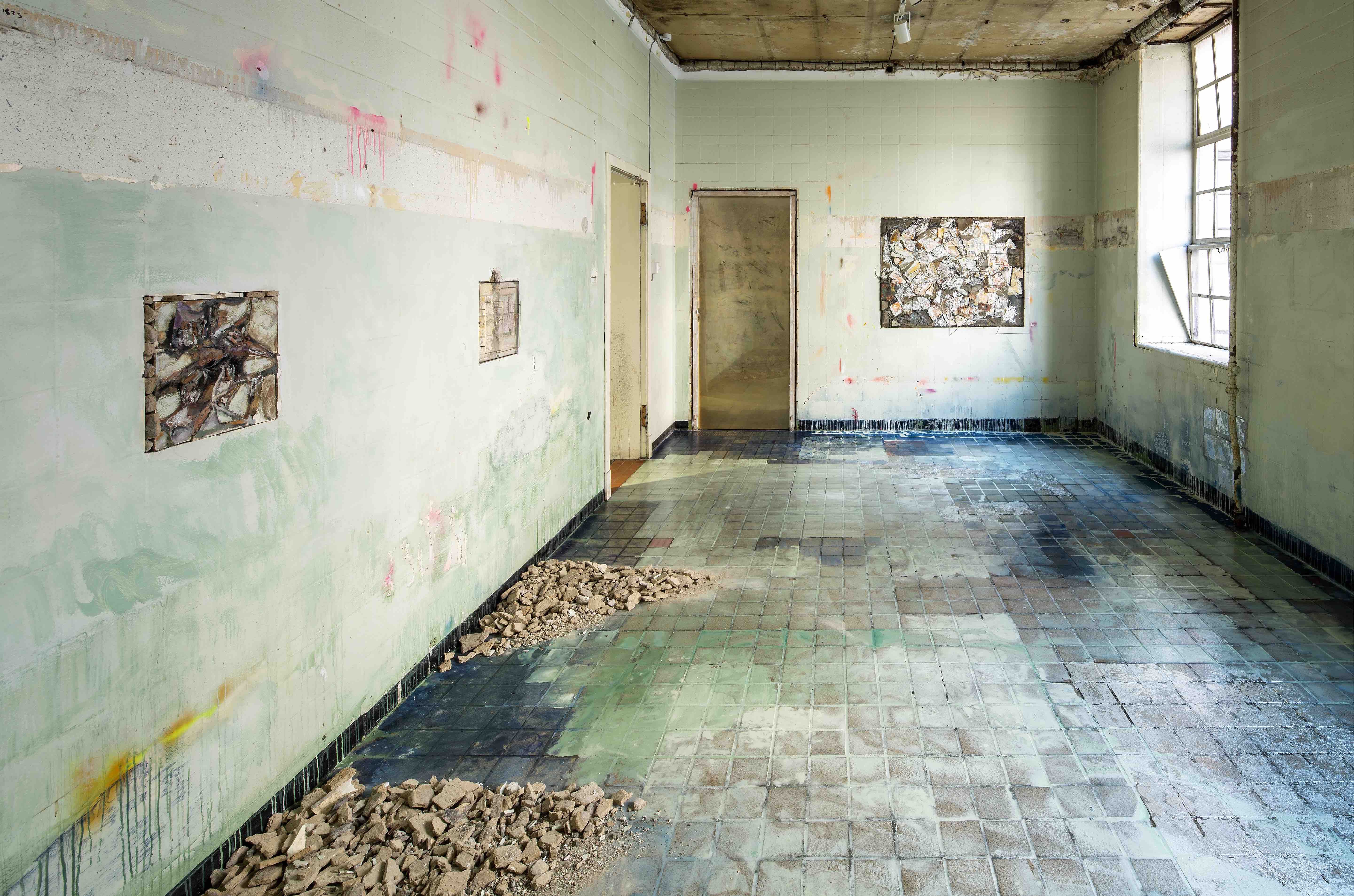
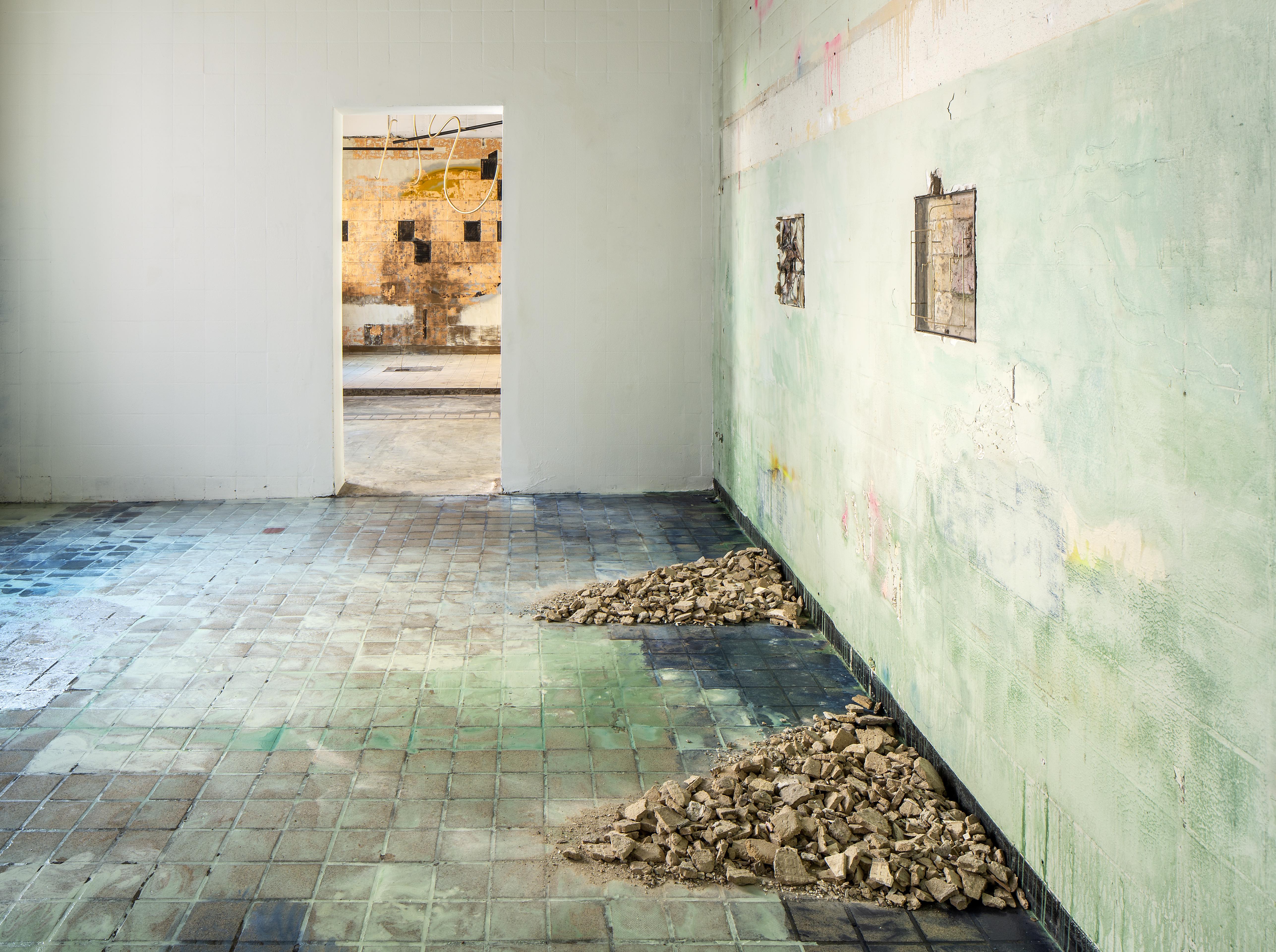
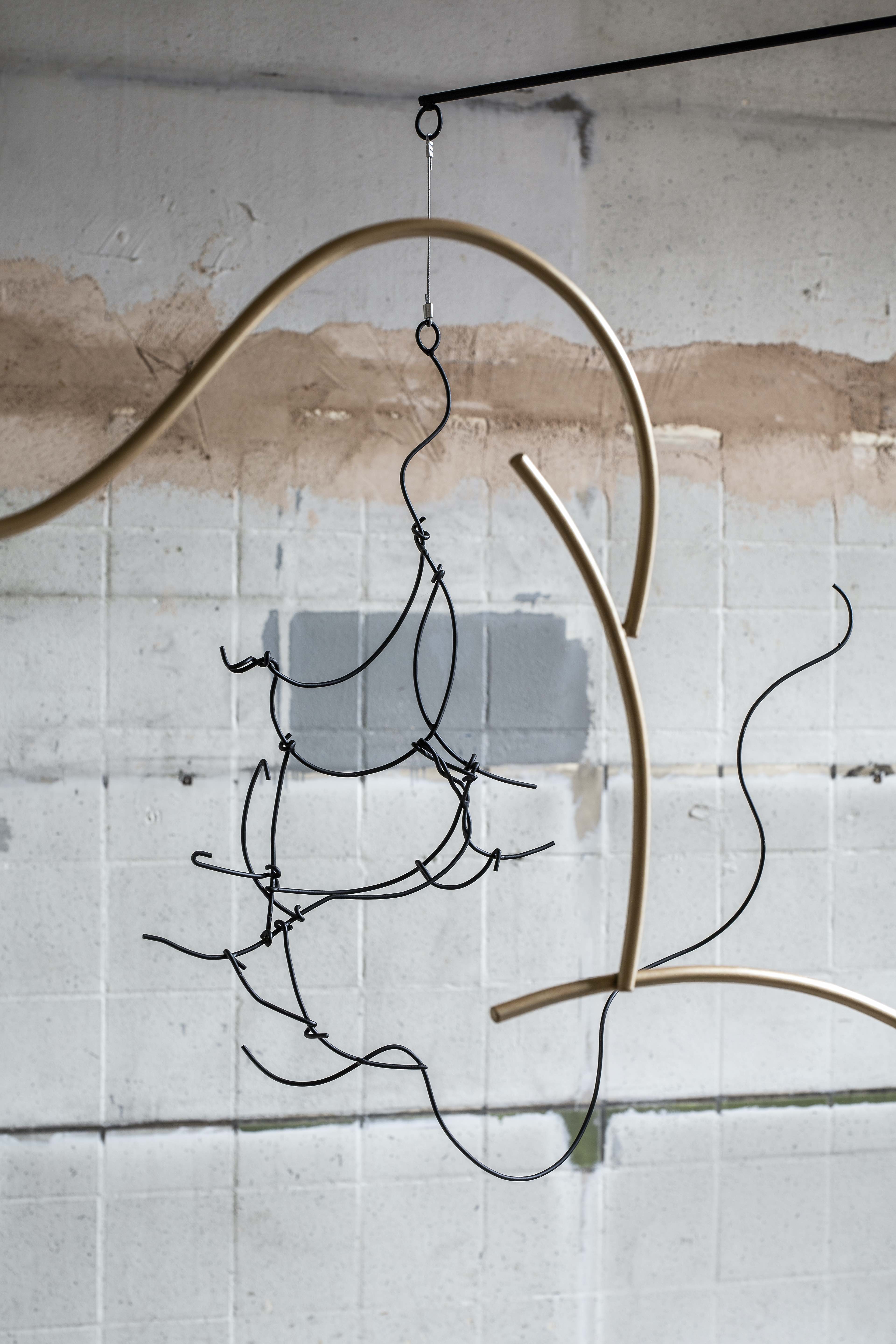
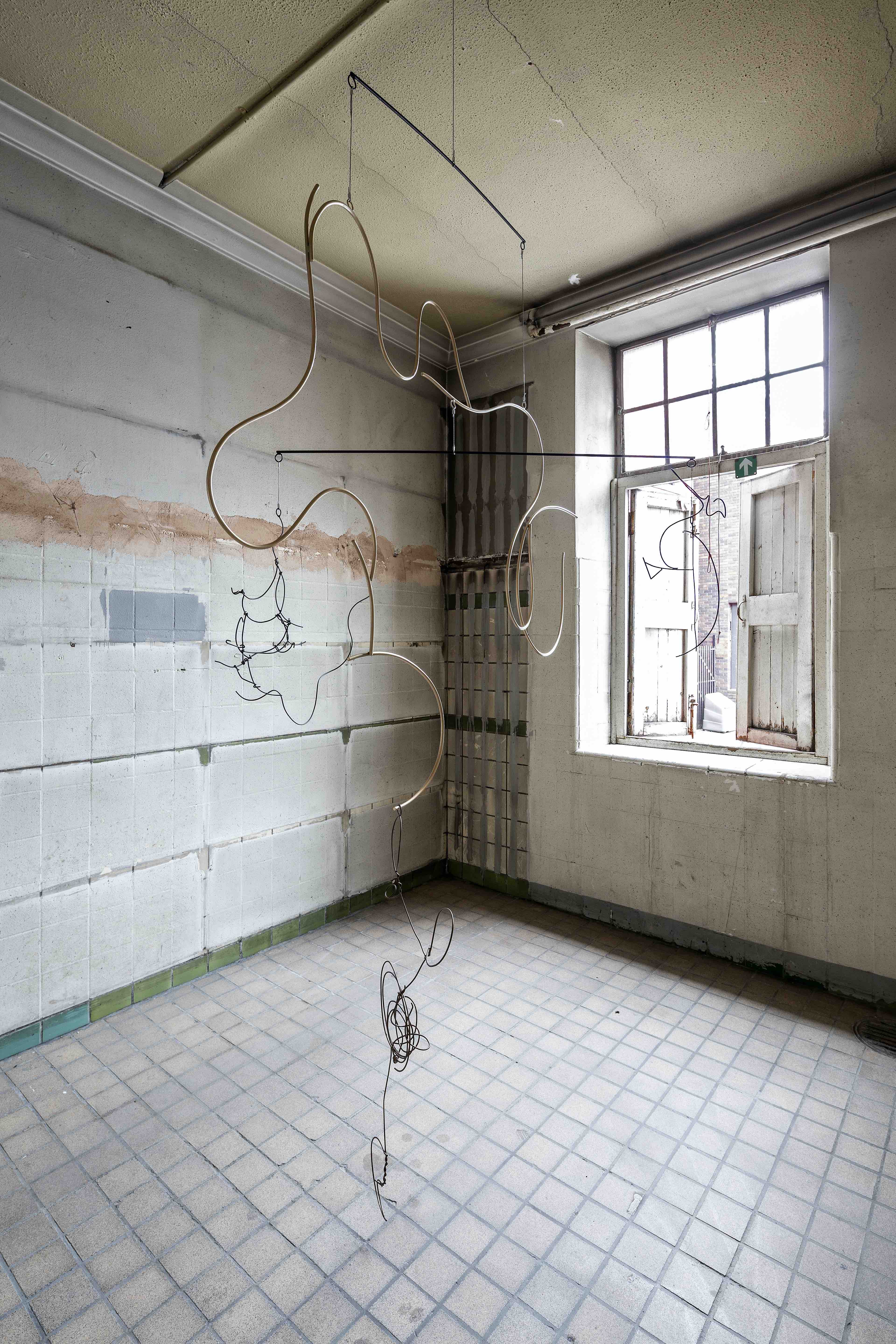
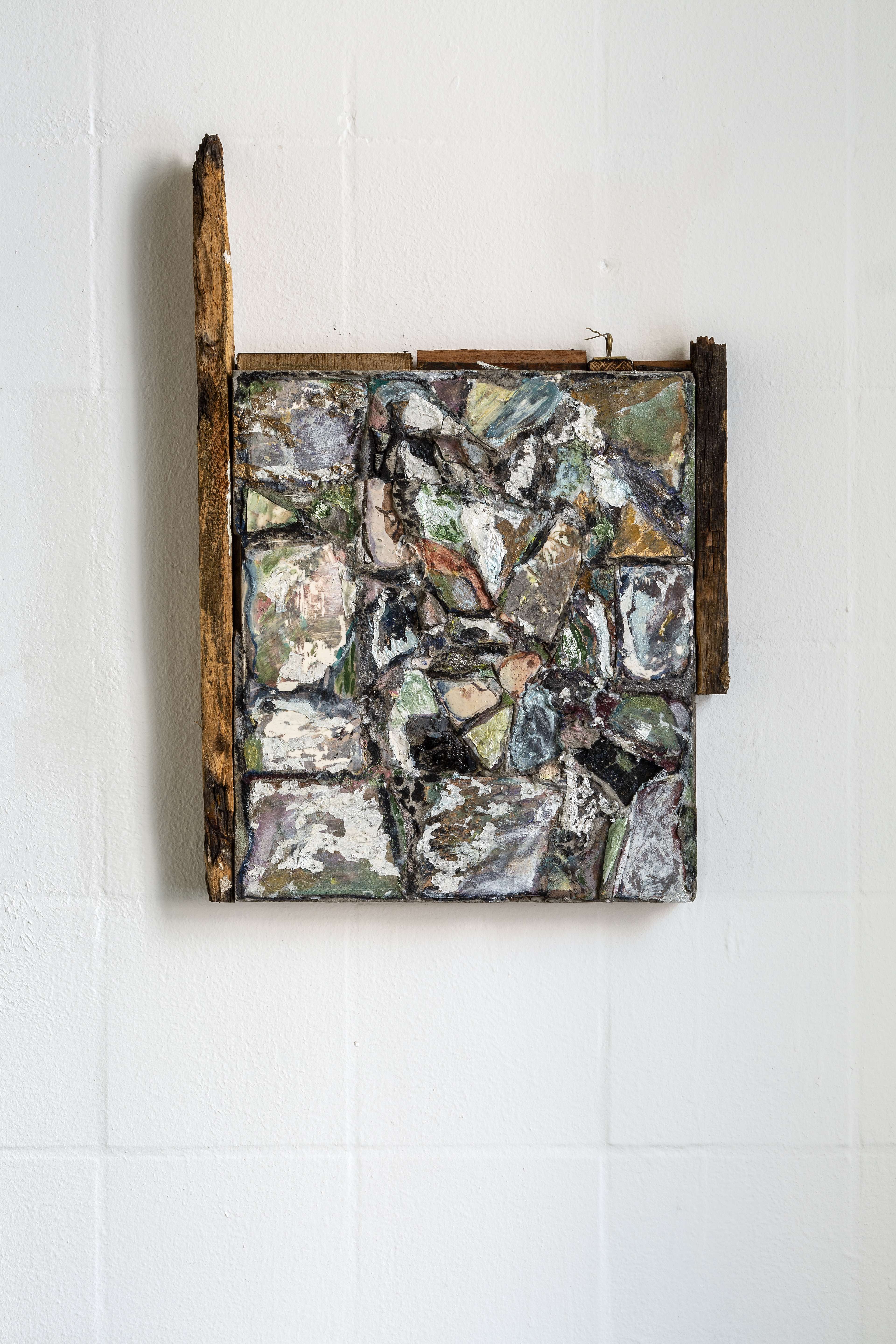
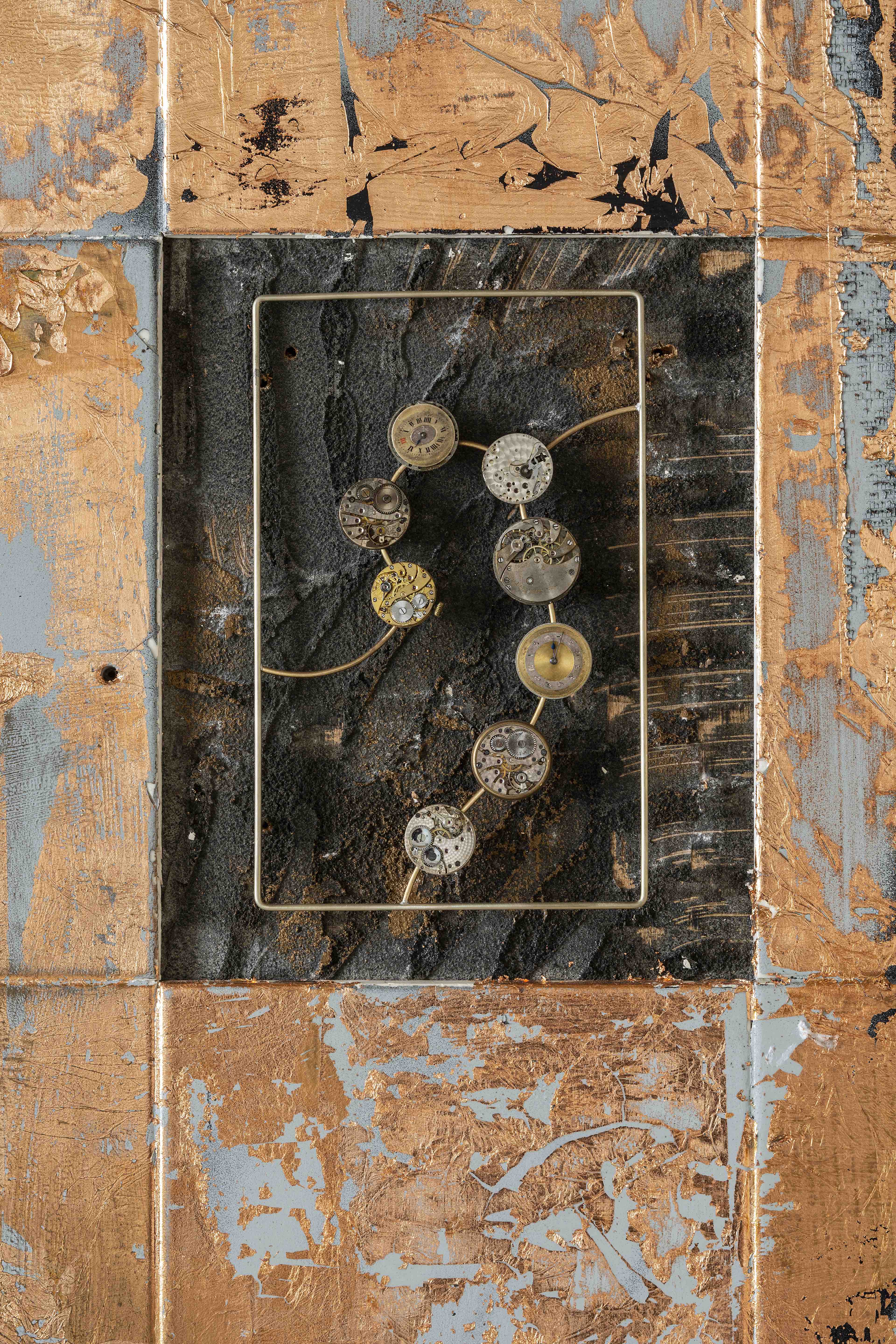
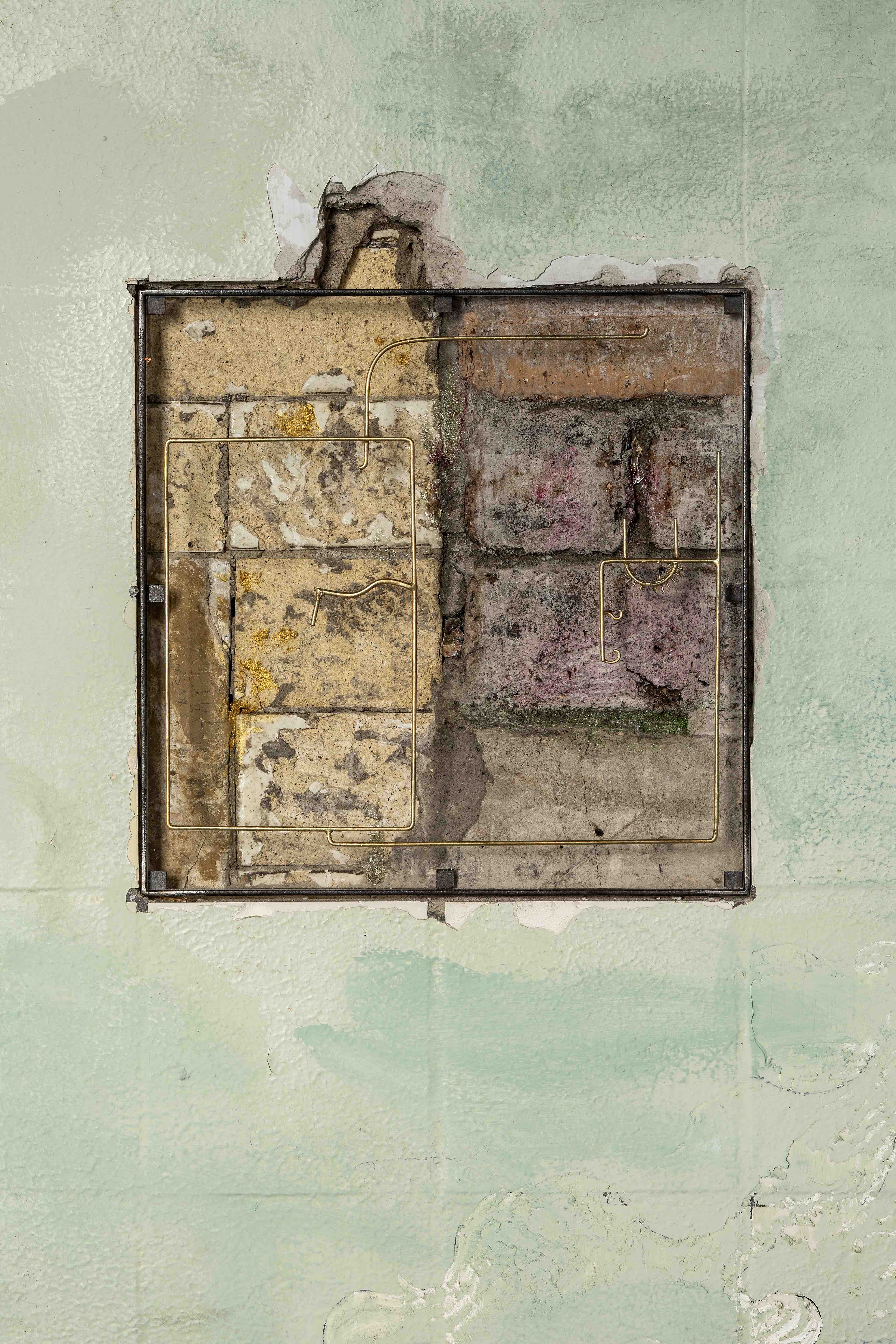
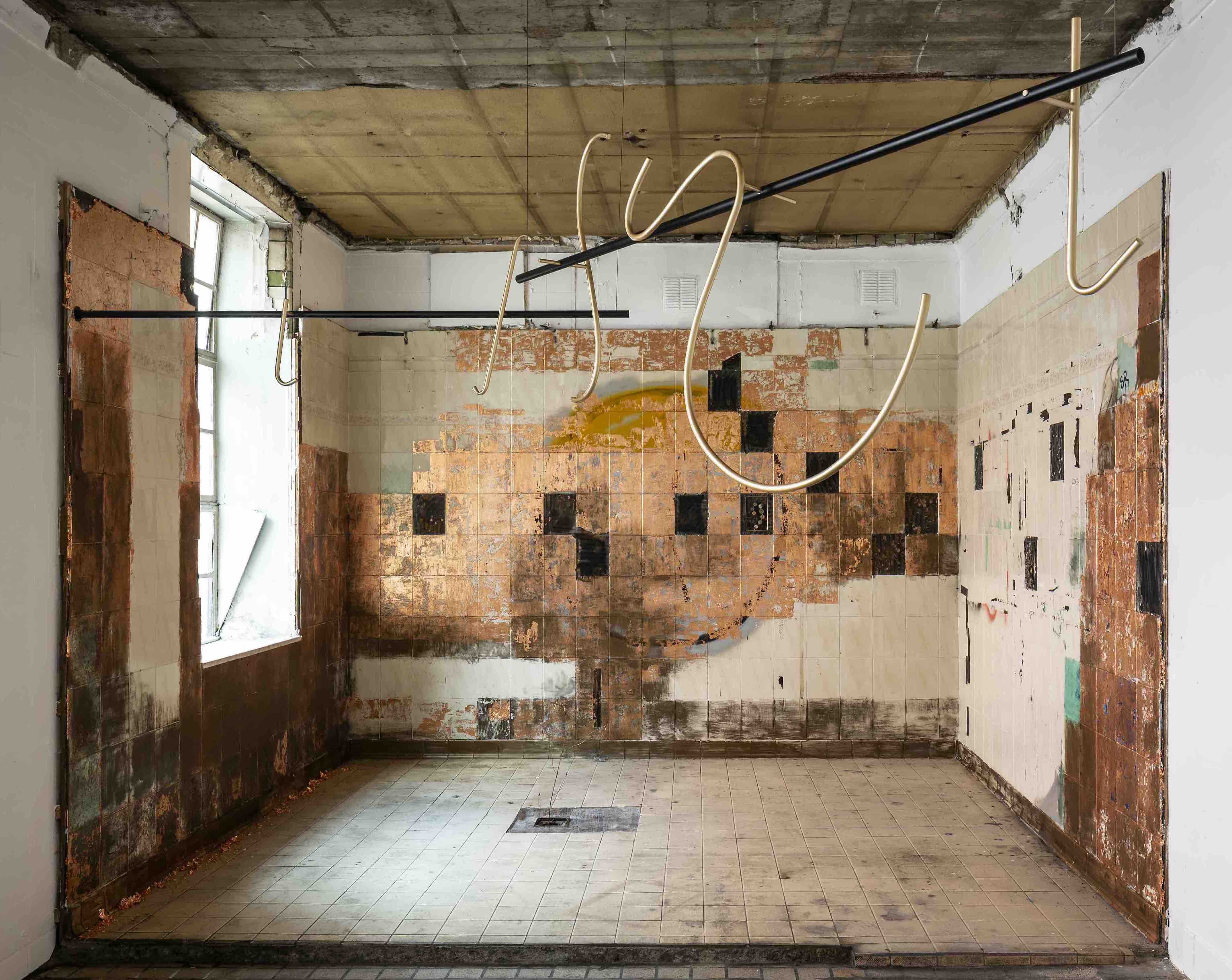
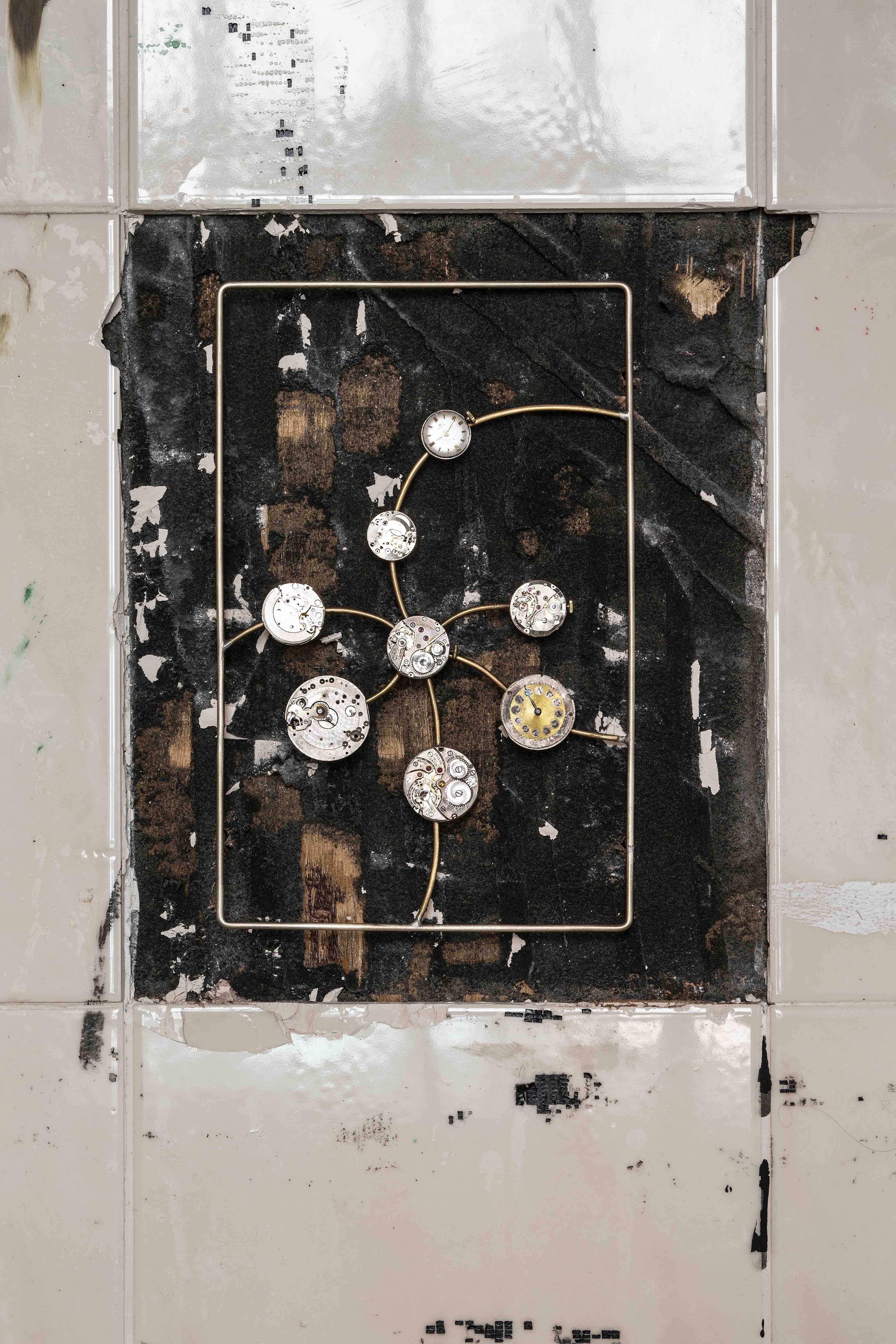
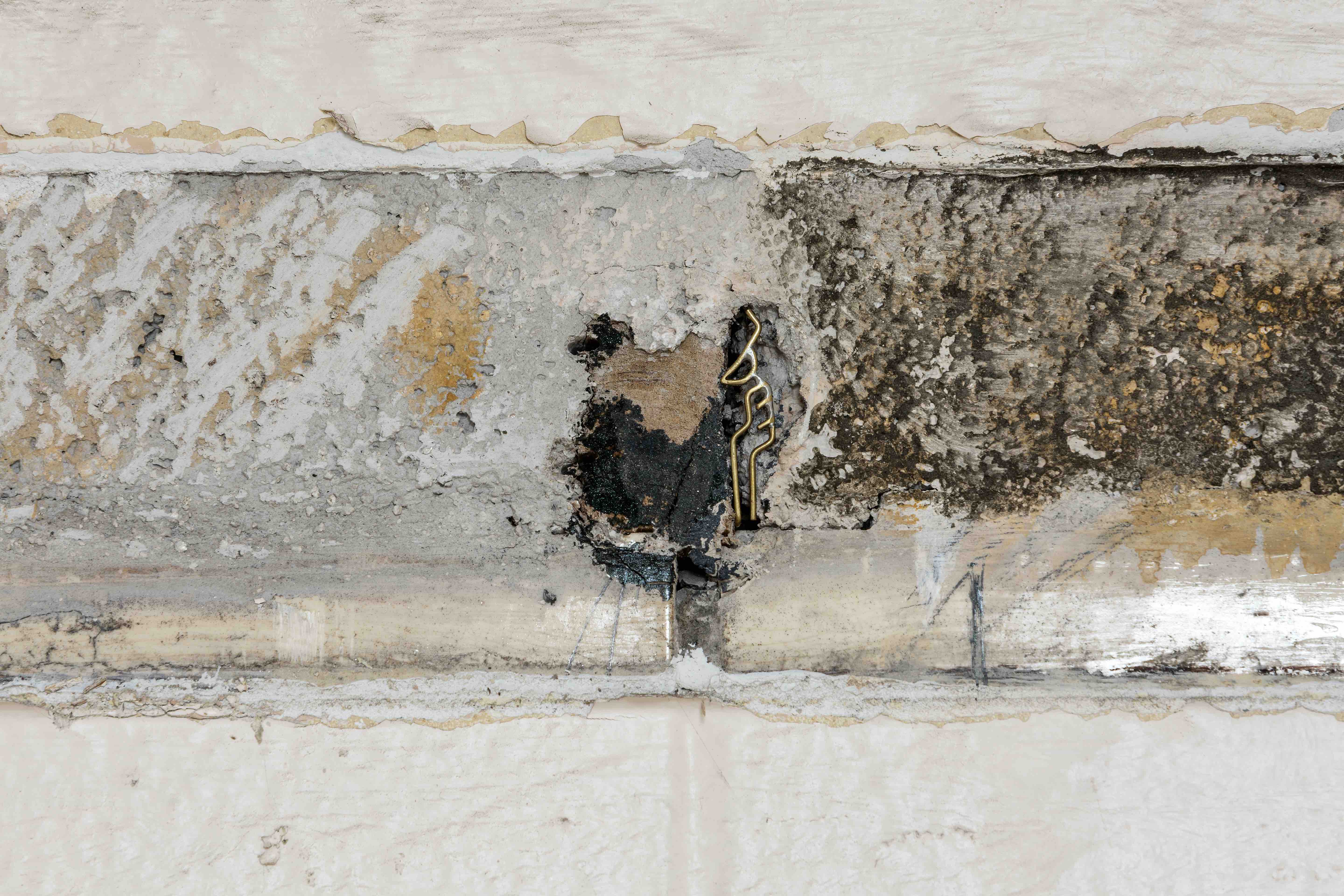
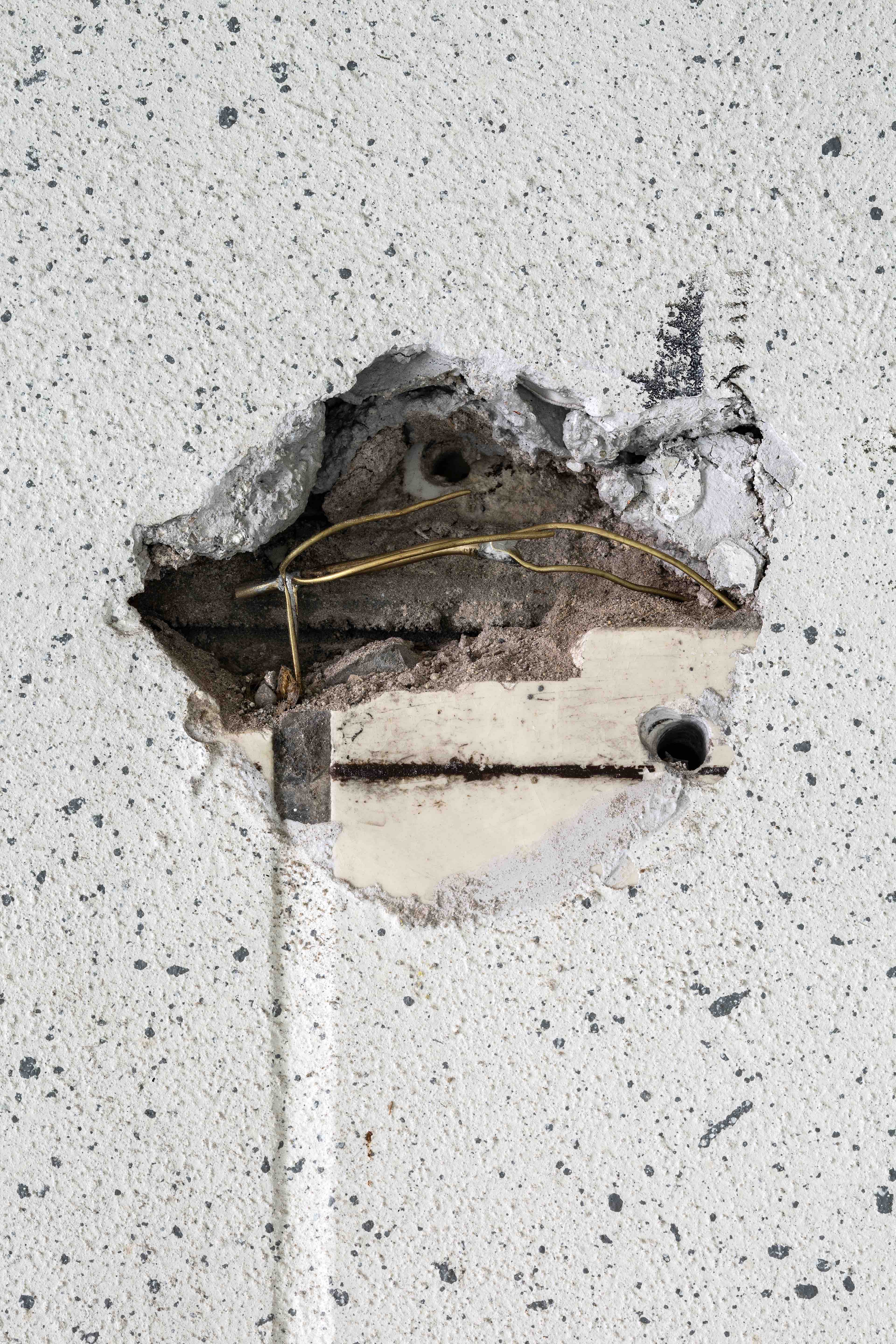
In contrast to the clean lines of a traditional art gallery, Barker was invited to engage with derelict environments, filled with the detritus of previous occupancy. The invitation to work in the in-between space at Oxford house allowed the artist to make works that embed themselves in, and emerge from, the fabric of the building itself. In so doing she converts the interiors of the former police station, designed by Alexander Beith McDonald’s (1847-1915), into a kind of found artwork.
The location was previously a shower and changing area servicing a police training academy. Preparation for the exhibition involved an exploratory process of working with and against the confines of the space, using external materials where needed to prize creative potential from existing features of the walls, doorways and floors.
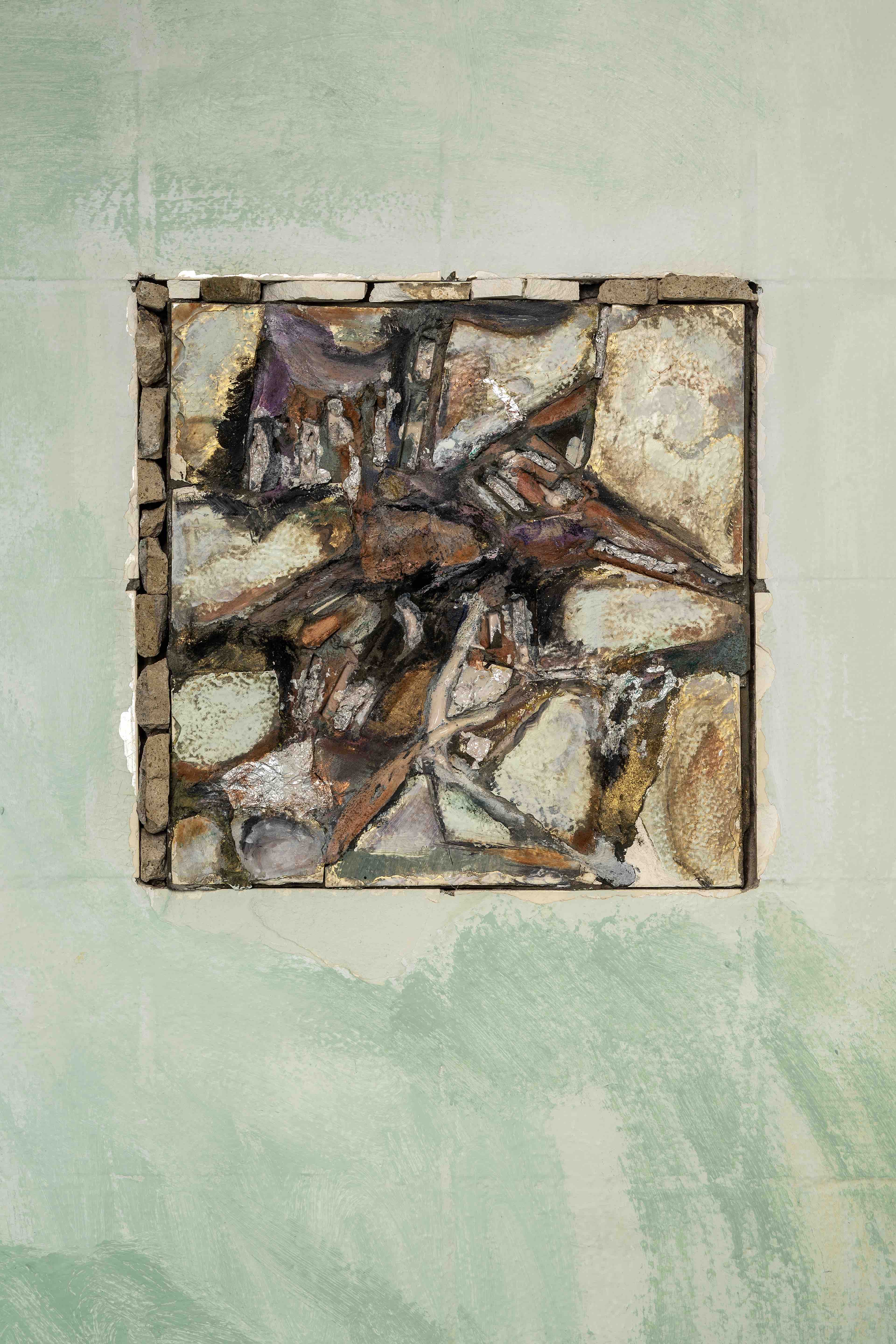
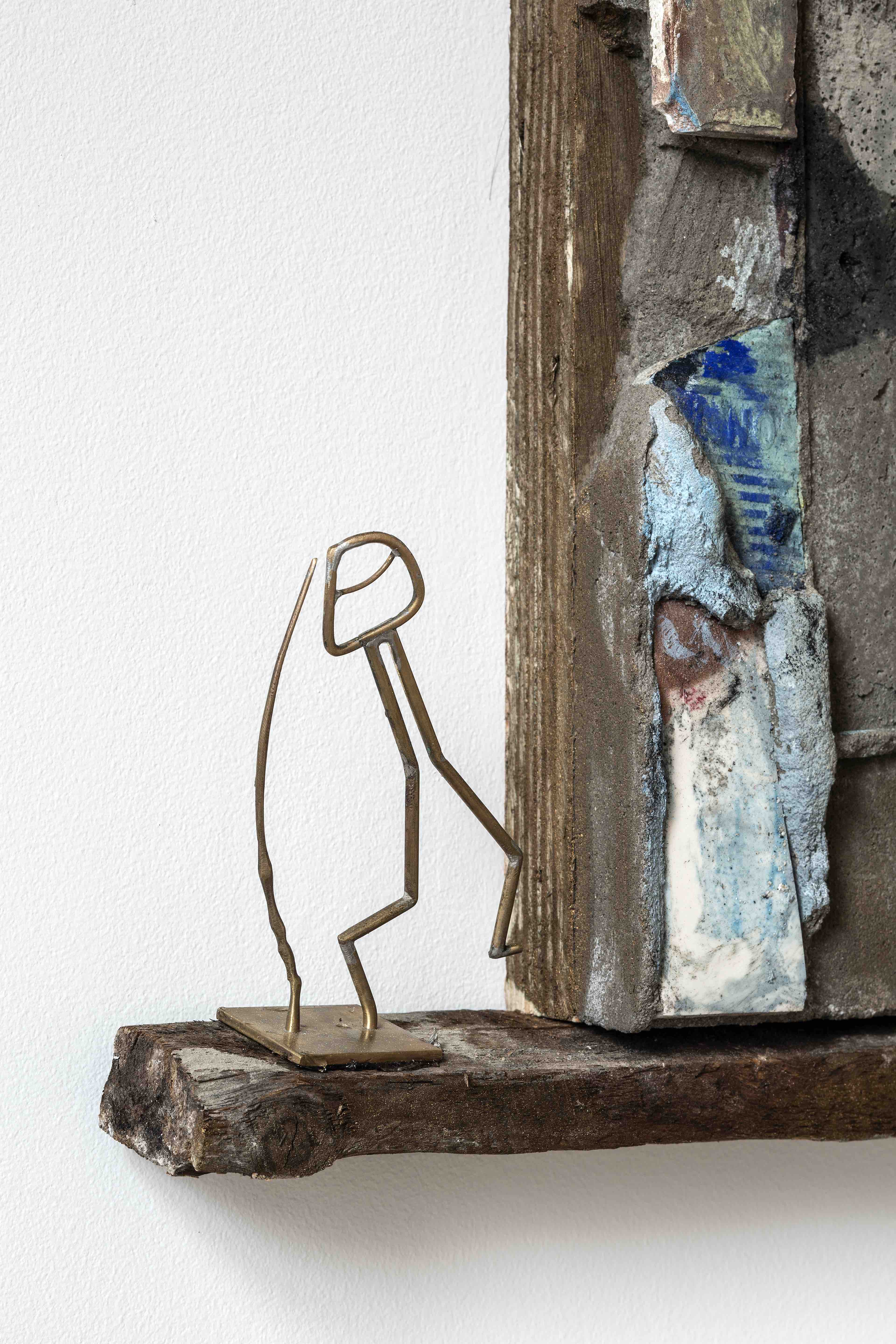
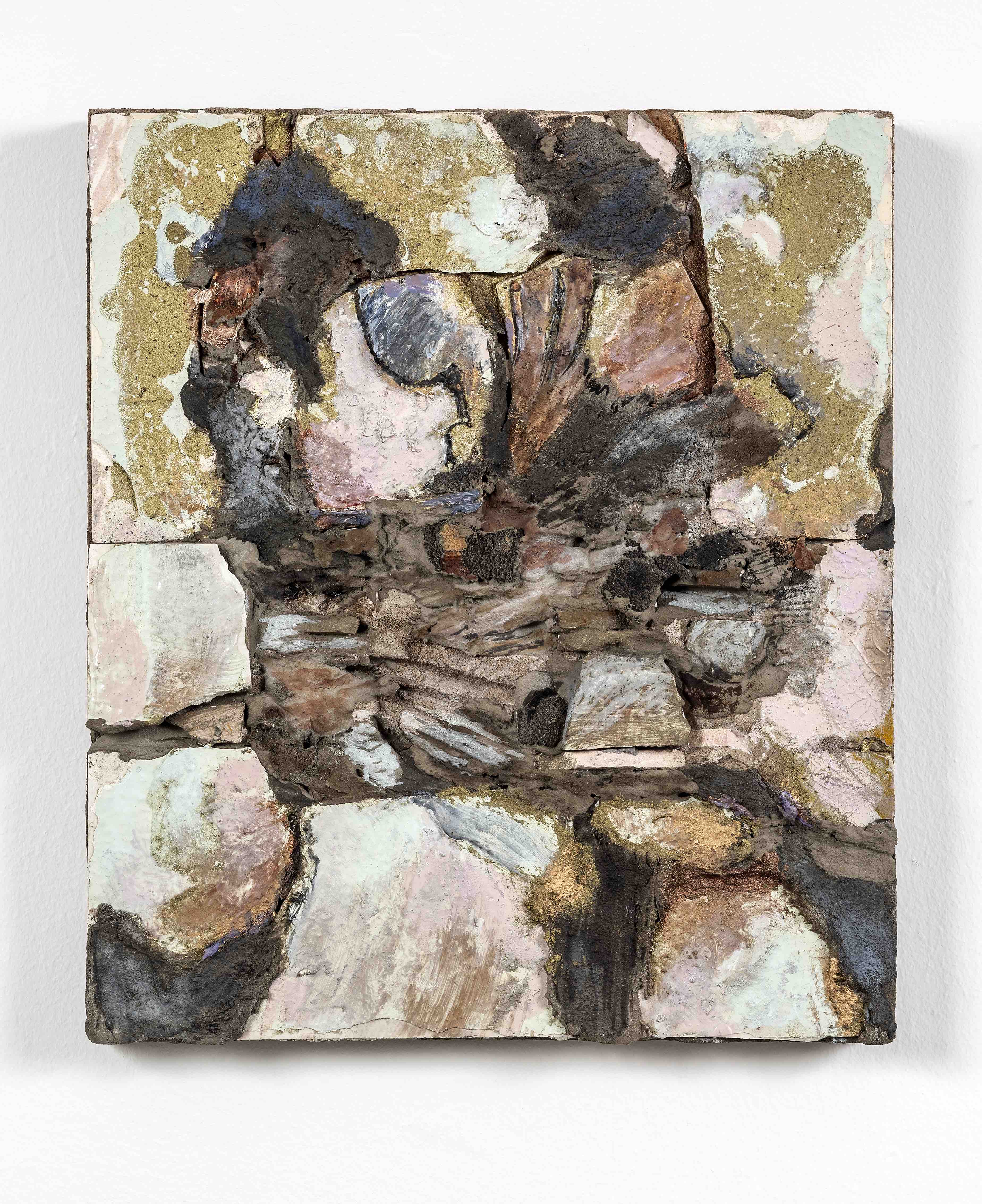
The site-specific nature of the exhibition has allowed Barker to develop a new set of compositional approaches, with the idea of recessed space running throughout. Several works, for example; ‘Oxford House’, take as their basis, sets of tiles dug out of walls by the artist. Combined with rubble, paint, foil, and other materials, bound with poured mortar inside a frame, these jewel-like slabs or tableaus read as paintings, spatial drawings, bas-reliefs, or cross-sections of miniature excavations. Some have been inserted back into the gaps created by their initial removal. These pieces establish suggestive relationships, with the grids made by the ceramic tiles, within an individual square or rectangle and the proportions of the room as a whole.
Watch Movements converts Oxford House into a single, multifaceted artwork. Its constituent materials and architectural features are customised and repurposed to become elements of an inhabitable sculpture, site-specific installation, or shadow-world of imagination.
Research Question:
What is at the threshold of creative intervention and architectural decay?
How can an artwork speak to and reveal the former lives of a building?
Methods:
An exploratory process of working within a dilapidated space and the materials left abandoned there. Bringing in new material interventions in conversation with the building, on surfaces and in recesses.
Thinking of the whole gallery (corridor with 4 spaces) as an artwork, experimenting with surfaces, heat-gunning off layers of paint, chipping away tiles, cleaning parts, leaving others, digging into the layers of the walls surface, themselves dating the building and revealing interior design from different eras.
Context of Contribution:
The context of this research sits at the edges of contemporary painting and sculpture and the borders between.
The exhibition is site-specific with work made for the site and in-situ at Oxford House, Glasgow - a space before its renovation - part of a former police station and training centre in 1895.