Ways of Seeing - Women and Photography in Scotland
Studies in Photography, in collaboration with the National Trust for Scotland and Glasgow Women’s Library have published the proceedings of the Ways of Seeing - Women and Photography in Scotland Symposium held online in October 2020
This publication marks an important step in telling the story of women engaged in the art of photography. It does justice to that long history, while also interrogating the erasures and absences that feature in institutional memories of the subject, through a wide range of research and practice-based responses. It discusses the rich history of women and photography and considers the meaning of images from the past. Above all, the essays collected here bring to light an impressive variety of social practices that sit alongside photographic methods, negotiated by women in front of and behind the lens.
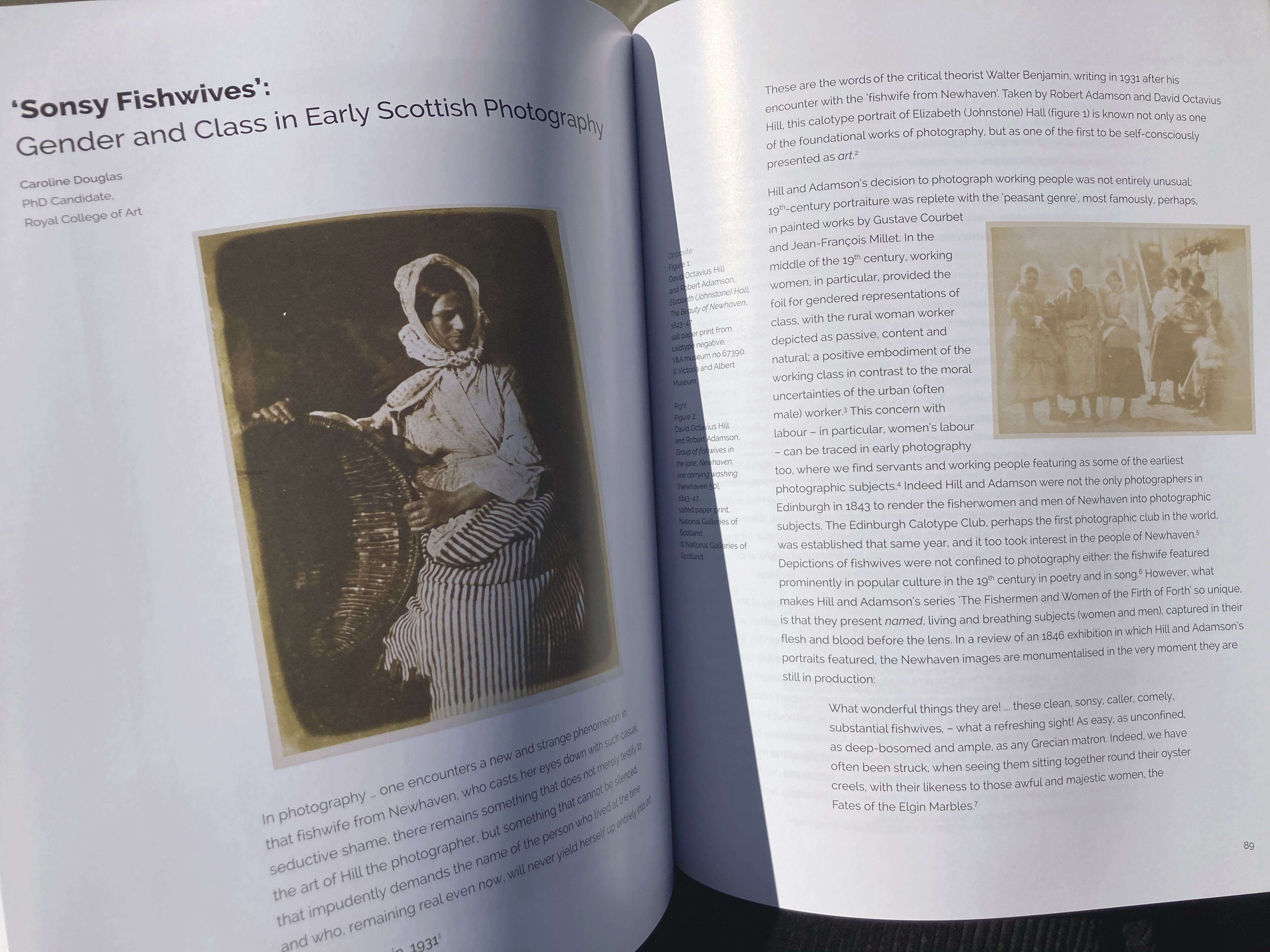
This article was based upon the paper ‘Sonsy Fishwives: Gender and Class in Scotland’s Earliest Photographic Portraits’ given at the Ways of Seeing - Women and Photography in Scotland Studies in Photography Symposium in the previous October (2020).
It explores the possibilities of recovering ‘unknown women’ in early photographic practice Scotland. It does so by taking as its starting point a forgotten outtake of the voiceless subject, Elizabeth Johnstone Hall - one of David Octavius Hill and Robert Adamson’s Newhaven ‘Fishwives’. The portrait depicts Johnstone Hall just moments before (or after) the ‘iconic’ shot that by which she is known. In this extraordinary version, however, she stares back, and disrupts a century of analysis of her ‘seductive shame’.
Using re-enactment and montage, the article interrogates Hall’s experience of being photographed and asks how our understanding of early photography might be enriched by examining the medium through the lens of the subject, in this case, working class, fisherwomen sitters.
In addition, Caroline Douglas explores the autobiographical dimensions of her research as a living decedent of the Newhaven fisherwomen, and reflects on the ethics of speaking for others. Included in the publication are calotypes and salt prints made by the artist.