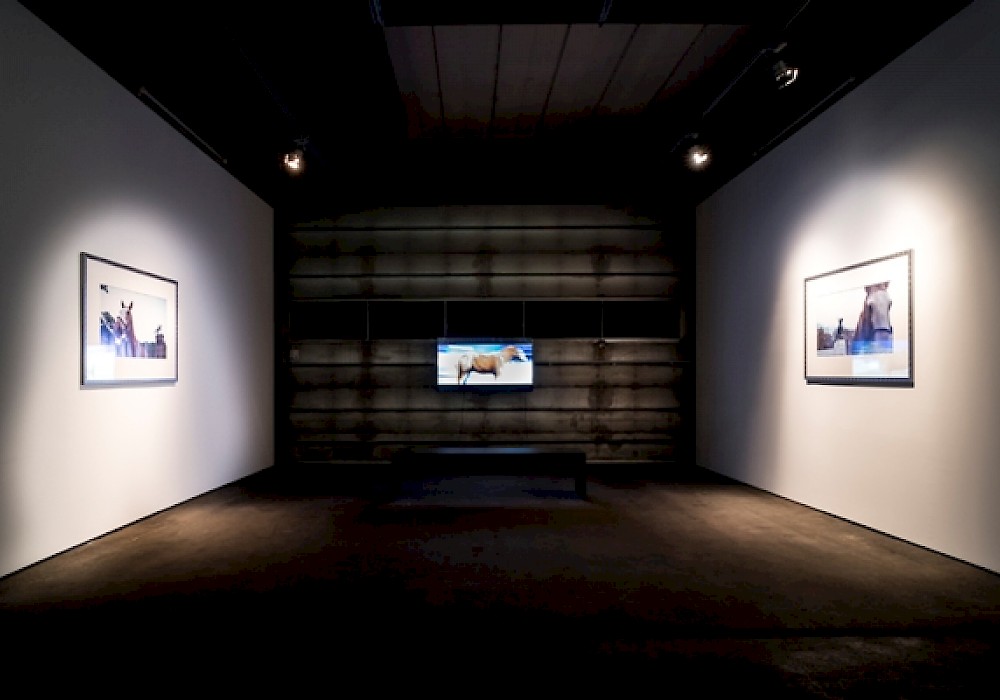
Criollo (Dir. Ross Birrell, 2017. Duration 6:59. HDV. Commissioned by documenta 14)
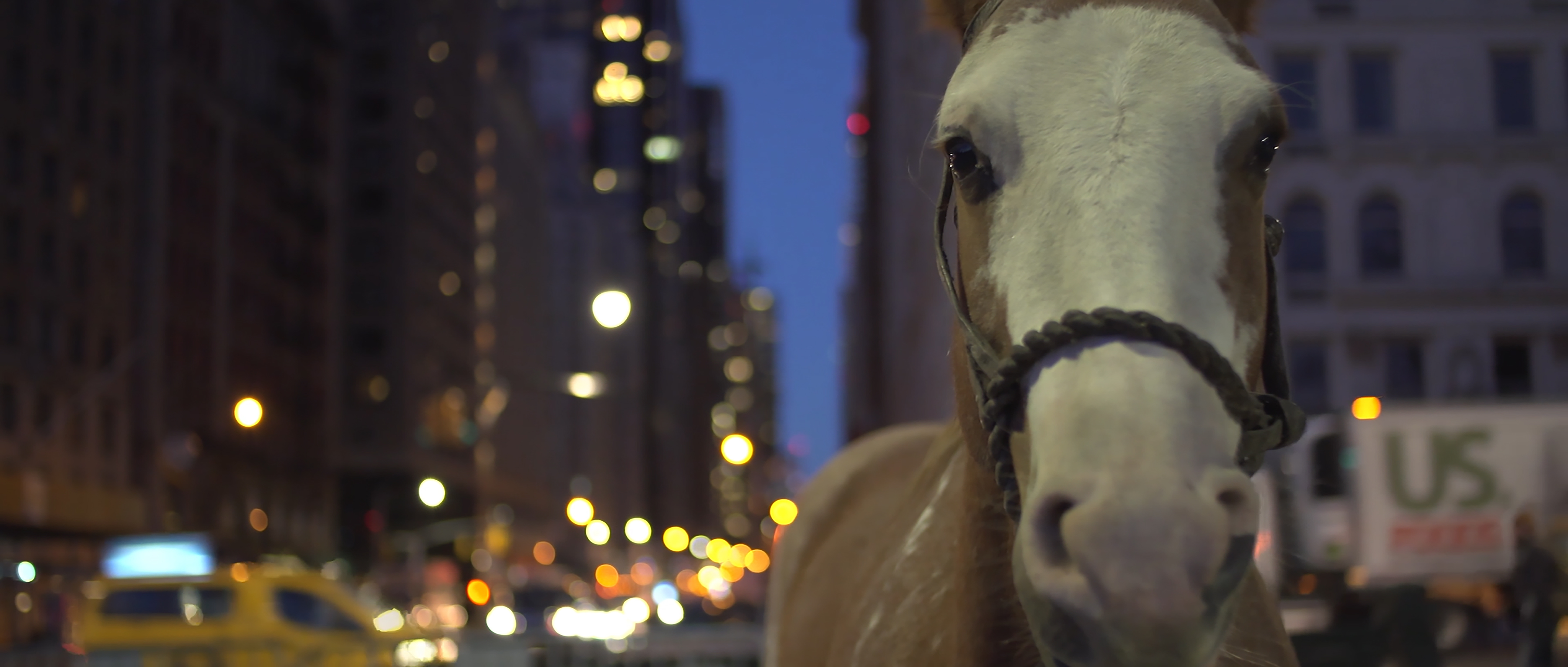
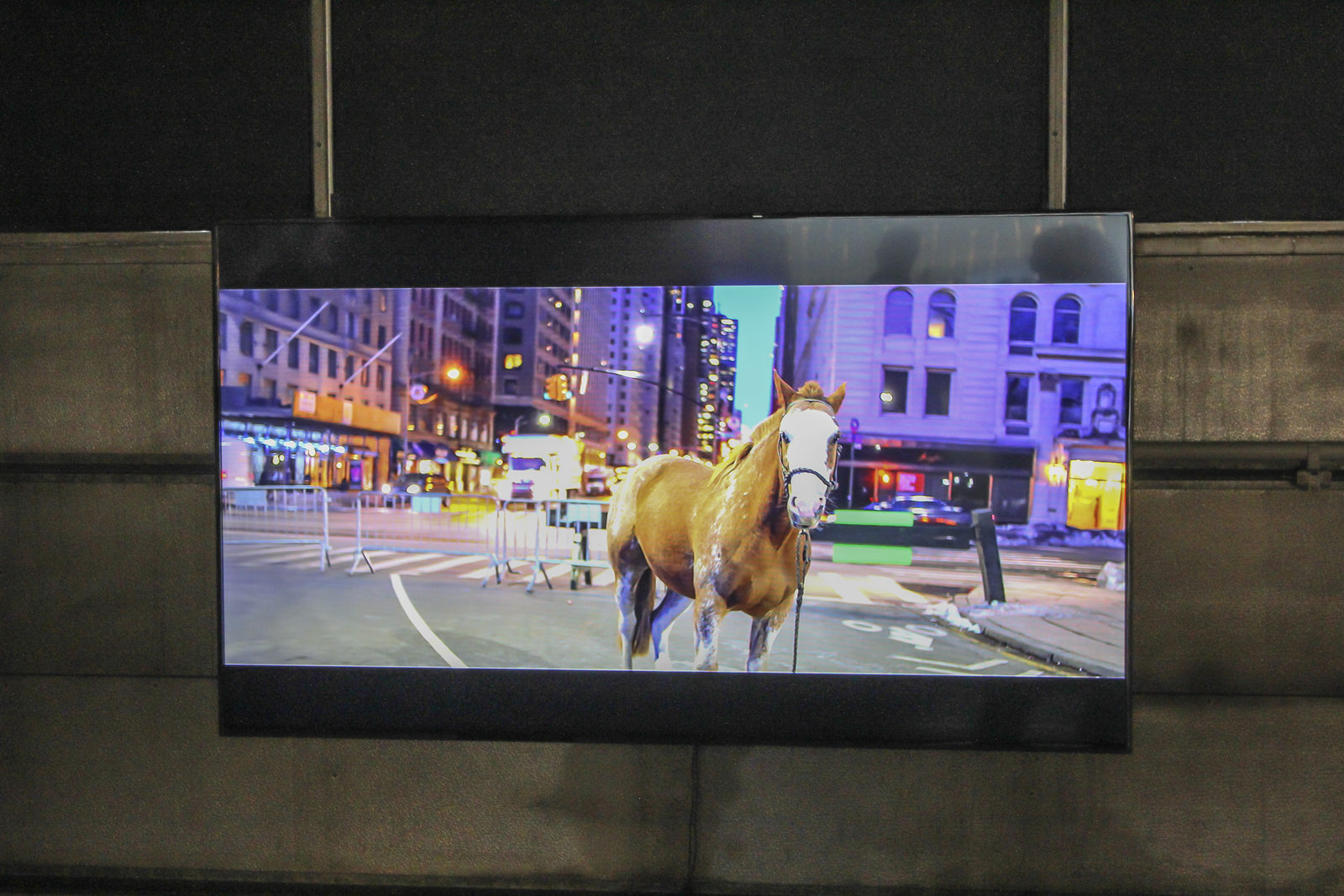
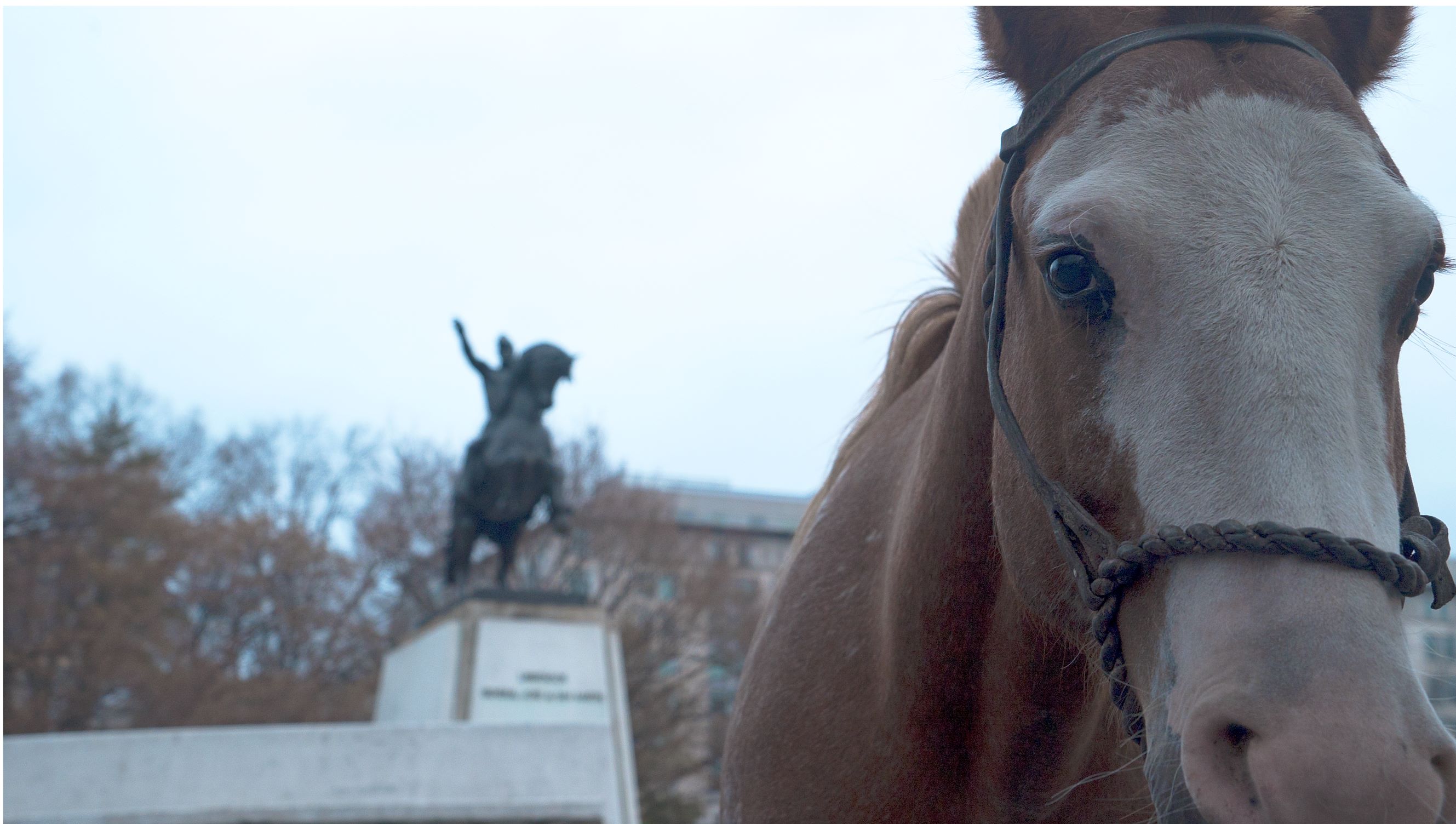
A solitary horse stands at the threshold to Central Park, New York framed by the lights and dawn traffic of 6th Avenue/Avenue of the Americas. The horse stands motionless, almost statuesque, its back to the Manhattan intersection. Only the ears move, attentive, scanning their sonic environment: yellow cabs, delivery trucks, early morning joggers braving the snow. The horse begins to walk and then disappears into the folds of Central Park. What is the agency of this solitary animal? Is it liberated, lost or abandoned? Is it an angel, apparition or gift? Is it a harbinger of unspecified change? Or envoy of a revolution to come?
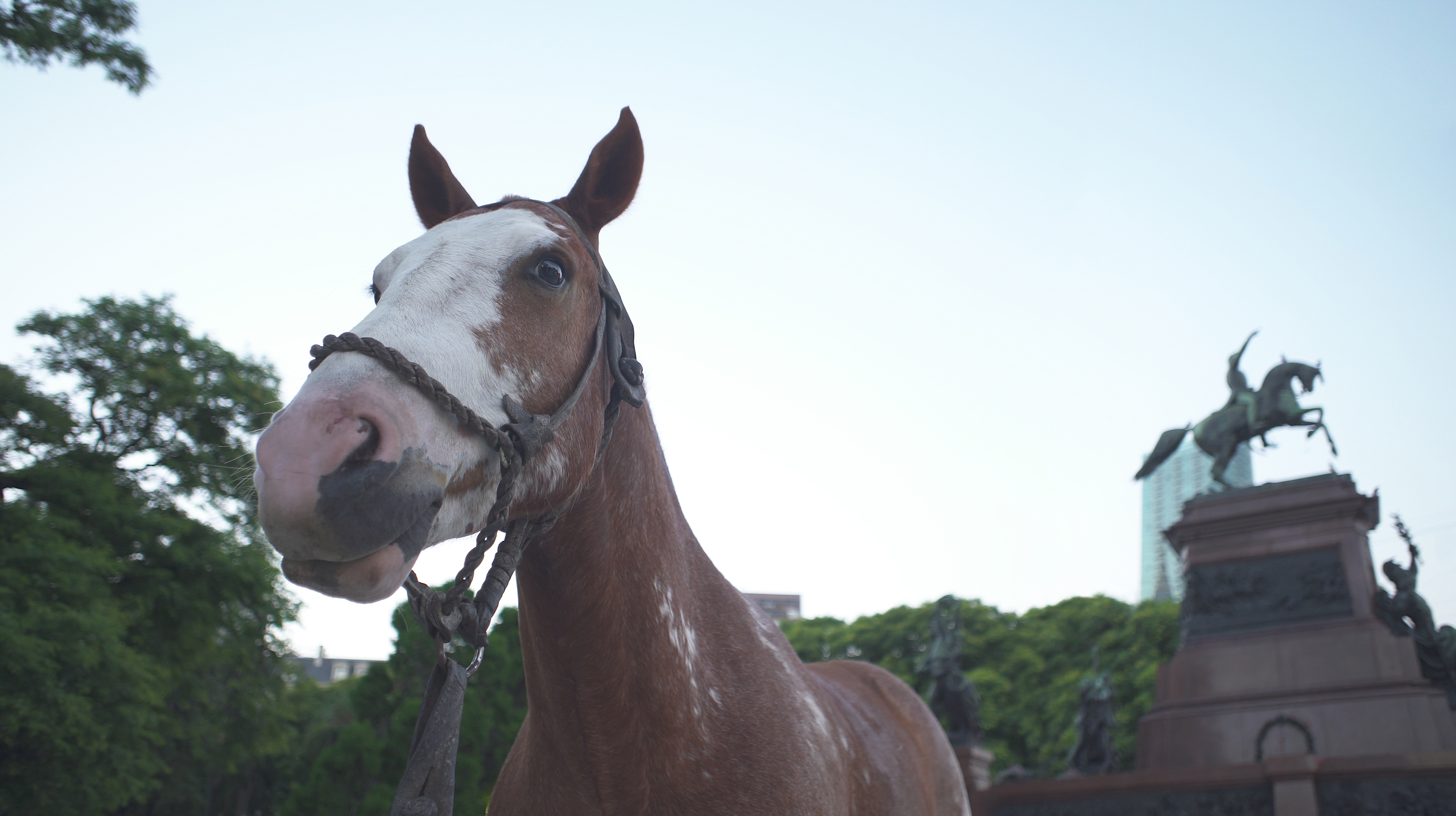
Criollo is inspired by Tschiffely’s Ride (1933), an autobiographical account of a 10,000 mile equestrian journey from Buenos Aires to New York between 1925-1928 by Swiss-Argentine horseman Aimé Félix Tschiffely riding on two Argentine criollos, Mancha and Gato. The criollo is renowned throughout Latin America for its stamina, temperament and capacity for hard work. Criollo is a variant of creole, and holds associations of postcolonial culture, globalism and creolization.
The horse which appears in the film is a 6-year old criollo gelding named, Ahi Veremos Resero, who was raised on the estancia El Cardal, Ayacucho, Argentina. Ahi was donated by Oscar Solanet, the son of Dr Emelio Solanet, the veterinarian who donated Mancha and Gato to Tschiffely in the 1920s. The criollo was transported from Buenos Aires to New York via air and road transportation, and arrives in New York as an apparition: an animal-angel-messenger which appears and disappears in the half-light of a Manhattan winter dawn.