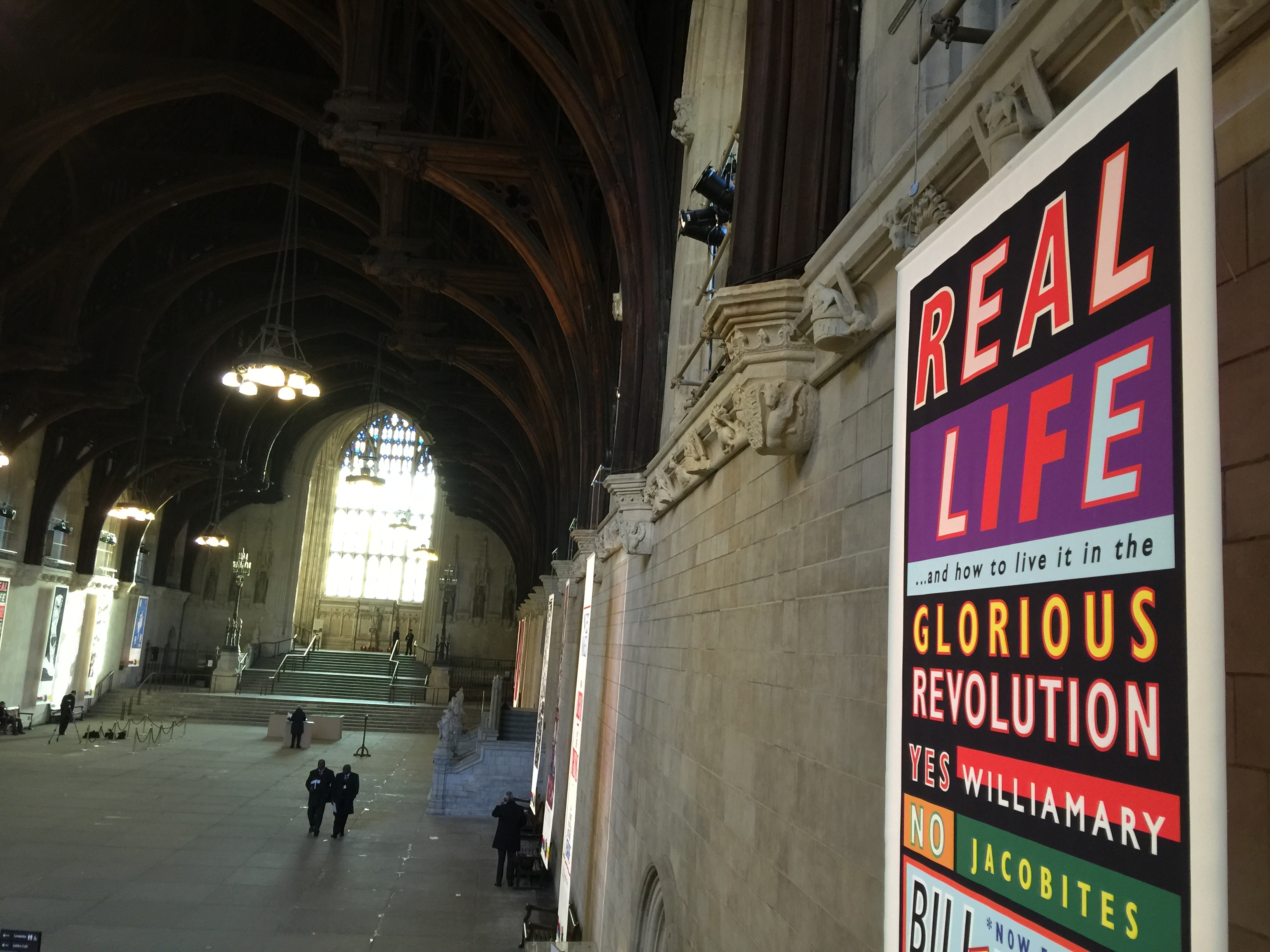
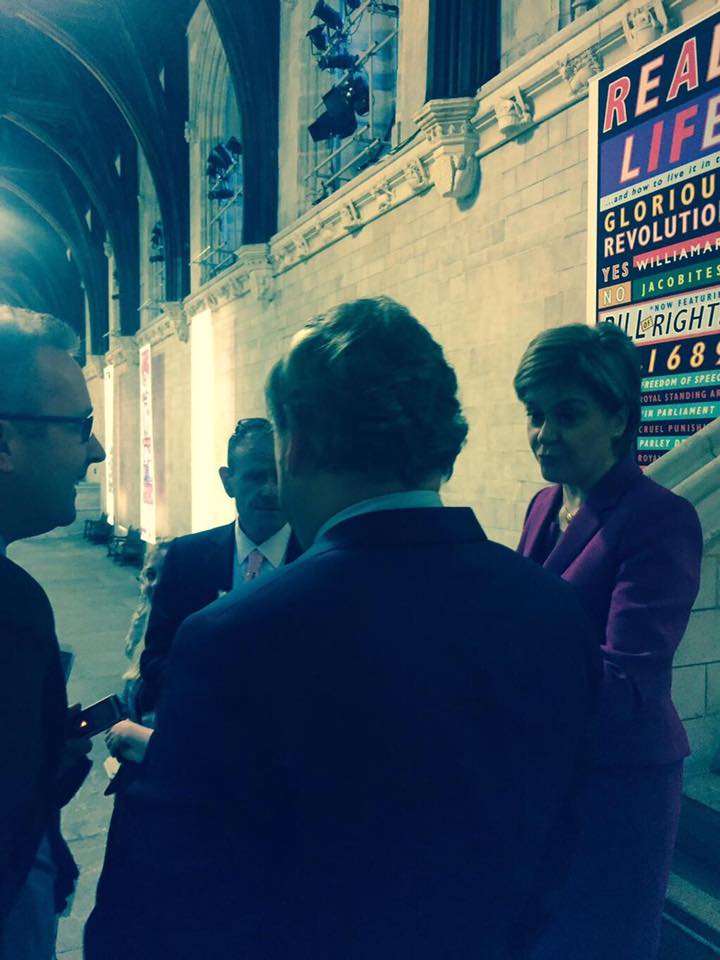
This project was a commissioned set of banners that hung in Westminster Hall, at the heart of the UK Parliament celebrating 800 years of Magna Carta and 750 years of the Simon de Montfort parliament with a series of events and exhibitions throughout 2015, alongside Ruth Ewan, Ross Birrell and others. (750,000 visitors)
Commemorating an 800 year history since Magna Carta, the exhibition covered 18 themes related to the movements and moments which ‘made a difference’ in the journey to the rights and representation that are enjoyed today.
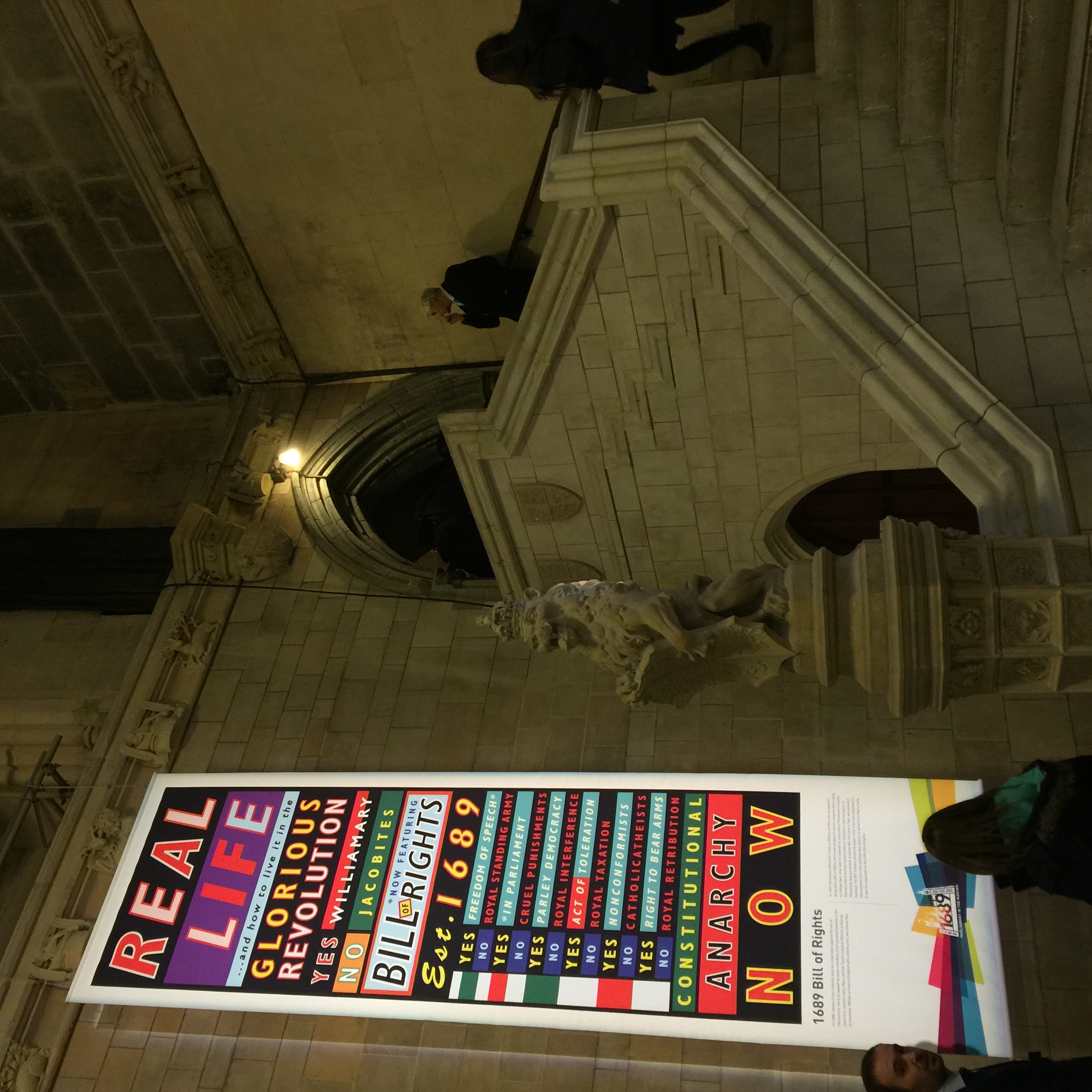
I designed banners that reflected on the Bill of Rights (1689) :
In 1688, King James II’s pro-Catholic policies, undertaken against the will of Parliament, led to an appeal by seven parliamentarians to James’s daughter, Mary, and her Dutch husband, William of Orange, to intervene. William arrived in England with a Dutch army, and James fled.
In 1689, Parliament offered the Crown to William and Mary, who accepted it along with a Bill of Rights, which was designed to prevent monarchs from trying to change laws, raise taxes or maintain an army without Parliament’s consent. Elections had to be held regularly without interference, and free speech in Parliament was guaranteed. A similar Bill, the Claim of Right, was passed in Scotland. The Bill of Rights limited the power of the Crown and established in law freedoms that many believed were ancient, or derived from Magna Carta. It was the inspiration for the USA’s Bill of Rights and the Peoples Charter (1838)
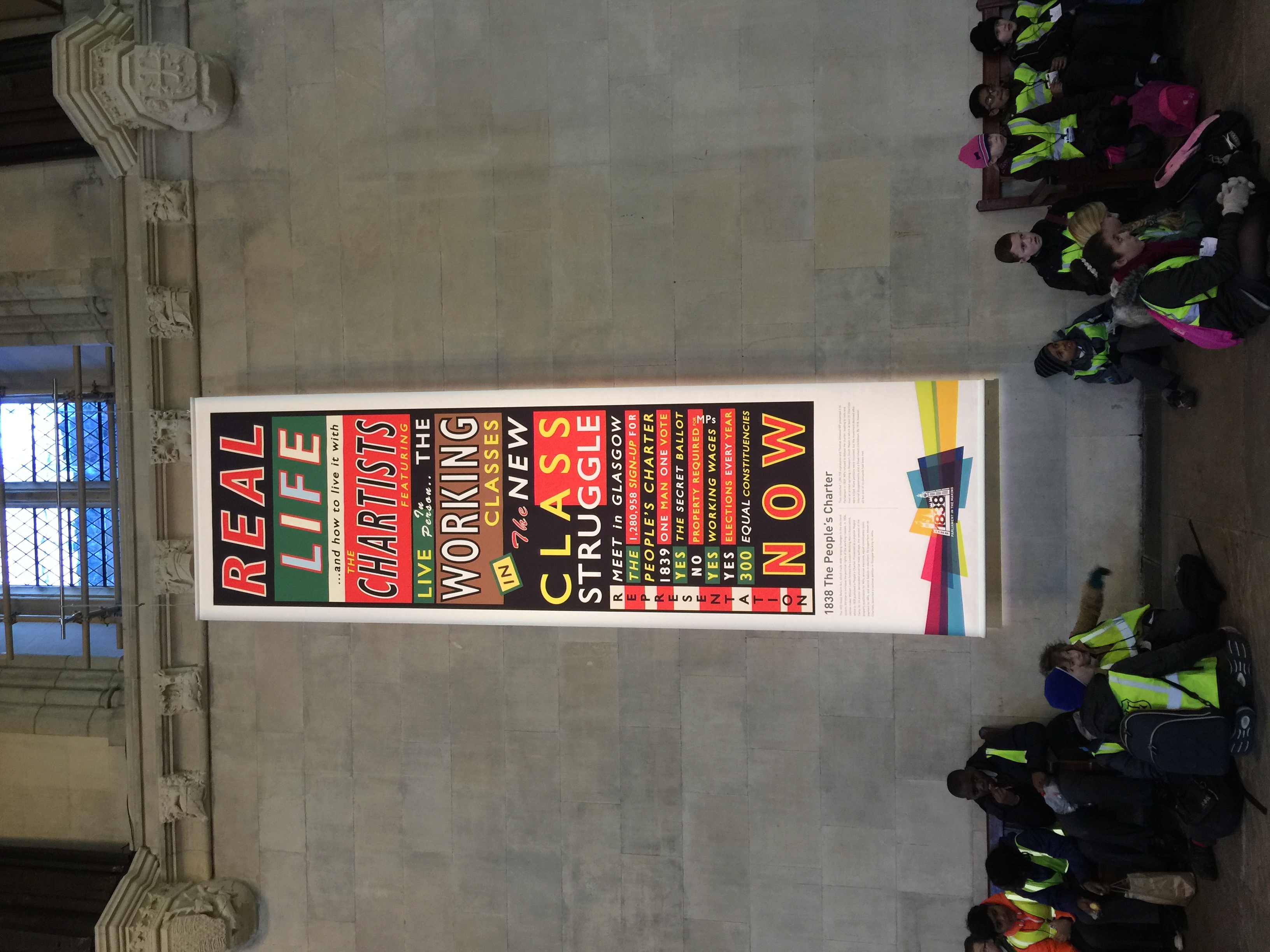
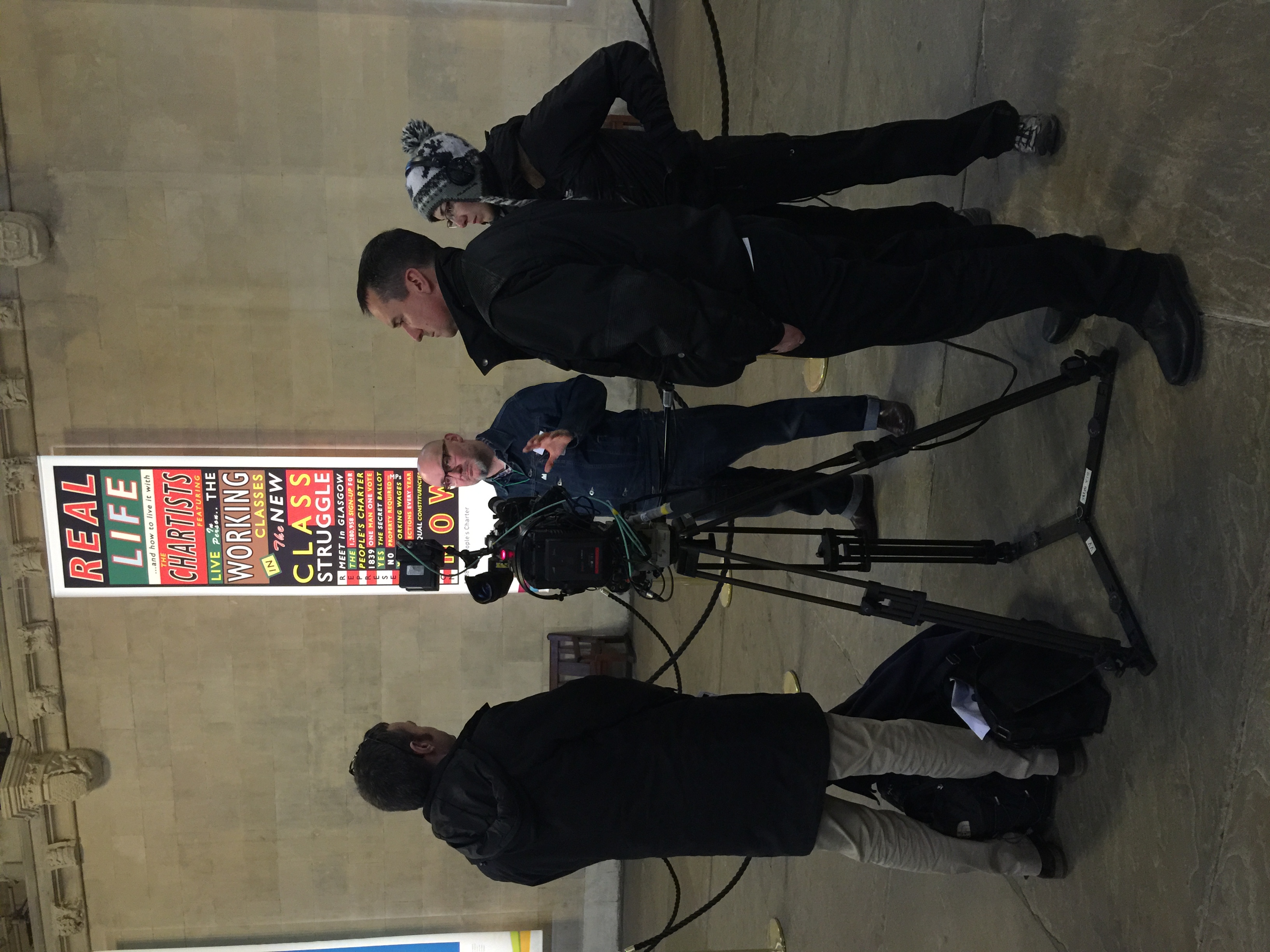
The 1832 Great Reform Act, which made wide-ranging changes to the electoral system, did little to increase the political rights of the working classes. In 1836, cabinet maker William Lovett formed the London Working Men’s Association, which in 1838 published a People’s Charter. Presented as a popular Magna Carta, its famous ‘six points’ demanded universal male suffrage, the removal of the property qualification for MPs, annual elections, equal constituency sizes, payment for MPs, and secret ballots in elections. Its supporters, known as Chartists, launched a petition in Glasgow backing its aims. They collected 1,280,958 signatures and Thomas Attwood MP presented it to Parliament in 1839. MPs refused to debate the charter, leading to riots and even an armed uprising in Newport, South Wales in which at least 22 Chartists were killed. More petitions were mounted, but the movement declined after internal disagreements and a Government crackdown. By 1918, however, all but one of its demands had been met.
Also Includes catalogue and 'report' publication and the banners themselves were gifted afterwards to different institutions around the UK.
The weblinks show interviews where I discuss the works and the project.