I was invited by the Boswell Collection and the University of St Andrews to develop works in response to the collection of physicist John Walter Allen, housed in their Archive and Museum Collections. John W. Allen was a physicist and academic at the University of St Andrews who was involved in the development of LEDs (Light Emitting Diodes) at SERL in the early 1960s. In his later research, he worked on LEDs in photosynthesis, plant health and skin cancer. Focusing on his teaching materials and horticultural research, I developed two works in response to the Allen collection: 'The Professor's Dream' and 'Case Study'. Both have been added to the Boswell Collection of modern and contemporary Scottish art at the University of St. Andrews.
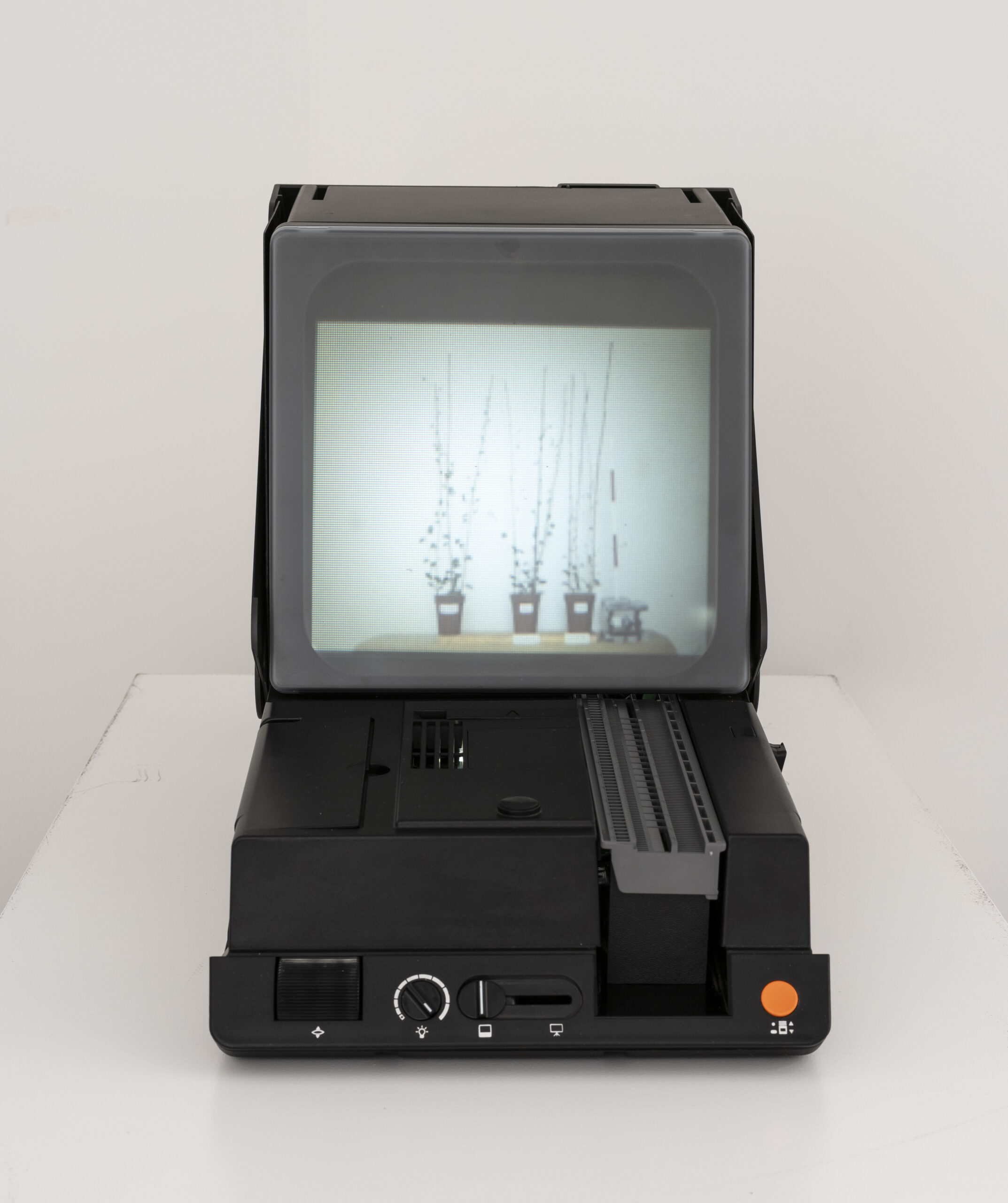
'The Professor's Dream' (2025)
Electronics, slide projector, audio.
5:45 minute loop.
'The Professor's Dream' uses slides and other teaching materials from the John W. Allen archive as its starting point, creating a looping sequence of images displayed on a hacked slide projector. These slides document Allen's experiments with a range of plant varieties between May 2000 and January 2001. Alongside imagery of plant and LED experiments, several slides feature quotations from art historian Robert Nelson's 2000 essay on the history of the slide lecture. As the slides progress, Allen's images begin to move, revealing invented moments never seen by Allen and video imagery from the archive.
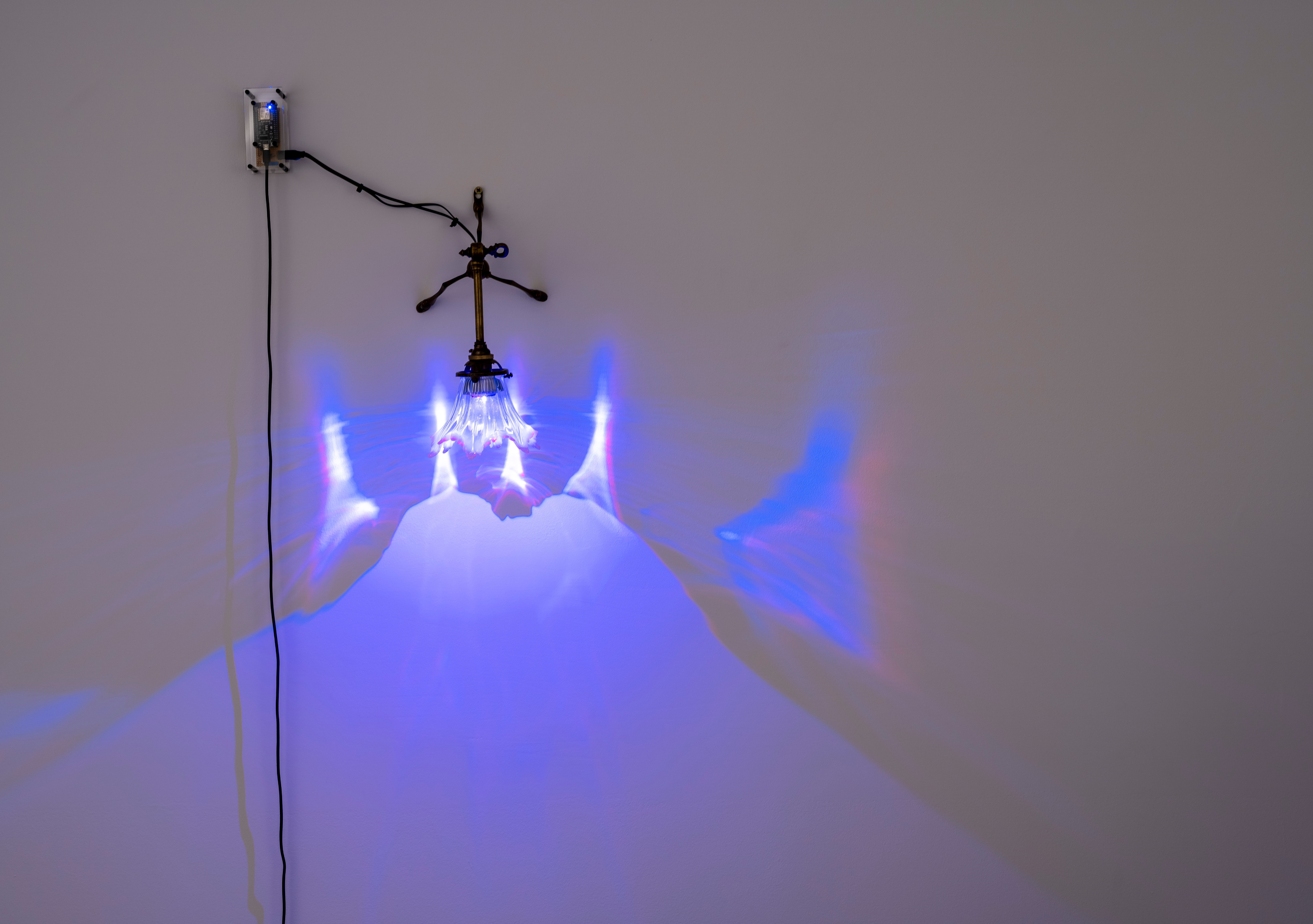
'Case Study' (2025)
Found a wall light, brass with a vaseline glass shade, and a single-board computer in an acrylic case.
'Case Study' is a lamp with a programmed light bulb, developed from John W. Allen's experiments with LED light. Allen documented the experiments across slides and papers in the archive. Allen conducted experiments using different wavelengths of LED light on a range of plant varieties to determine their effects on photosynthesis. These experiments took place approximately between May 2000 and January 2001. Case Study tranposes these trials into a sequence of flashing lights powered by a hacked contemporary LED grow light housed in a 19th-century sconce.