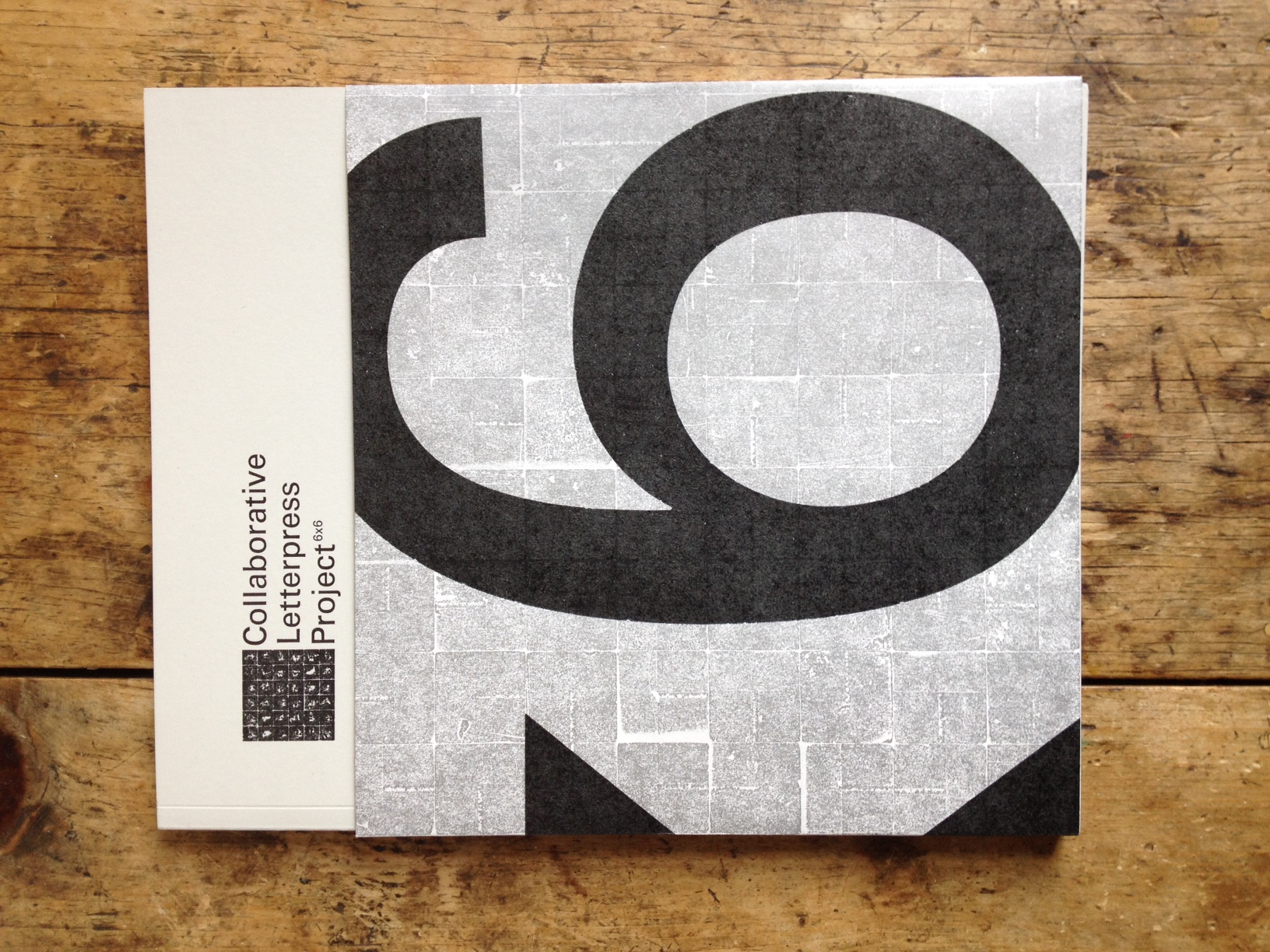
Book section: In Decant. Written piece and printed work on the recent history of The Caseroom at The Glasgow School of Art
6x6 Project abstract:
The Council for Higher Education Art & Design (CHEAD) definition of ‘minority specialist subjects’ encompasses ‘subjects that are concerned with the teaching and learning of core skills, materials and processes; specifically this would cover subjects that are concerned with non-digital issues, and with the physicality of processes/materials’ (2009). Subject areas identified through case studies and research include technical and workshop areas such as ceramics, metalwork, textiles, bookbinding and letterpress (Farren, 2008). Farren argues the economic value of these subjects, which have traditionally formed a part of the core learning of art and design education that has given the UK its creative ‘edge’.
The benefits of teaching graphic design students letterpress in relationship to learning to understand typography is well-documented. Spencer (1982) argued for retaining ‘craft’ subjects as the physicality of processes including letterpress foster immersive learning. Edwards (2005) argues that the letterpress process is a significant teaching tool that complements, and should act in conjunction with, computer-based design education. Cooper & Gridneff (2009) believe that processes such as letterpress should be explored beyond the value of a teaching tool. They argue that processes such as letterpress are valuable due to the transferable skills that they can equip students with, such as an appreciation of physical space and the speed of work fostering reflection-in-action.
At present, the importance of research into specialist subject areas has been identified, but is disparate. The six colleges identified to participate in the project have active letterpress workshops with a dedicated member of technical staff. Each are engaged with practice-led research, but at the time of writing there is no mechanism for collectively reviewing and sharing this research. In doing so, a model could be created for other specialist subjects to follow.