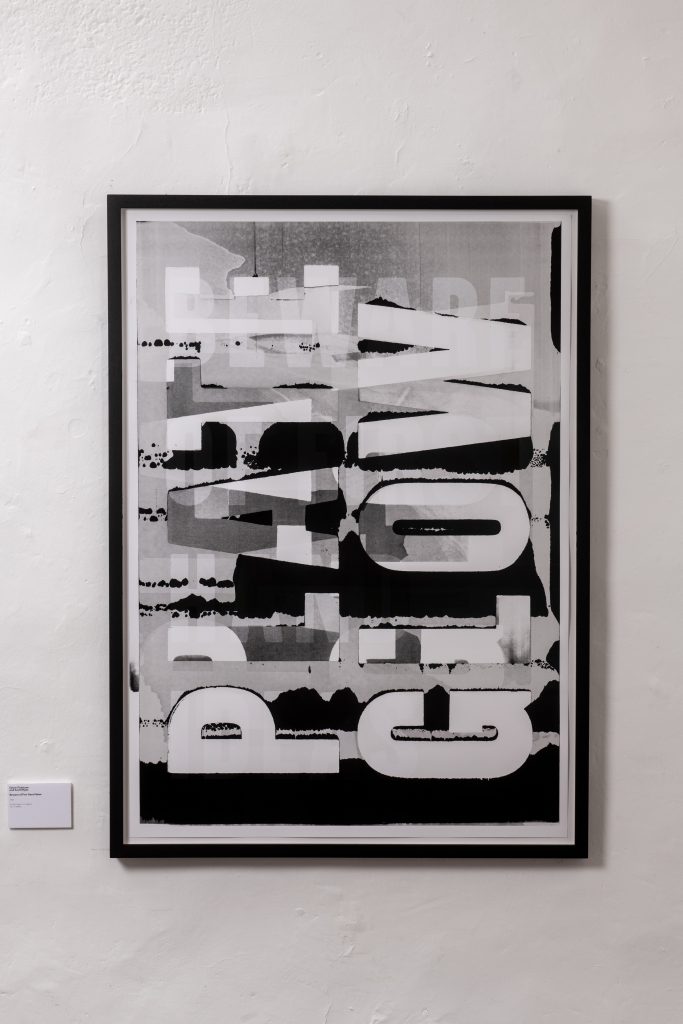
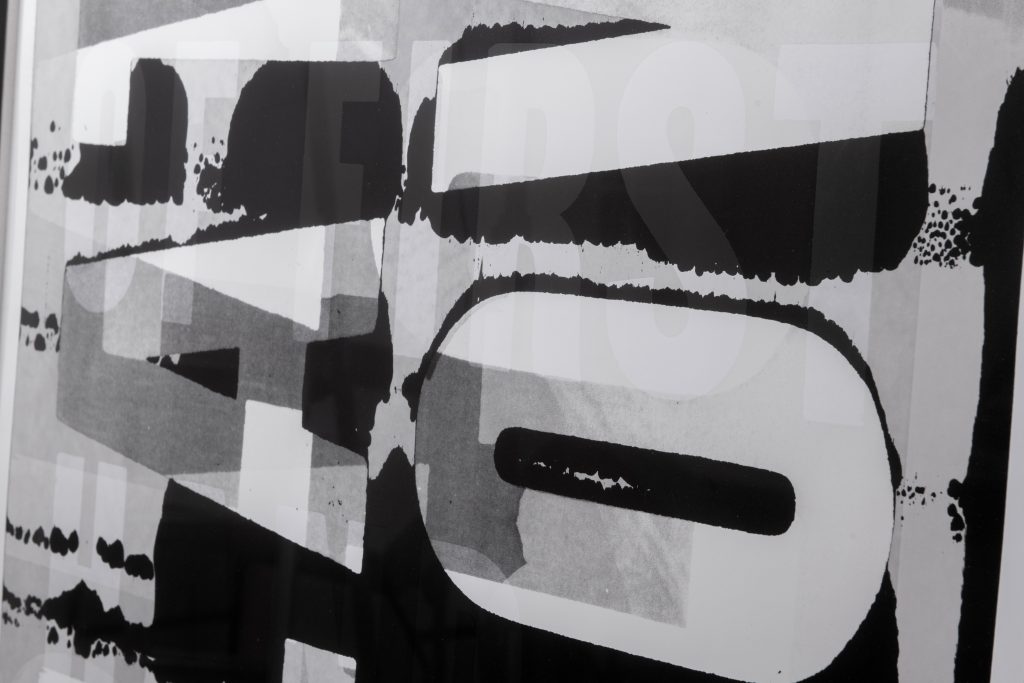
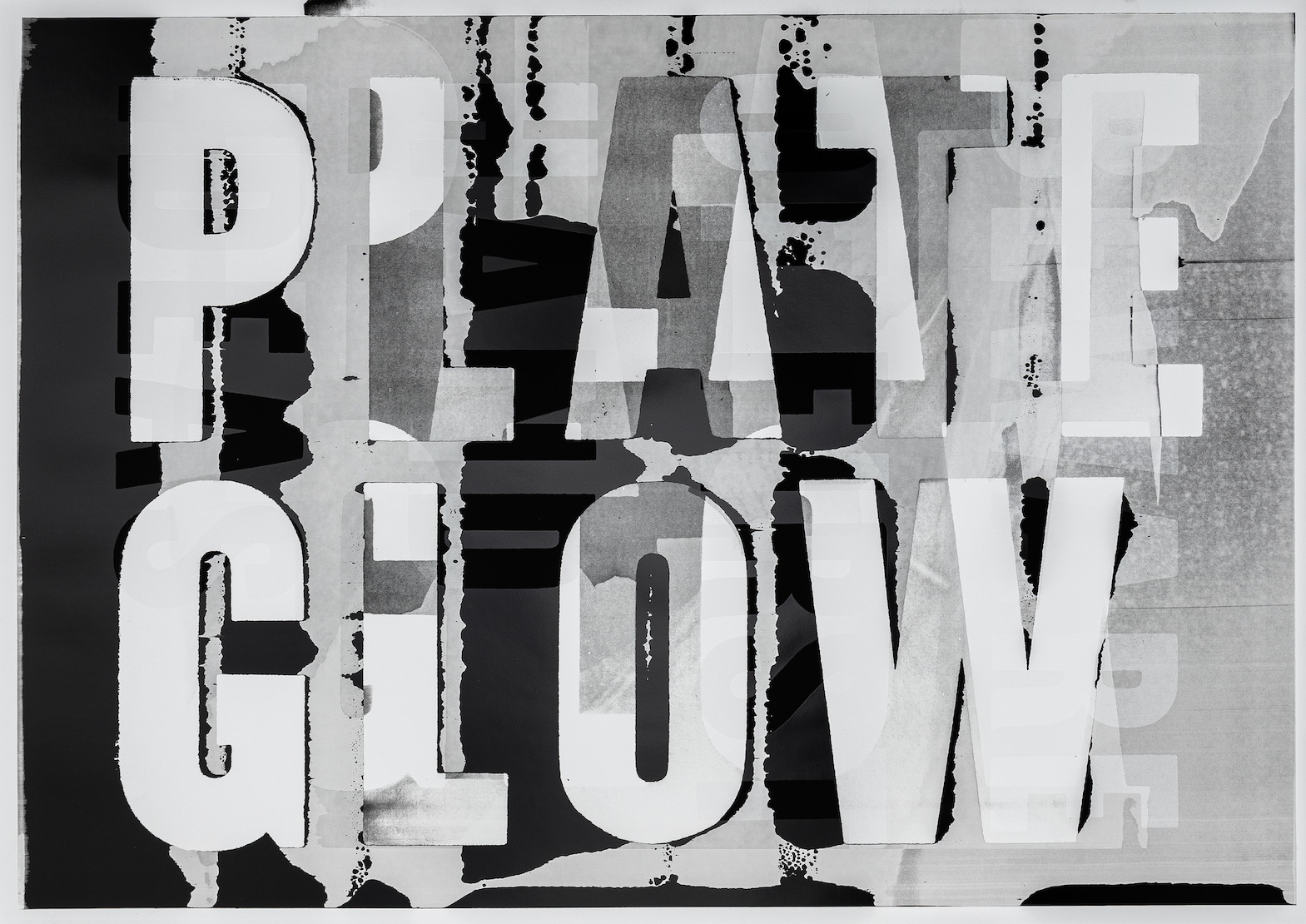
Beware of First Hand Ideas
Edwin Pickstone & Scott Myles
2021
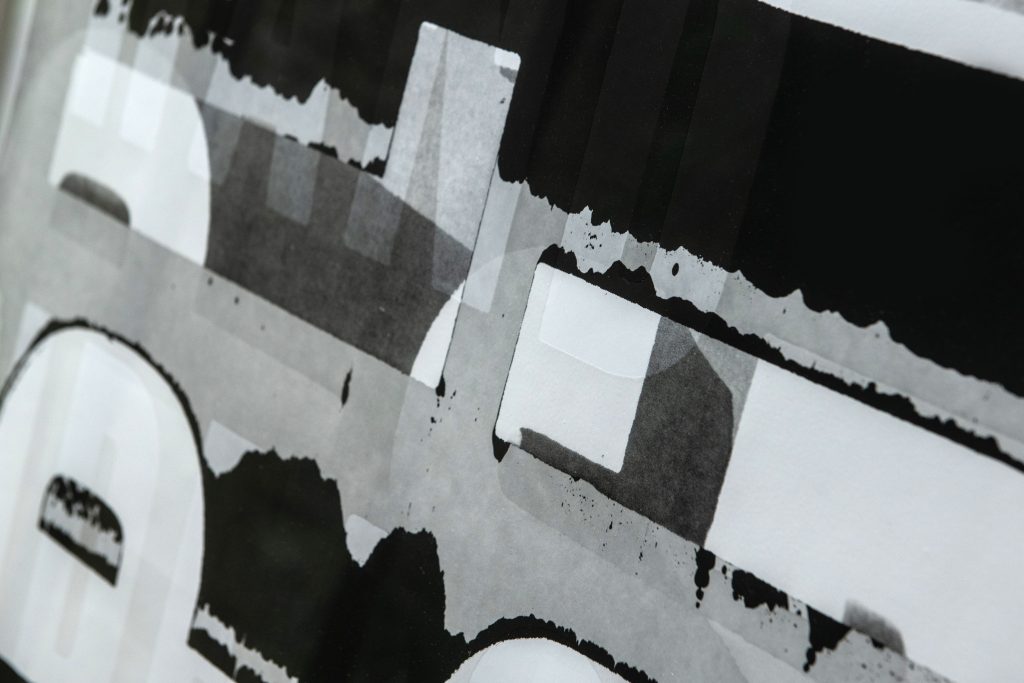
Silkscreen on paper, 70.7x100cm.
An artwork commissioned for the exhibition Imprints: Art Editing Modernism
Shandy Hall, the Laurence Sterne Trust, Coxwold, UK
28 August – 11 September 2021
The artists would like to refer you to the following three passages taken from ‘The Machine Stops’ by E.M. Forster, first published in The Oxford and Cambridge Review, November 1909:
‘Imagine, if you can, a small room, hexagonal in shape, like the cell of a bee. It is lighted neither by window nor by lamp, yet it is filled with a soft radiance. There are no apertures for ventilation, yet the air is fresh. There are no musical instruments, and yet, at the moment that my meditation opens, this room is throbbing with melodious sounds. An armchair is in the centre, by its side a reading-desk — that is all the furniture. And in the armchair there sits a swaddled lump of flesh — a woman, about five feet high, with a face as white as a fungus. It is to her that the little room belongs.
An electric bell rang.
The woman touched a switch and the music was silent.
“I suppose I must see who it is”, she thought, and set her chair in motion. The chair, like the music, was worked by machinery and it rolled her to the other side of the room where the bell still rang importunately.
“Who is it?” she called. Her voice was irritable, for she had been interrupted often since the music began. She knew several thousand people, in certain directions human intercourse had advanced enormously.
But when she listened into the receiver, her white face wrinkled into smiles, and she said:
“Very well. Let us talk, I will isolate myself. I do not expect anything important will happen for the next five minutes — for I can give you fully five minutes, Kuno. Then I must deliver my lecture on ‘Music during the Australian Period’.”
She touched the isolation knob, so that no one else could speak to her. Then she touched the lighting apparatus, and the little room was plunged into darkness.
“Be quick!” she called, her irritation returning. “Be quick, Kuno; here I am in the dark wasting my time.”
But it was fully fifteen seconds before the round plate that she held in her hands began to glow. A faint blue light shot across it, darkening to purple, and presently she could see the image of her son, who lived on the other side of the earth, and he could see her.’
‘…He broke off, and she fancied that he looked sad. She could not be sure, for the Machine did not transmit nuances of expression. It only gave a general idea of people — an idea that was good enough for all practical purposes, Vashti thought. The imponderable bloom, declared by a discredited philosophy to be the actual essence of intercourse, was rightly ignored by the Machine, just as the imponderable bloom of the grape was ignored by the manufacturers of artificial fruit. Something “good enough” had long since been accepted by our race.’
‘And even the lecturers acquiesced when they found that a lecture on the sea was none the less stimulating when compiled out of other lectures that had already been delivered on the same subject. “Beware of first-hand ideas!” exclaimed one of the most advanced of them. “First-hand ideas do not really exist. They are but the physical impressions produced by love and fear, and on this gross foundation who could erect a philosophy? Let your ideas be second-hand, and if possible tenth-hand, for then they will be far removed from that disturbing element — direct observation.’