That we are what we have… is perhaps the most basic and powerful fact of
consumer behaviour’ (Belk 1988 p. 139).
Women’s individual identity discourses are encoded socially and culturally through
relationships with material objects and practices of dress. Relationships with loved
objects yield an emotional and intellectual approach that literally unpicks fashion,
exposing its operations, its relations to the body whilst at the same time binding
feminine structures. This more expansive view of fashion situates the relationship
material objects have to the self and how women relate to the material world as a
universe of meaning making.
The phenomenological inquiry presents a set of methods for practice based research
including observations from workshops, in-depth interviews, case studies, films and
questionnaires. The research as practice approach includes visual and verbal narratives
that portray the essence of the self, interpreting the conceptual complexities that are
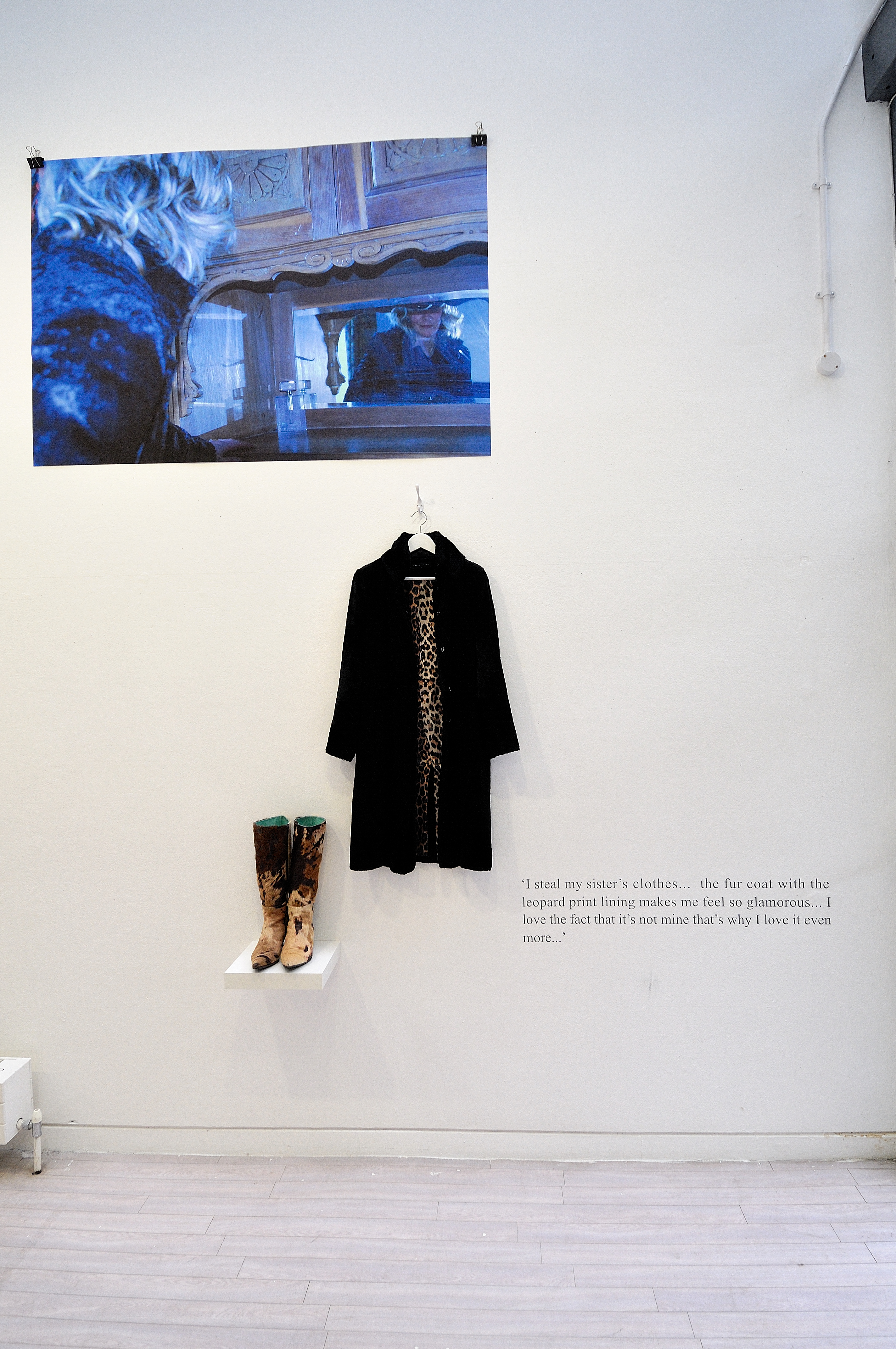
inherently tentative, temporal and temporary in identity construction. The intimate
research portraits are presented as the interplay between image and text; whilst the
films portray the silent spaces in research contexts. These visual apparatus speak of
expressions of embodiment.
It is the articulation of these feminine practices that elucidates the incorporation of
the socially constructed body into the corporeal. The situal thus embodies the lived
relation as a result of the phenomena experienced in the specific social encounter.
The situal, positions the social practices of fashion as a series of intimate identity
discourses. Through this collective engagement, heterogeneous forms of knowledge
emerge, transforming the act of dressing into a wider view of self and life.