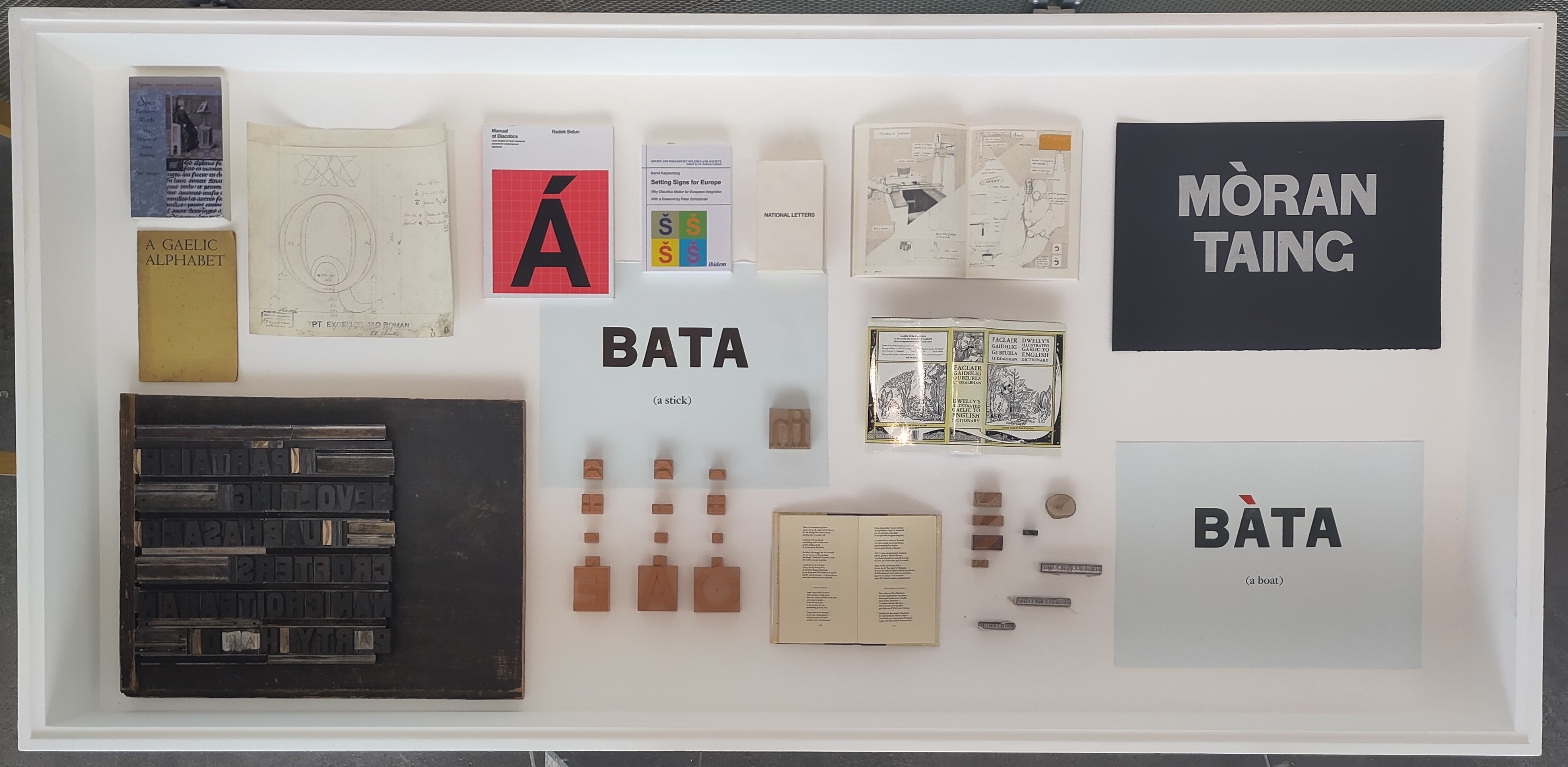
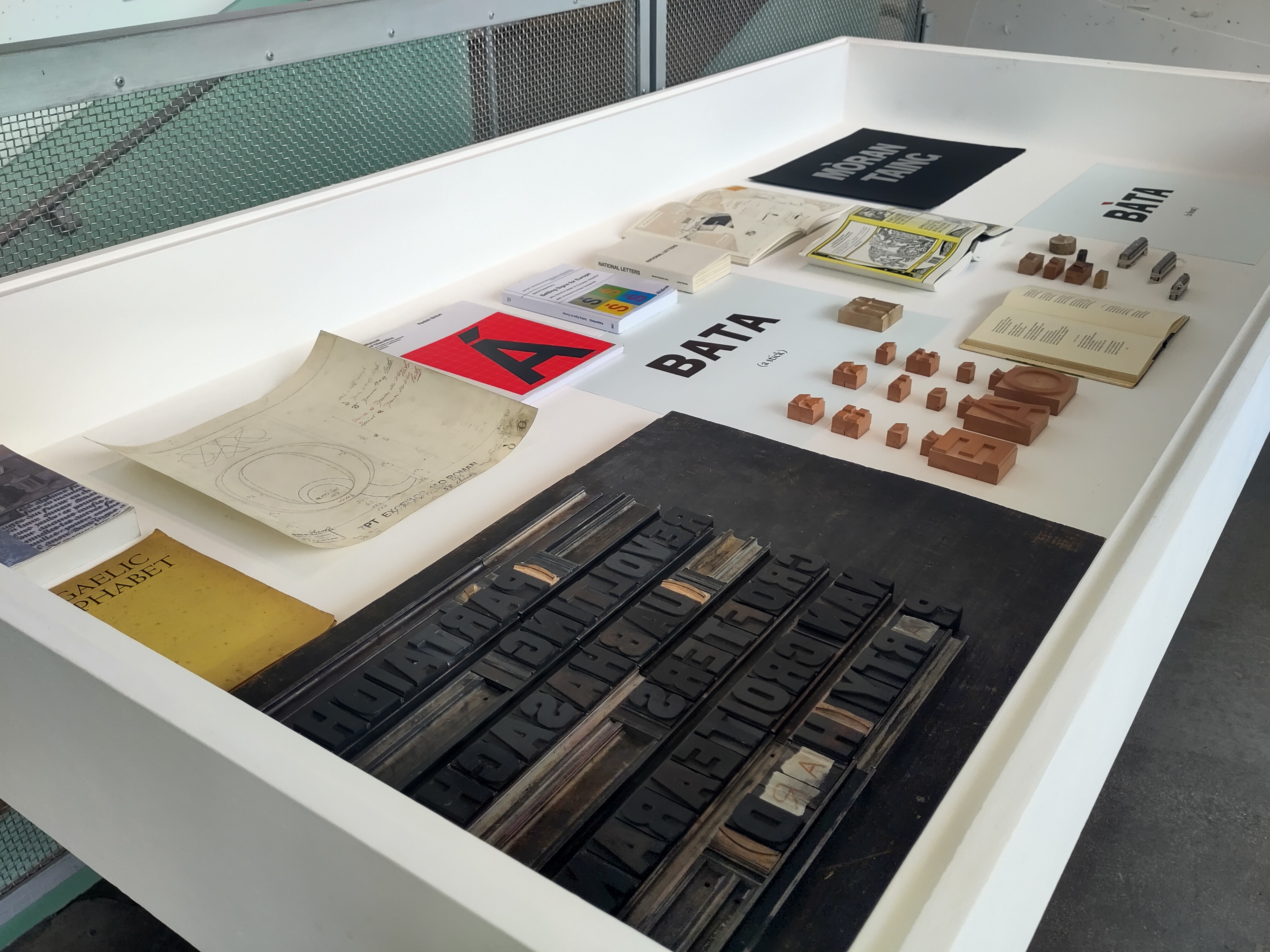
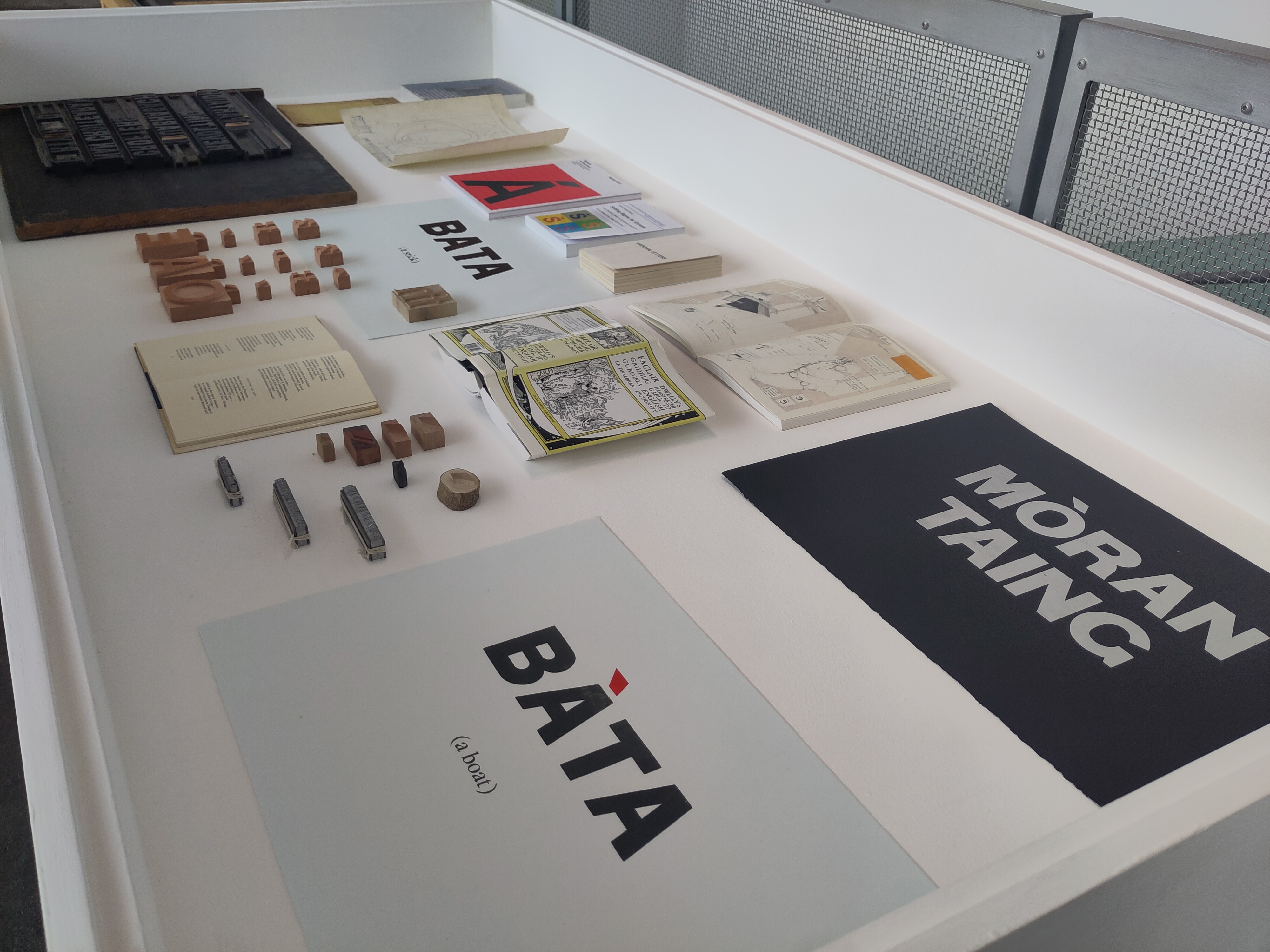
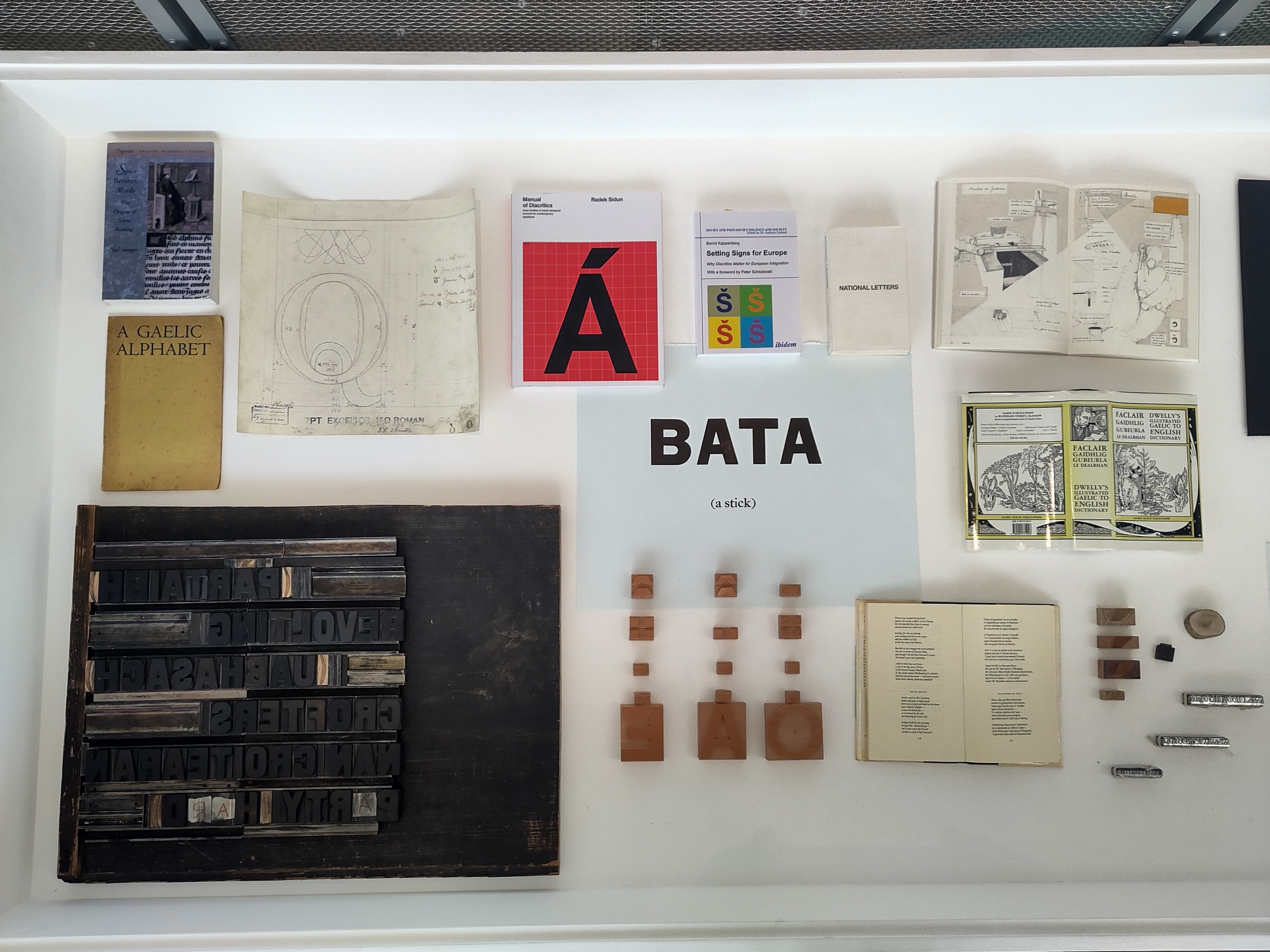
A display of original printed works, prototype equipment and key research sources exhibited as part of Co-labhairt Typographica / Scottish Gaelic Print and Typography Symposium.
Print works:
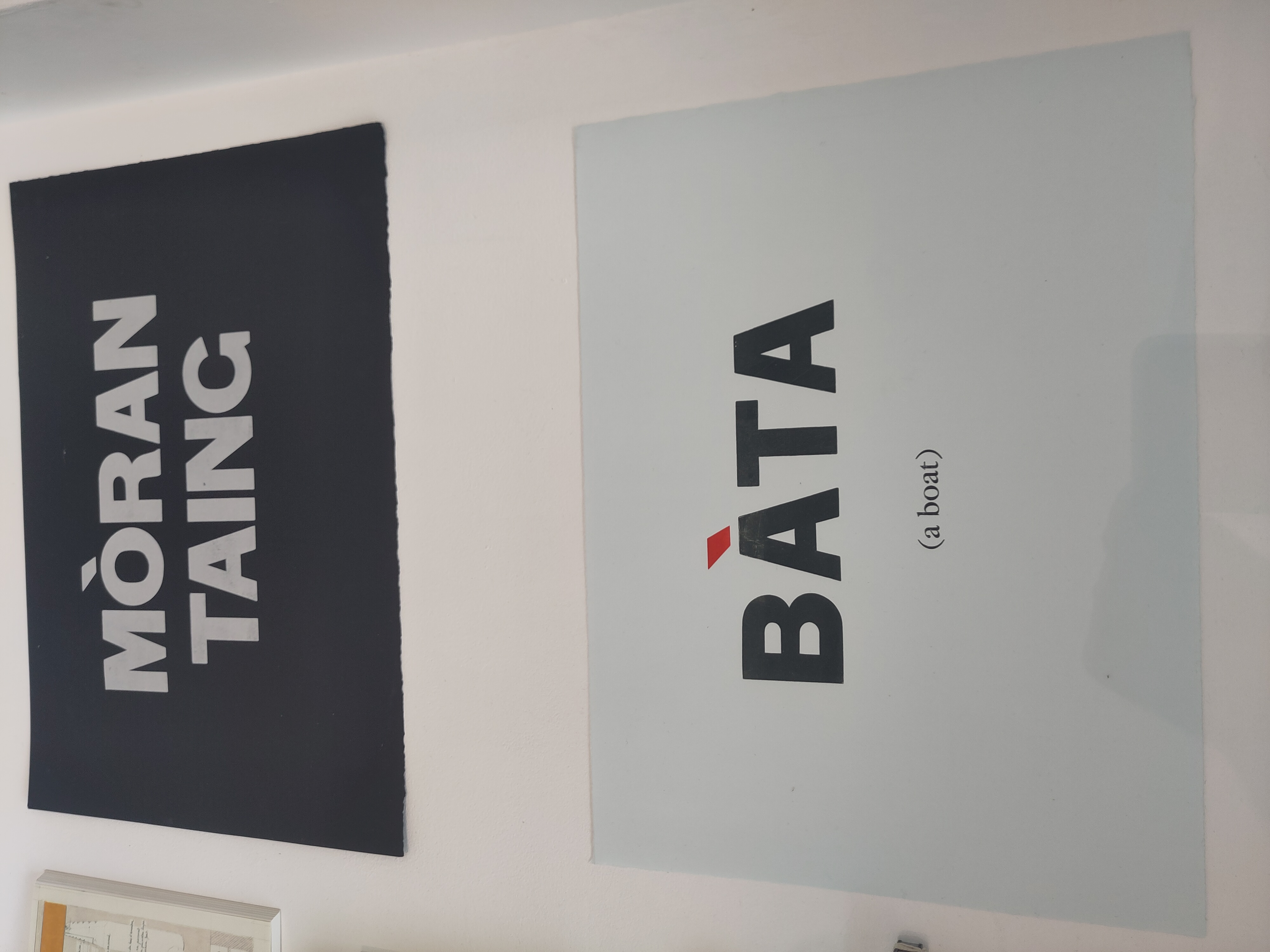
Bata (a stick)
Letterpress print, 2025
Radar output 10623
Mòran Taing
Letterpress print, 2025
Equipment:
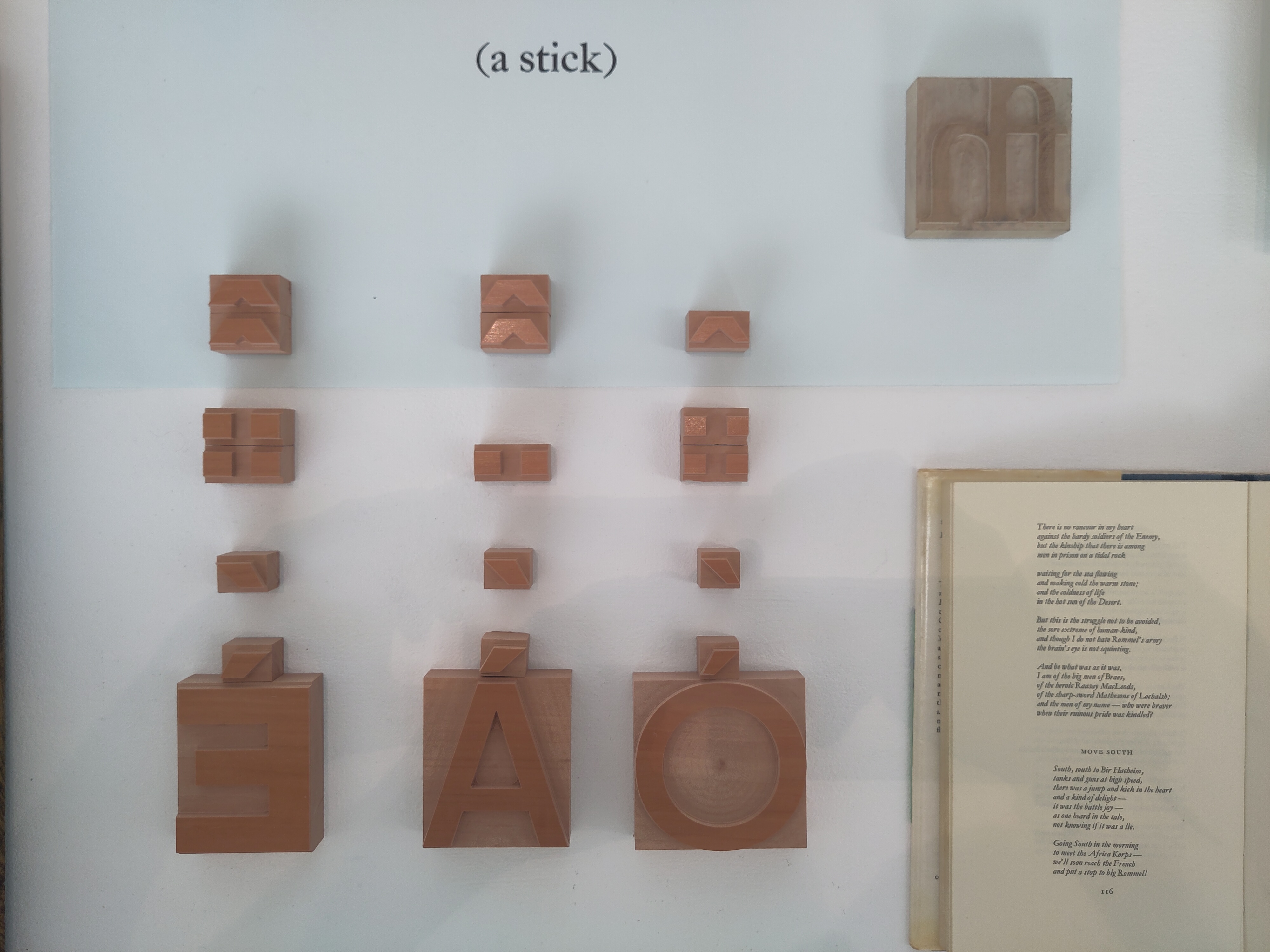
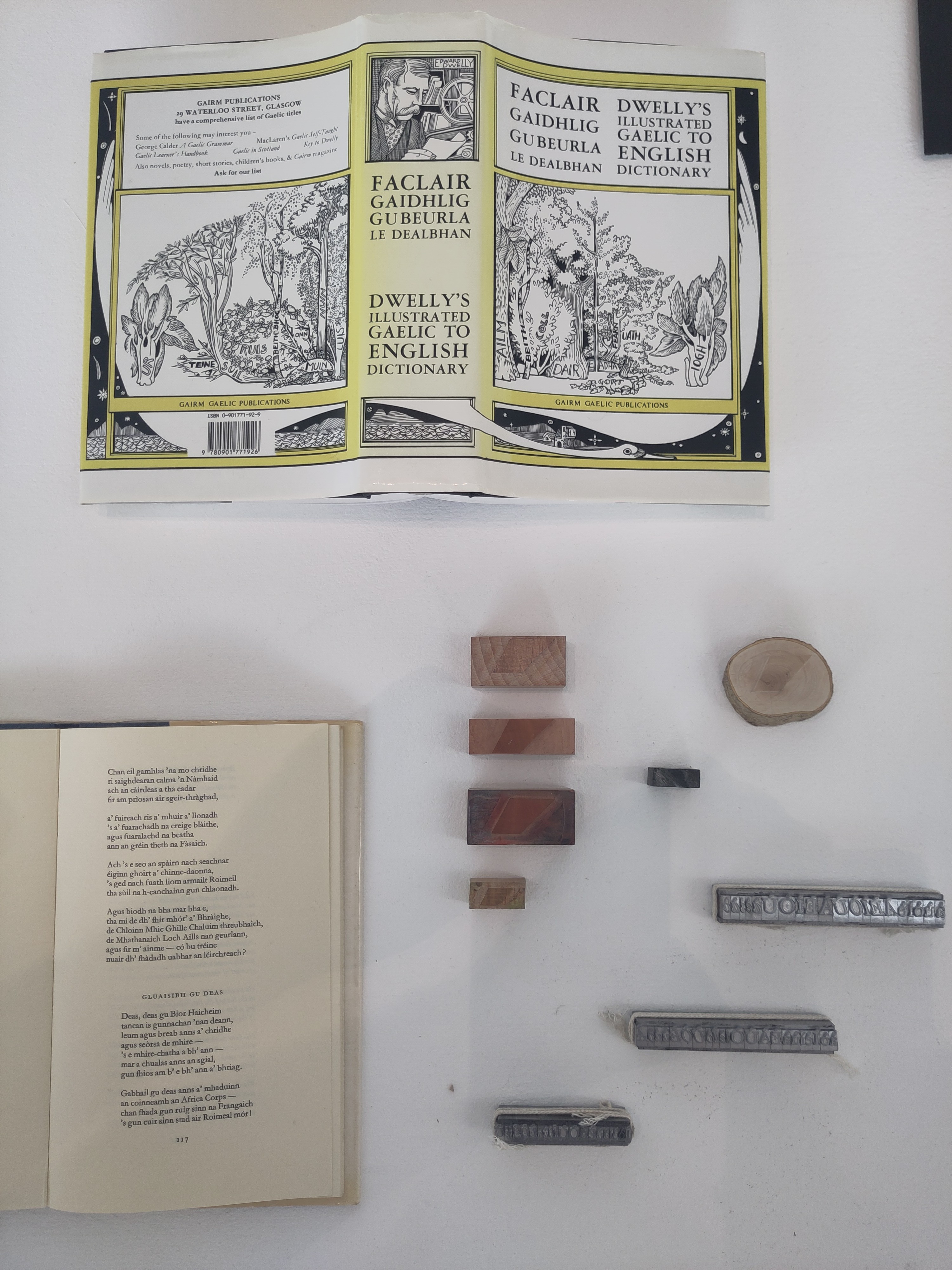
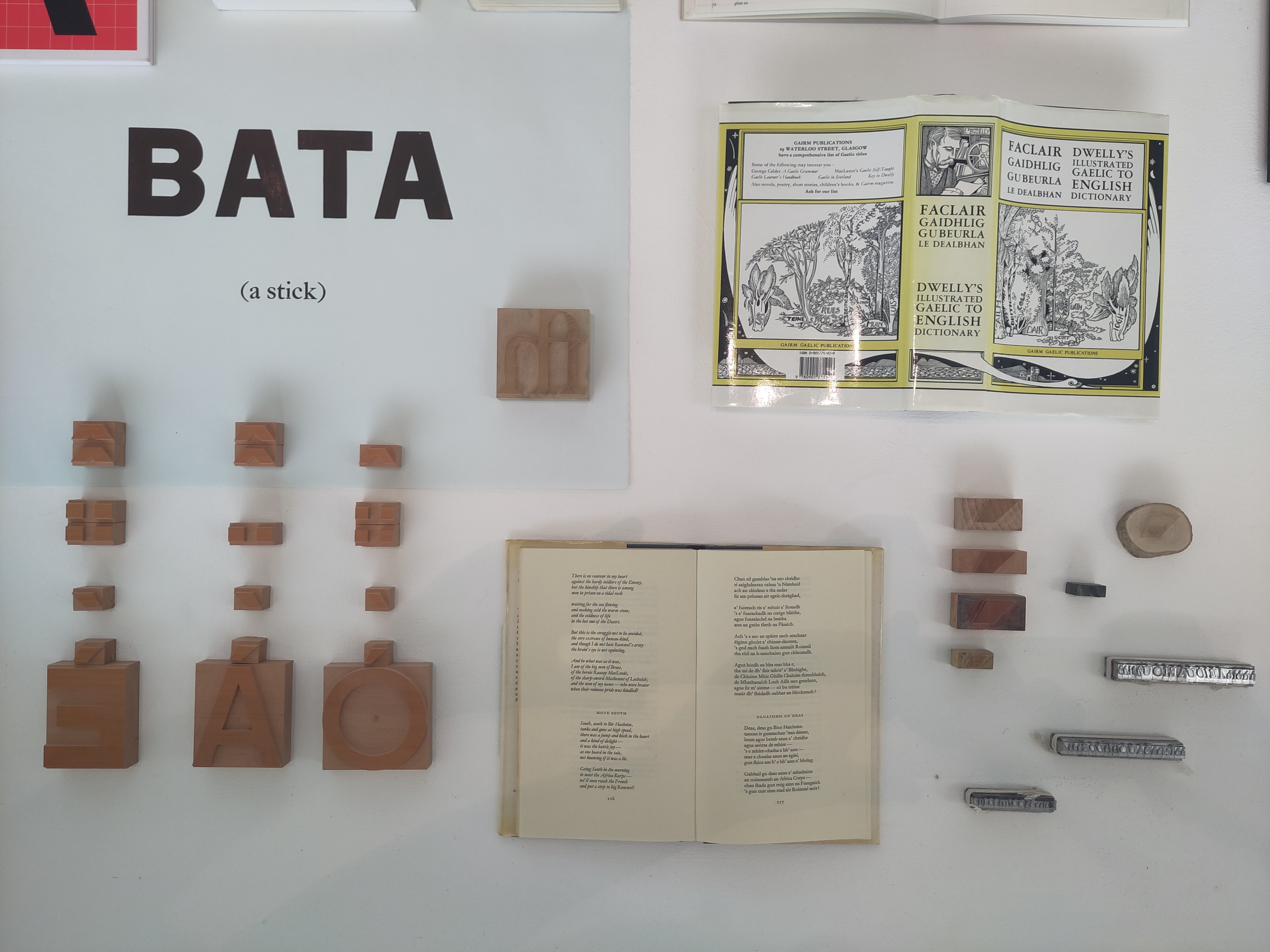
Metal type accented vowel sorts
Stràc on holly wood round
’S dòcha a’ Chiad Bhloc-Fiodha Sgrìobhaidh fh Ceangailte a-riamh
/ Possibly the First Wood Type fh Ligature in The World.
Pantograph cut in holly wood, 2026
Radar output: 11001
Found improvised grave accent
(origin unknown)
Prototype wood type accents
Design: Guðmundur Úlfarsson (Or Type)
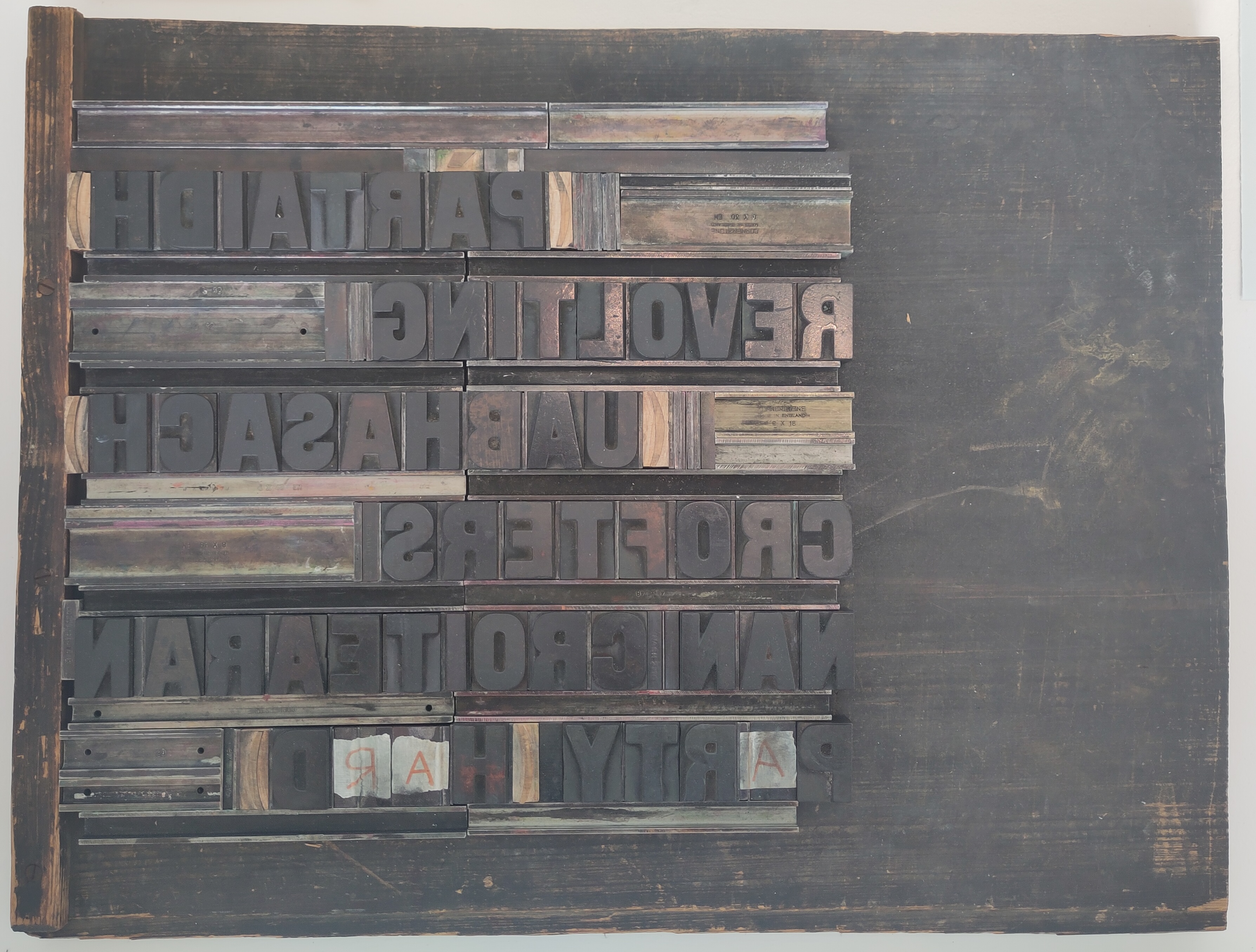
Forme for dual language poster
Design: Craig Gallacher & John Smith (Wild Raver)
Books:
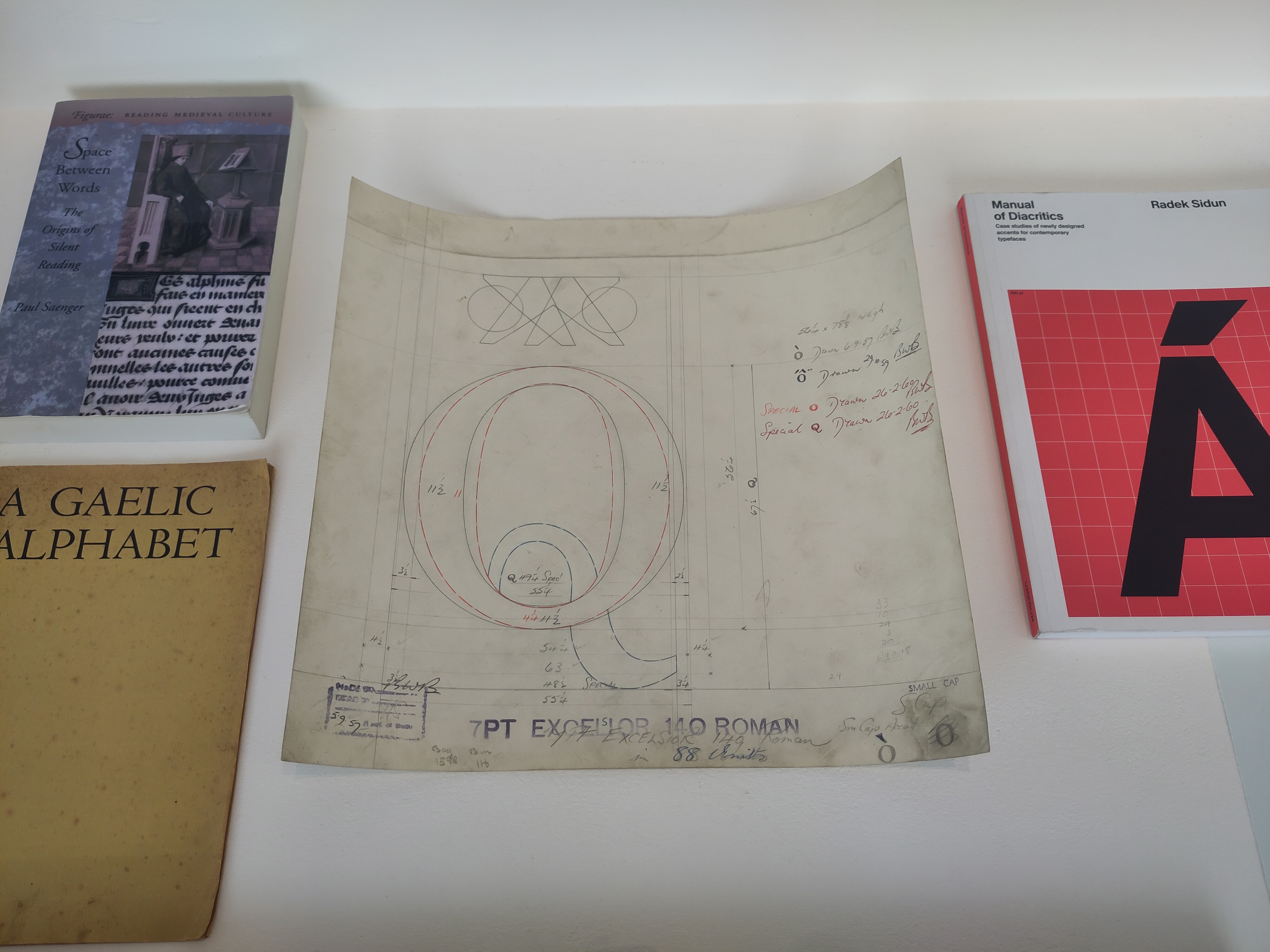
Manual of Diacritics, Radek Sidun, Prague 2021
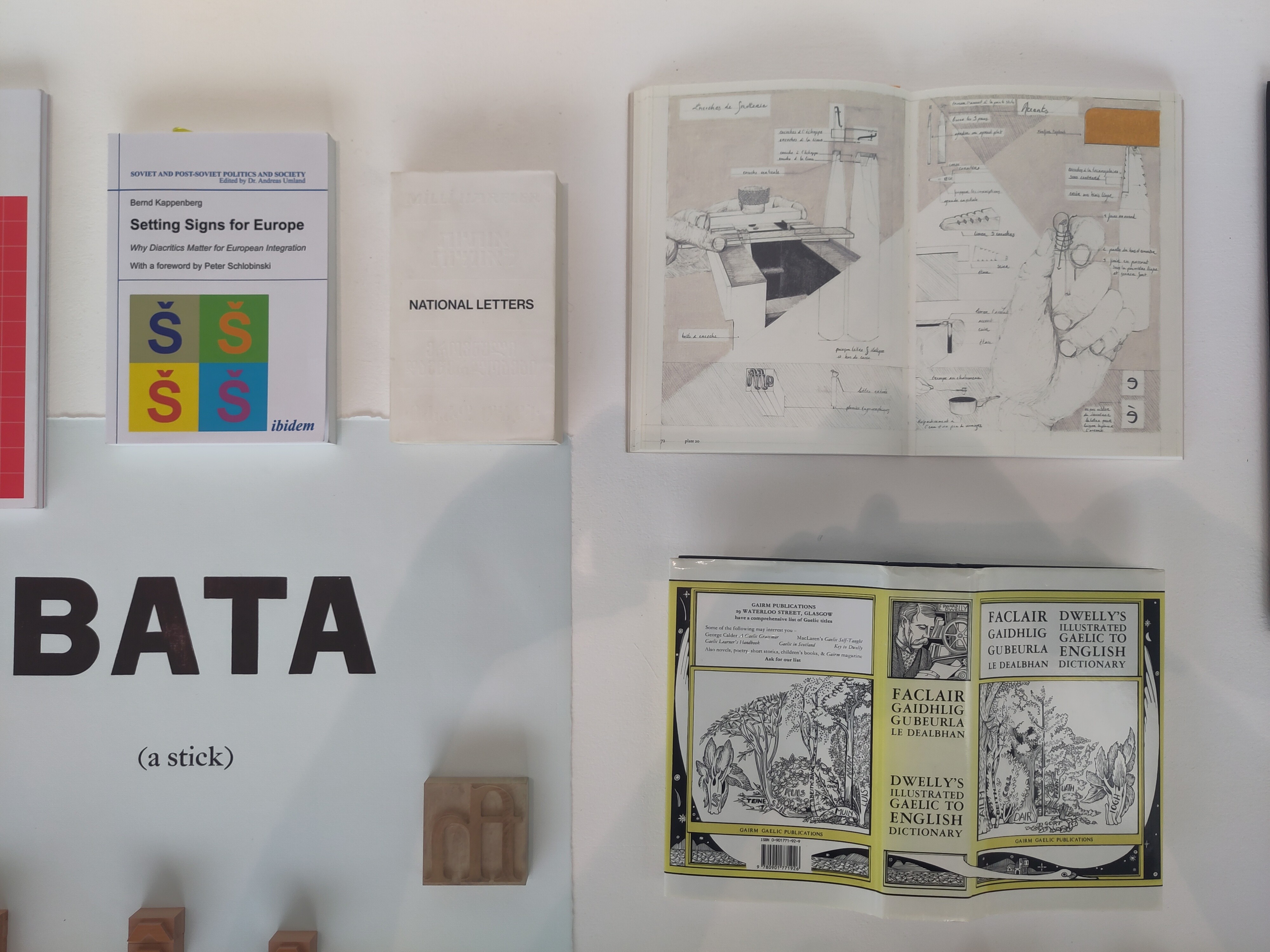
Setting Signs for Europe, Why Diacritics Matter for European Integration, Bernd Kappenberg, Stuttgart 2015
National Letters, Languages and Scripts as Nation Building Tools, Marek Nadelka (ed.), Prague 2023
Space Between Words, The Origins of Silent Reading, Paul Saenger, Stanford 1997
Drawing the Movement: Cutting the Type Punch, Nelly Gable & Annie Bocel, Paris 2018
Dwelly's Gaelic to English Dictionary, Alasdair Gray cover edition, Glasgow 1994 (first pub. 1901–1911)
A Gaelic Alphabet, Michael Biggs & Liam Miller, Dublin, 1960
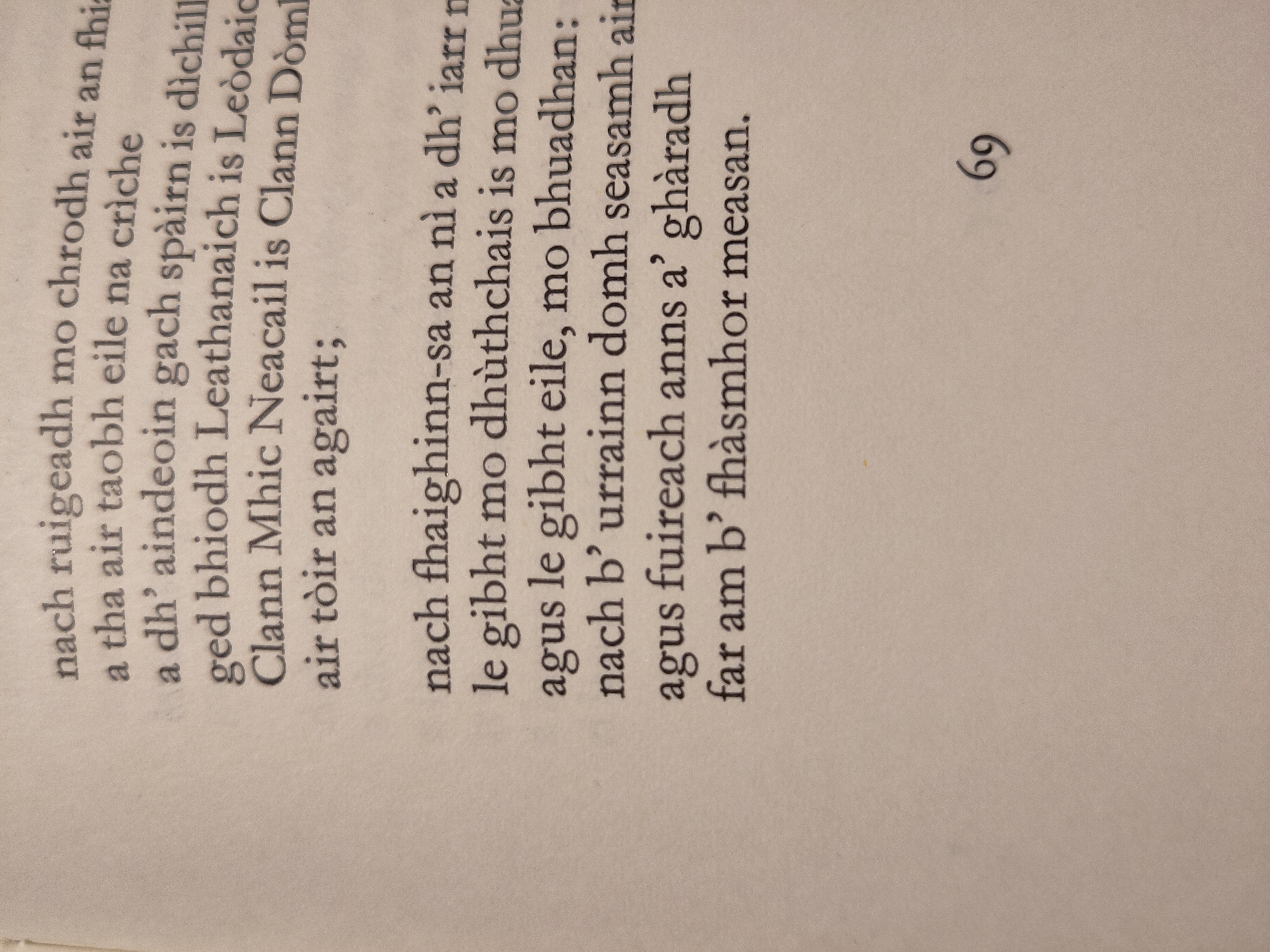
Reothairt is Contraigh, Taghadh de Dhàin 1932–72, Spring tide and Neap tide, Selected Poems, Sorley MacLean, Edinburgh 1977
Documents:
Original drawing for Q character of 7pt Excelsior typeface showing diacritical marks, Linotype Drawing Office, Manchester c.1930
Context
The Caseroom (Glasgow School of Art’s collection of traditional typographic printing equipment) holds one of Scotland’s pre-eminent collections of traditional metal and wooden printing types. However, other than a small amount of Katakana (Japanese translation script) all of this type is limited to use with standard English language text. In line with GSA’s key strategy of Diversity and Inclusion we have taken steps to begin broadening the scope of the collection with the inclusion of Scottish Gaelic type. This is an important development given GSA’s location, the standing of the Caseroom collection within a Scottish higher education context, and the regularity of projects within the school which explore and celebrate Gaelic culture. The complex process of commissioning this Gaelic type (to our knowledge these will be the only examples available in a Scottish HEI) has brought up a number of vital questions around the book culture and typographic identity of the Scottish Gaelic language which this project aims to address.
Visual identity of language is a key factor in cultural identity and national heritage. From the designed writing systems of Cyrillic and Hangeul in Russia and South Korea to guillemots of France and ‘long s’ of Germany, the use of distinct characters, diacritics, conventions and the regional variation of visual typographic heritage that grows around a written language, helps to locate you in a particular country or region and build cultural attachment and identity.
As a dual language country, Scotland’s second (minority) language, Scottish Gaelic, is endangered (as defined by UNESCO). It also lacks a distinct visual identity. The reasons for this are varied and deeply rooted in the history of the region. To give one example, there are few surviving early Scottish manuscripts. This is in contrast to the preservation of Irish manuscripts of the same period, many of which were transported to continental Europe. This means that comparatively, modern Scottish Gaelic has limited physical inheritance from literary sources, which has fed into the widespread belief that it is a wholly oral culture. Of course, that orality is real and important. But it belies what a significant impact the region had, with the most extensive written tradition in the European middle-ages having made a major contribution to modern writing systems, the most significant of which is the word space (ie. the formal use of a break between words). This project is designed to address the gap in Scottish Gaelic’s contemporary visual identity, exploring questions around the language’s rich but largely unknown visual heritage to consider its possible futures.