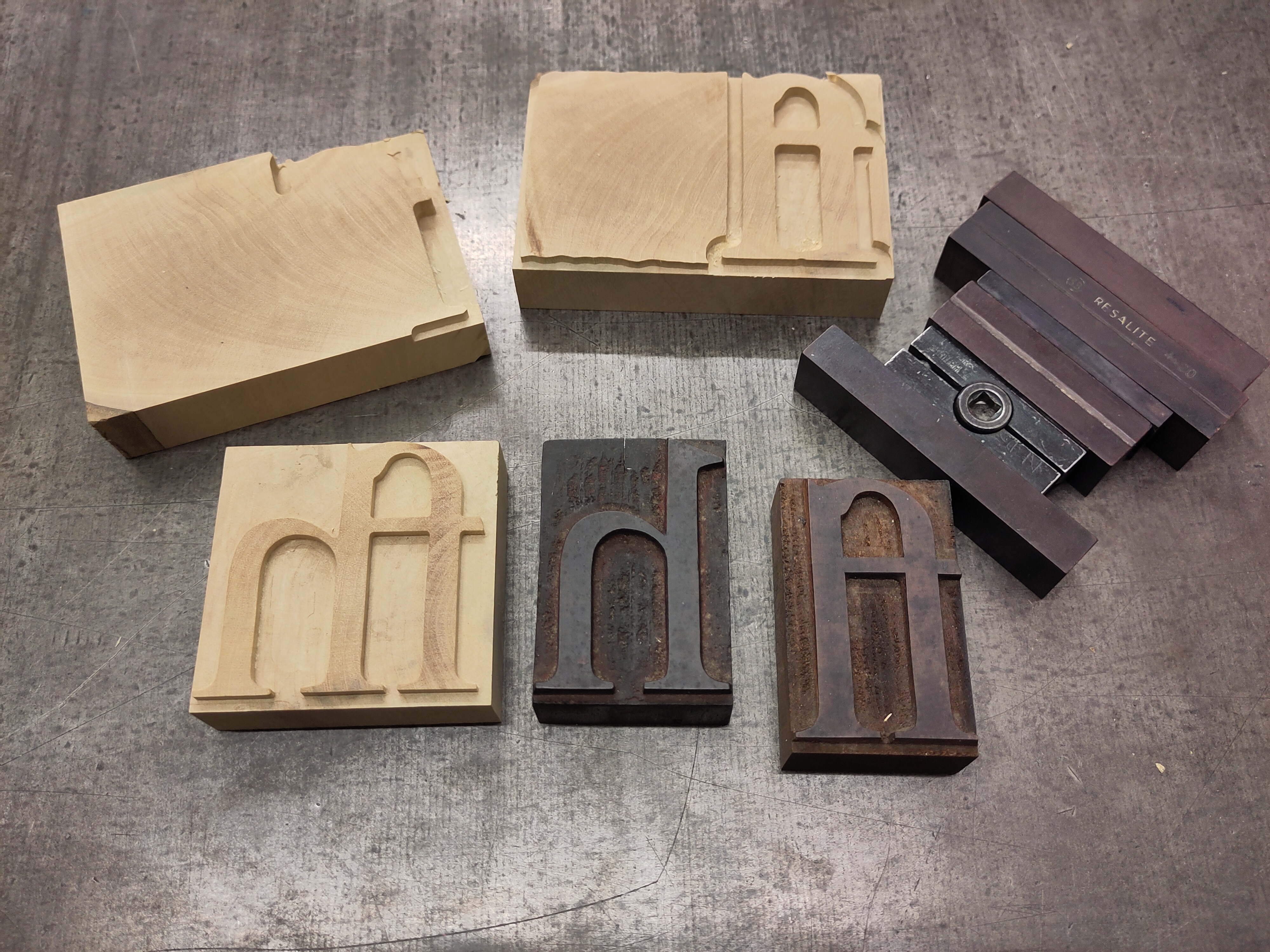
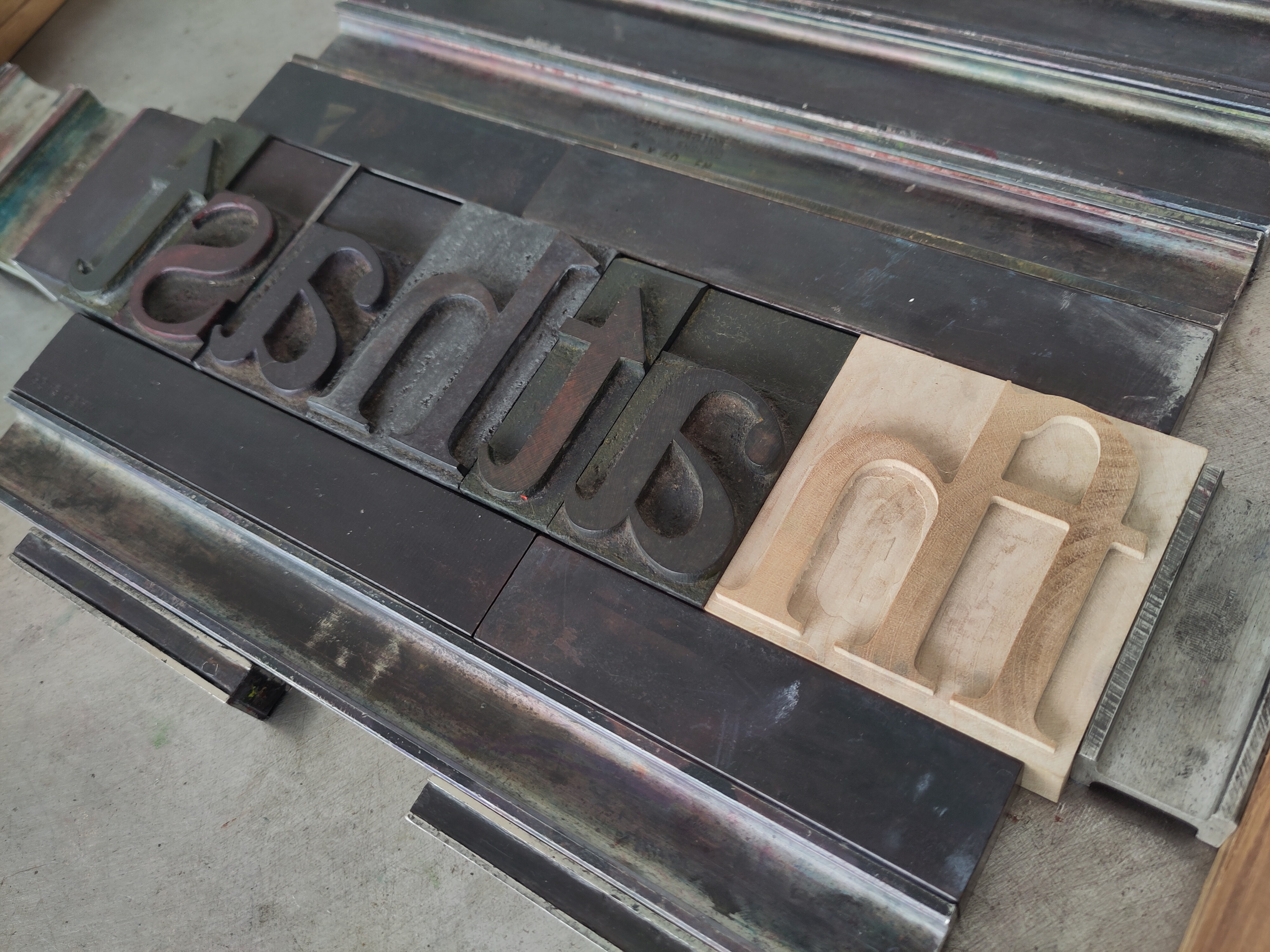
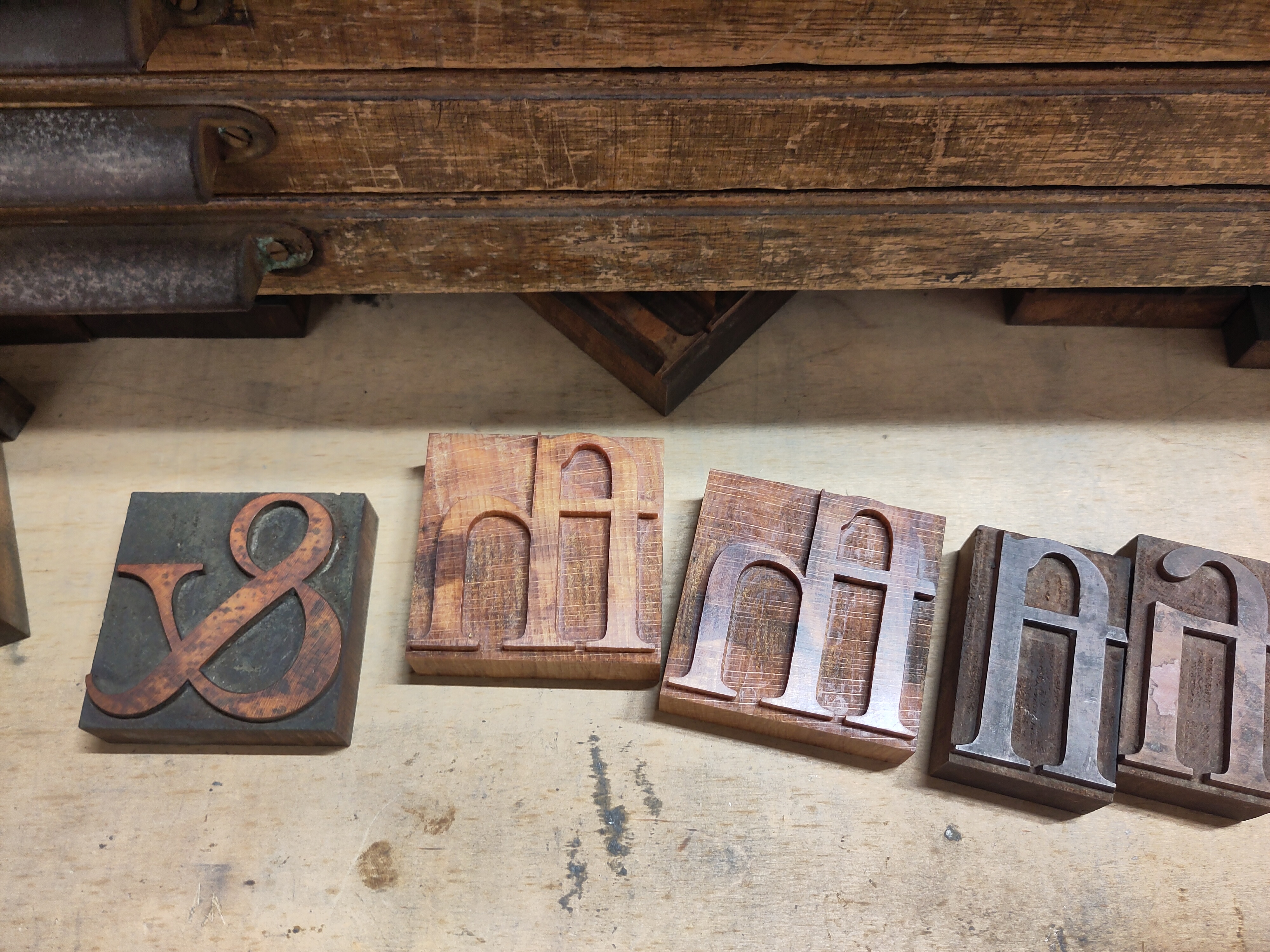
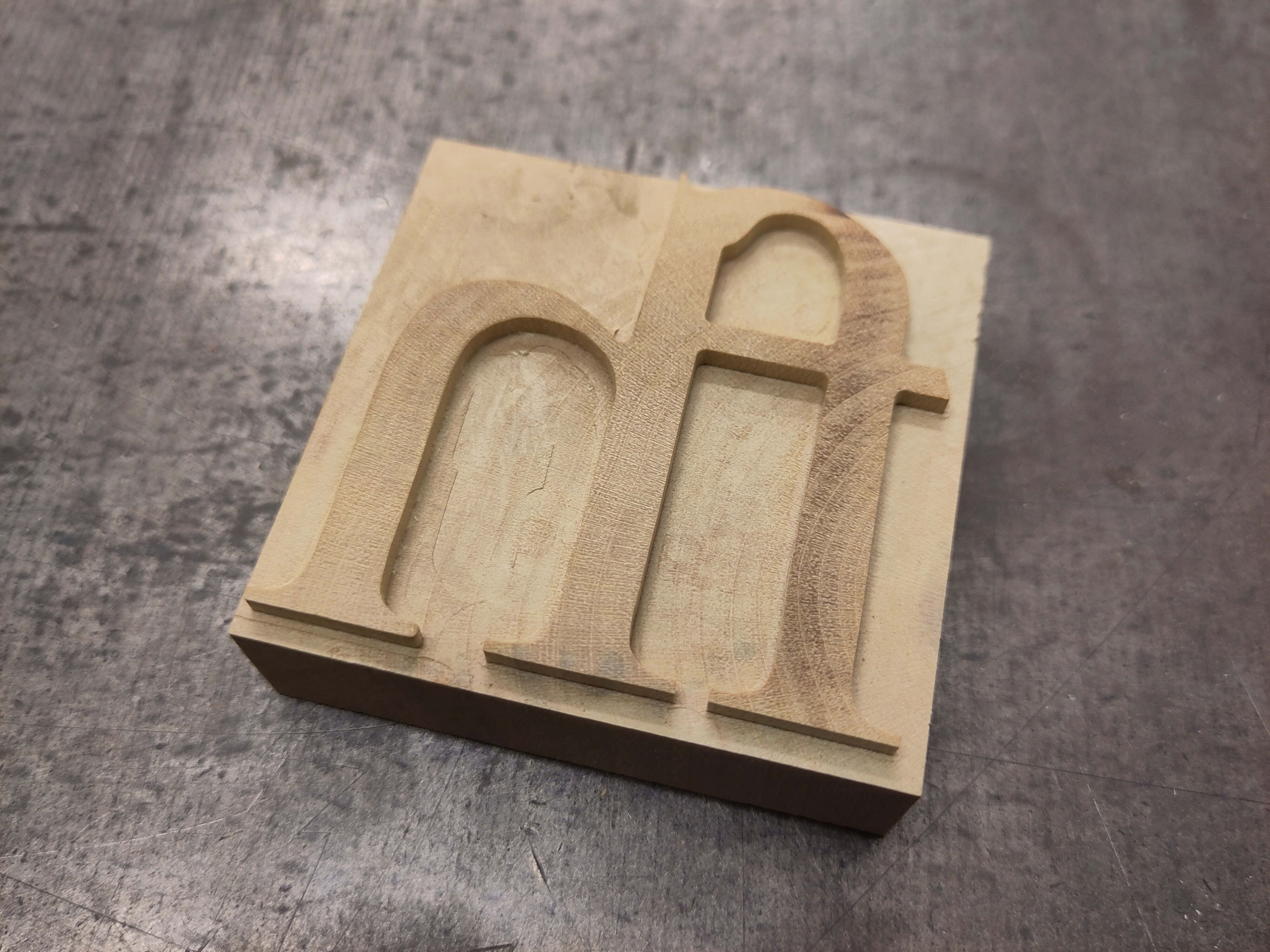
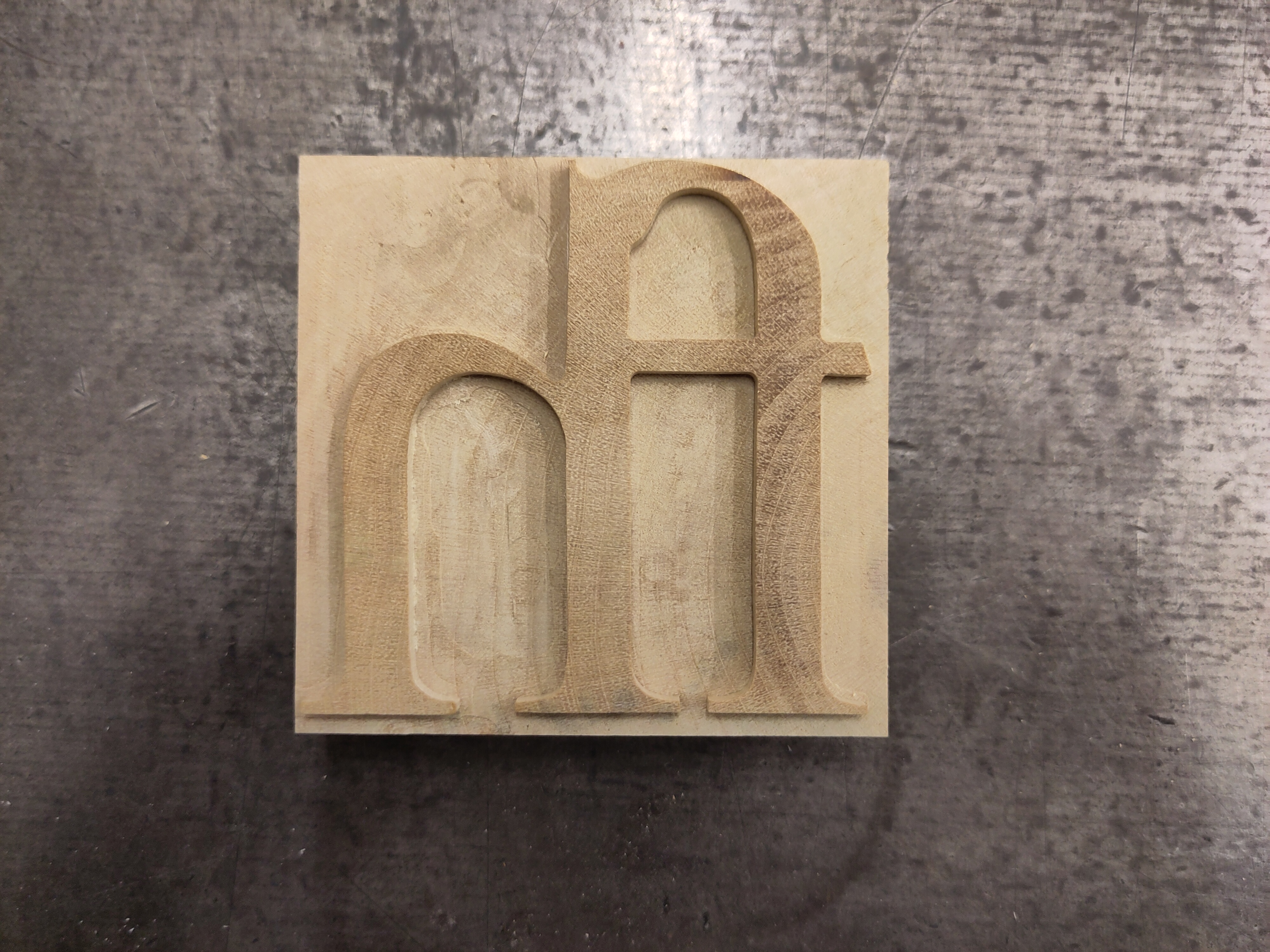
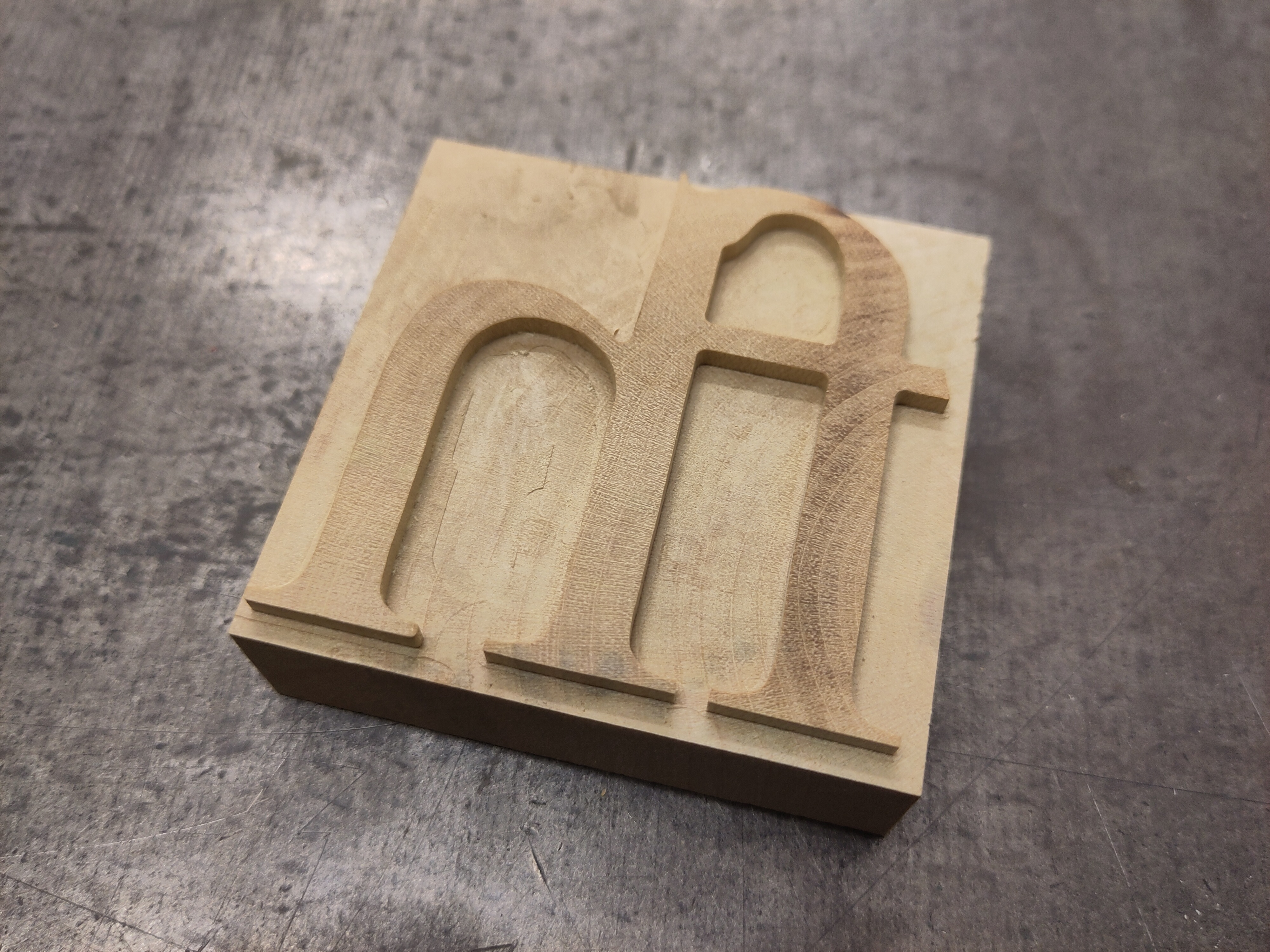
This artefact, a combination fh character, commonly found in Scottish Gaelic (though rarely in other European languages) is an output of the project Dearbh-aithne Lèirsinneach Clò-sgrìobhaidh na Gàidhlig tro Chultar Clò-bhualaidh is Leabhraichean / Scottish Gaelic: Uncovering and Promoting Typographic Visual Identity through Print and Book Culture. It was exhibited at Co-labhairt Typographica / Scottish Gaelic Print and Typography Meet, Glasgow School of Art, August 2026.
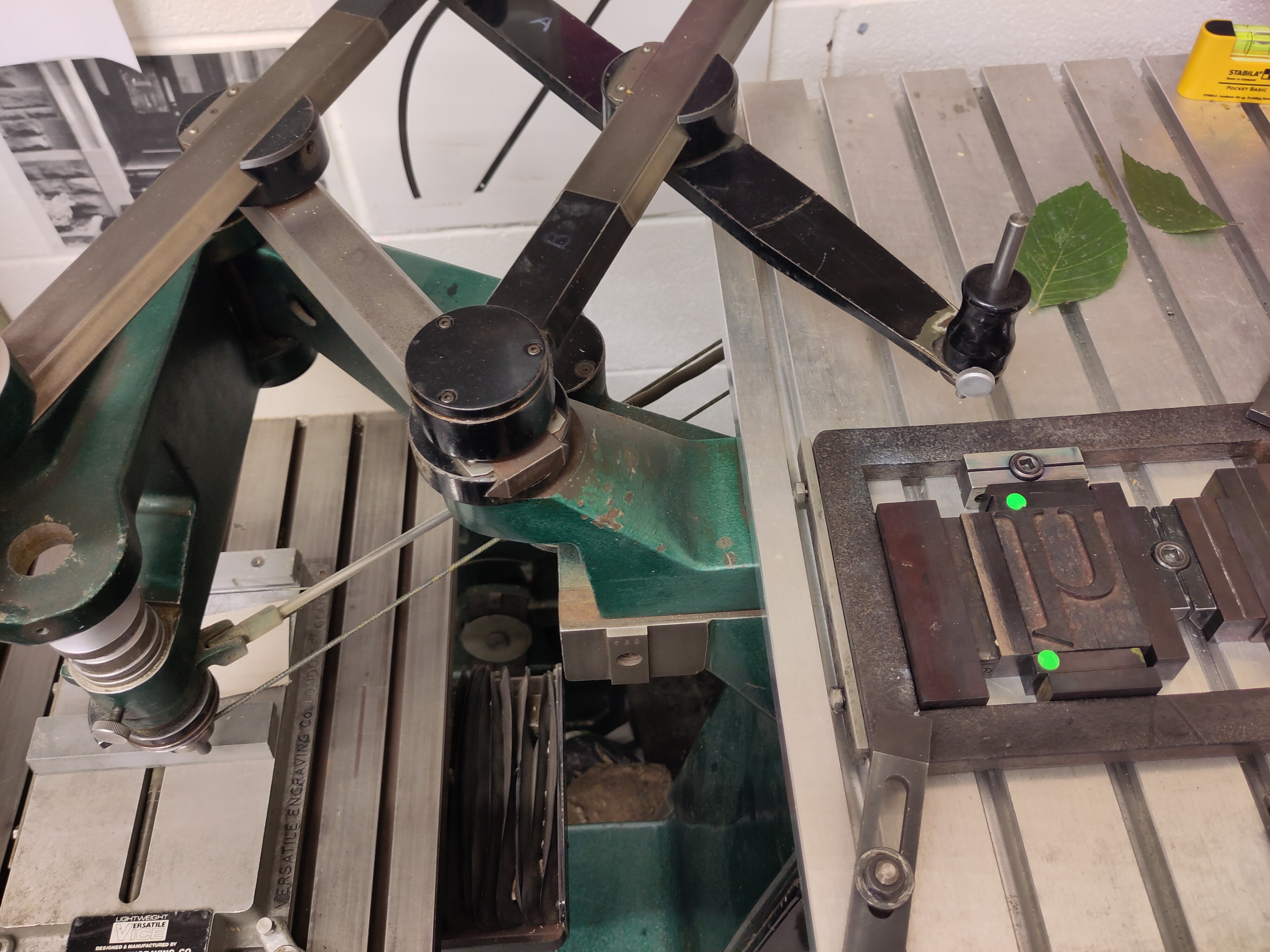
The type, cut in holly wood using a traditional lateral pantographic router, has been created as part of a prototype conversion kit to match an existing Old Style typeface in the GSA Caseroom collection, using original types as patterns for the new hybrid block (see images).
Context
The Caseroom (Glasgow School of Art’s collection of traditional typographic printing equipment) holds one of Scotland’s pre-eminent collections of traditional metal and wooden printing types. However, other than a small amount of Katakana (Japanese translation script) all of this type is limited to use with standard English language text. In line with GSA’s key strategy of Diversity and Inclusion we have taken steps to begin broadening the scope of the collection with the inclusion of Scottish Gaelic type. This is an important development given GSA’s location, the standing of the Caseroom collection within a Scottish higher education context, and the regularity of projects within the school which explore and celebrate Gaelic culture. The complex process of commissioning this Gaelic type (to our knowledge these will be the only examples available in a Scottish HEI) has brought up a number of vital questions around the book culture and typographic identity of the Scottish Gaelic language which this project aims to address.
Visual identity of language is a key factor in cultural identity and national heritage. From the designed writing systems of Cyrillic and Hangeul in Russia and South Korea to guillemots of France and ‘long s’ of Germany, the use of distinct characters, diacritics, conventions and the regional variation of visual typographic heritage that grows around a written language, helps to locate you in a particular country or region and build cultural attachment and identity.
As a dual language country, Scotland’s second (minority) language, Scottish Gaelic, is endangered (as defined by UNESCO). It also lacks a distinct visual identity. The reasons for this are varied and deeply rooted in the history of the region. To give one example, there are few surviving early Scottish manuscripts. This is in contrast to the preservation of Irish manuscripts of the same period, many of which were transported to continental Europe. This means that comparatively, modern Scottish Gaelic has limited physical inheritance from literary sources, which has fed into the widespread belief that it is a wholly oral culture. Of course, that orality is real and important. But it belies what a significant impact the region had, with the most extensive written tradition in the European middle-ages having made a major contribution to modern writing systems, the most significant of which is the word space (ie. the formal use of a break between words). This project is designed to address the gap in Scottish Gaelic’s contemporary visual identity, exploring questions around the language’s rich but largely unknown visual heritage to consider its possible futures.