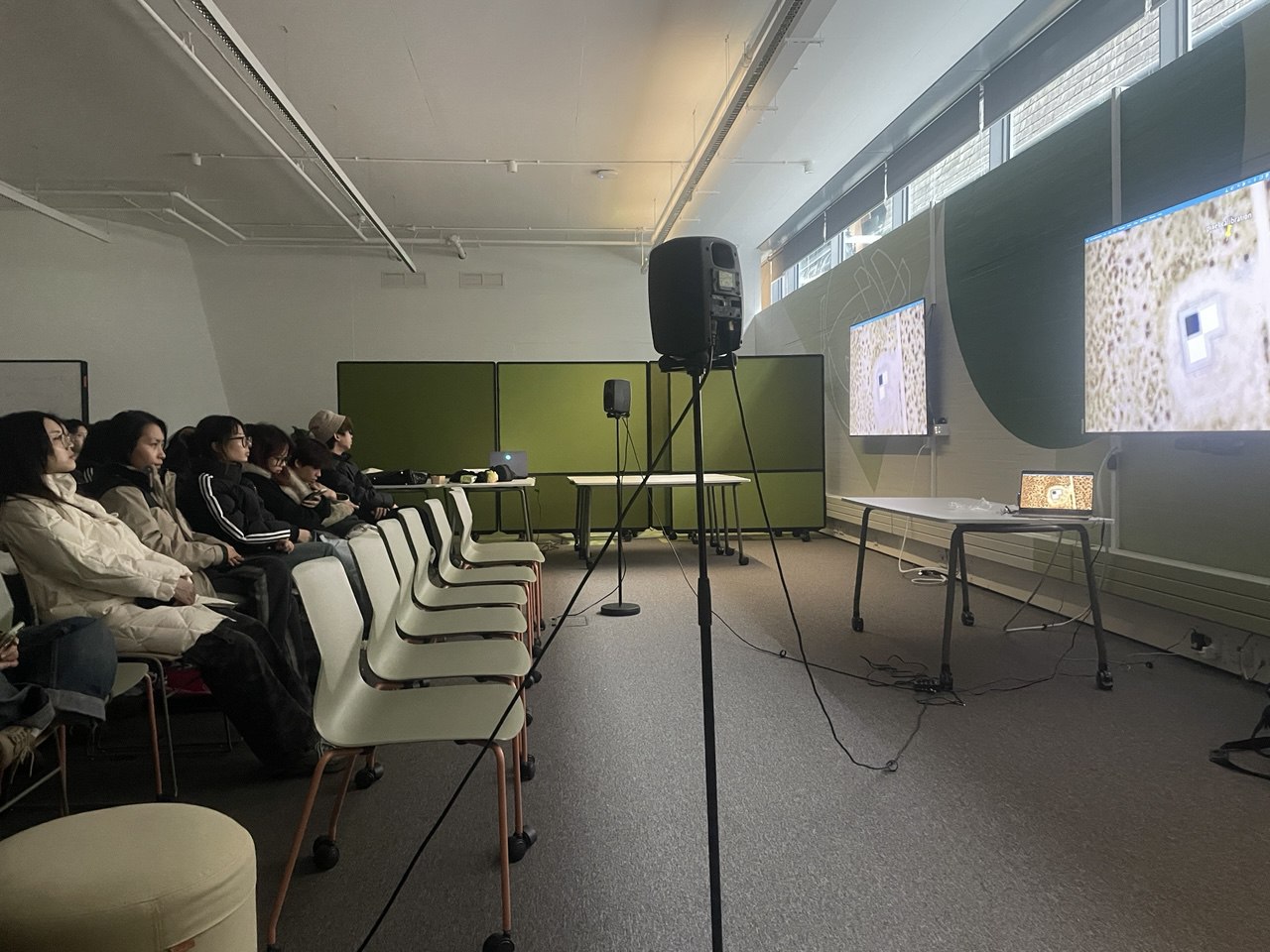
A curated screening I organised on graphic design-related visual essays held at Glasgow School of Art on 12 February 2026. The event investigated what specific methods graphic design might contribute to audiovisual essay practices, particularly how designerly approaches to images, sequencing and composition might structure essayistic moving-image works.
The screening developed questions emerging from my Ecofantasy Kit research project and the audiovisual essay Spar Clyde Genesis (RADAR ID 10702). That work explored how essayistic methods including reflexivity, speculation, open-endedness and associative thinking can be translated into graphic design practices of iteration, sequencing and versioning.
The programme focused on works employing still or near-still imagery, including photography, slow transitions, static camera shots, GIF-like repetition and experimental sequencing. By foregrounding the manipulation of still images rather than cinematic movement, the works demonstrated how audiovisual essays can be constructed through sensibilities associated with graphic design production and “designerly ways of knowing” (Cross, 1982).
Videos shown included:
Karel Martens – Not for Resale
Deftones – Cut Hands
Dexter Sinister – “Identity”
Black Audio Film Collective – Handsworth Songs
Chris Marker – La Jetée
Hito Steyerl – How Not to be Seen
Arthur Jafa – Apex
Metahaven – The Sprawl
Camille Henrot – Grosse Fatigue
Harun Farocki – Eye / Machine I
Mark Leckey – Green Screen Refrigerator Action
Tony Cokes – Of Lies & Liars Study 04
The screening functioned as a curatorial research method through which different graphic design approaches to audiovisual essaying could be compared, reflected on, discussed and analysed. The works suggested that essayistic reflexivity (commonly associated with essay film) can be extended into graphic design practice through attention to sequencing, iteration and the visual and material qualities of designed media. In this context, essayistic forms emerged through the manipulation of documents, typography, images, pixels, printing and interfaces, foregrounding the materiality of graphic design tools and media. This research therefore proposes that audiovisual essay practices can be structured through graphic design logics (such as printmaking, layout, interface design, typographic composition and still-image montage) rather than relying primarily on cinematic narrative conventions.
The event also extended my research into the relationship between graphic design, sonic fiction and audiovisual essay practices, drawing on theories of audiovisual relations (Chion, Audio-Vision, 1994) and audio essay methodologies (Sonic Faction: Audio Essay as Medium and Method, 2024).