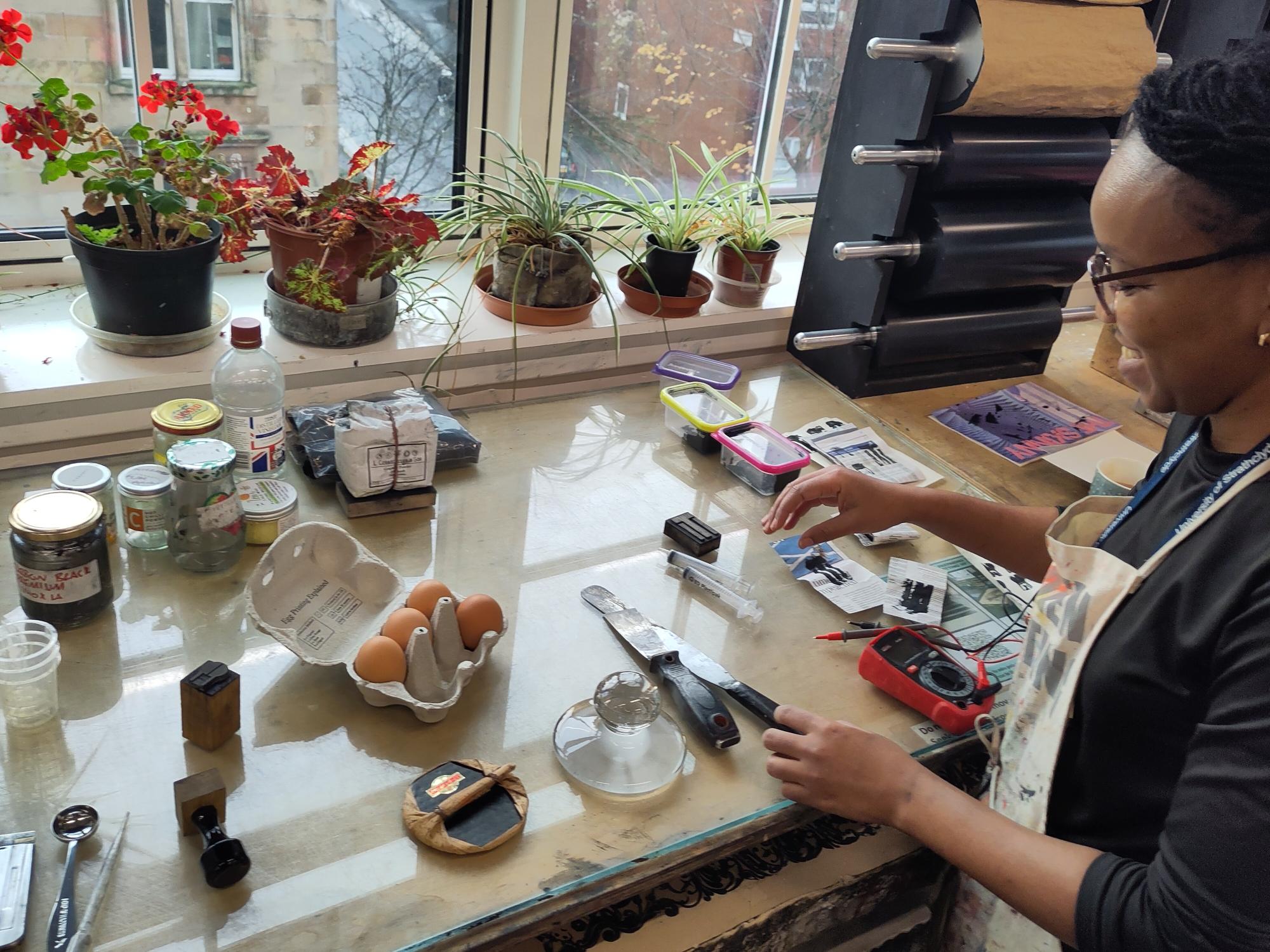
Display of experimental Woodblock Bio-sensors shown in the exhibition Soil at Somerset House, London
Exhibition Caption Text:
This joint, interdisciplinary research project conducted between the University of Strathclyde, The Glasgow School of Art and Kenyatta University, Nairobi, is working to create a low-cost, biodegradable soil sensor which can be made and used anywhere in the world. Conductive ink is made using ubiquitous materials such as egg, charcoal and seed oils, and printed with a hand-cut woodblock in the shape of a simple electrode, onto scrap or recycled paper. Soil samples are placed onto the paper, which has been treated with an enzyme which sensitises it to the concentration of a target nutritional element (such as phosphates or nitrates) in the soil. A potentiometer is then used to measure the level of resistance in the electrical circuit which gives the user a measure of the nutritional element in their soil.
Artist Statement
The ability to understand and measure key environmental parameters is important, but often relies on expensive, laboratory infrastructure, making it inaccessible to smallholder farmers with low incomes. In this project we have been exploring whether woodblock printing can be used to create electrochemical sensors that could be used in real time at the point of need. The project Towards Low Cost Soil Fertility Sensor Systems for Smallholder Food Security in Kenya is funded by an award from the EPSRC and was developed with the support of NERC seed funding.
SOIL: The World at our Feet,
23 Jan – 13 Apr 2025
This groundbreaking exhibition unites visionary artists and thinkers from around the world to explore the remarkable power and potential of soil. Through a range of artworks, artefacts and innovative approaches, visitors are invited to reconsider the crucial role soil plays in our planet's health. The exhibition delivers a message of hope and urgency, encouraging a more sustainable, harmonious relationship with the Earth—if we choose to act now.
Soil is more than dirt. Soil is a secret world at our feet, an ecosystem as diverse in life as our night sky is full of stars. The billions of bacteria contained in its rhizospheres do for plants what the microbes in our stomachs do for us: sustain life. Our relationship with soil is our connection to Earth itself. Without soil, there is no us.
Our exhibition brings together a range of stories and responses to soil from a group of global artists, writers, musicians and scientists. Combining sensory artworks, historical objects, scientific artefacts and documentary evidence, the exhibition sets out to inspire and educate visitors about the power and the fragility of soil, its fundamental role in human civilisation and its remarkable potential to heal our planet.